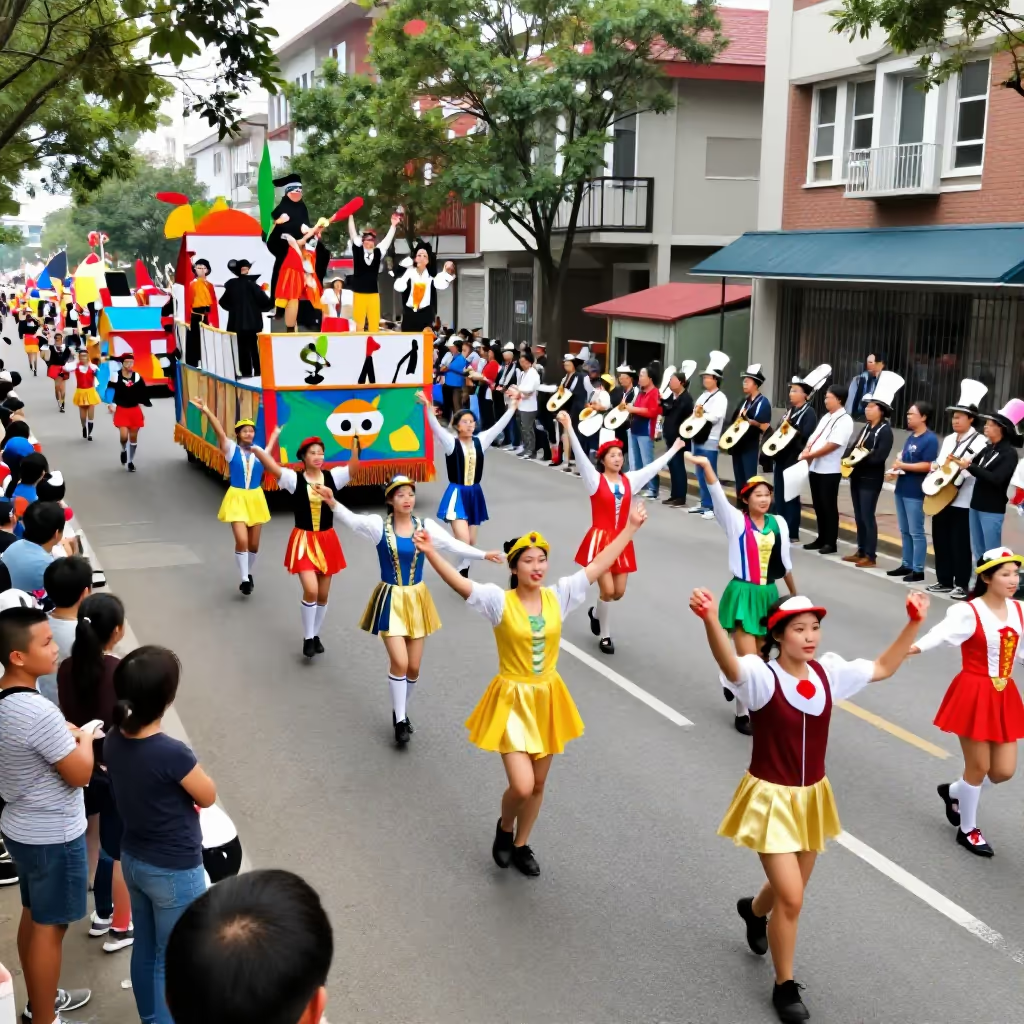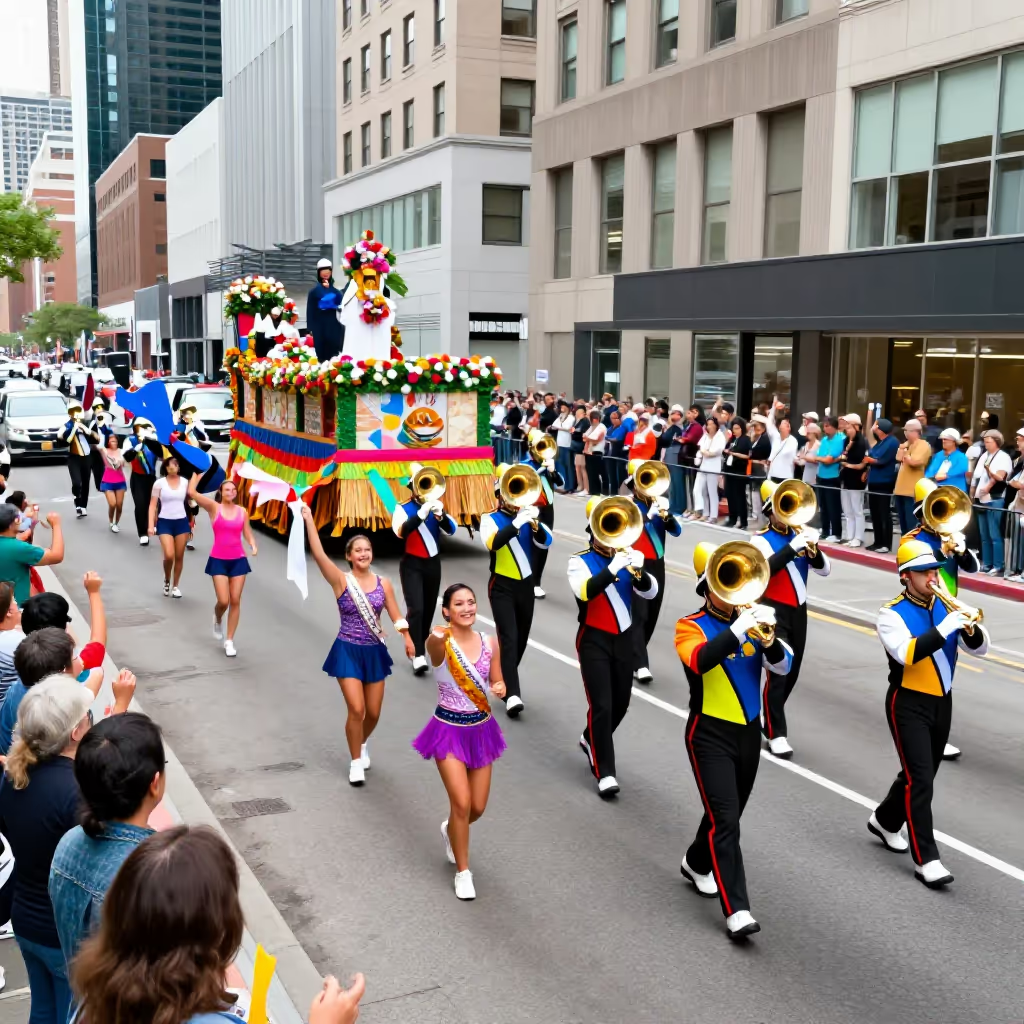
A festive procession in public, often with music, decorated floats, and many participants, to celebrate an event.
example
Die jährliche Christopher-Street-Day-Parade zieht hunderttausende von Besuchern an.
The annual Christopher Street Day parade attracts hundreds of thousands of visitors.
Usage tips
Context clue
You can tell from the context whether a festive procession or a military march is meant. Words like 'bunt' (colorful), 'feiern' (to celebrate), or 'Karneval' (carnival) point to a festive parade, while 'Soldaten' (soldiers) or 'Militär' (military) indicate the military meaning.
EXAMPLE
Die bunte Parade zum Stadtfest zog durch die Straßen.
The colorful parade for the city festival moved through the streets.
Typical collocations (festival)
In connection with festive processions, 'Parade' (parade) is often combined with verbs like 'ansehen' (to watch), 'teilnehmen' (to participate), or 'stattfinden' (to take place). People also speak of a 'bunte' (colorful) or 'fröhliche Parade' (cheerful parade).
EXAMPLE
Wir haben uns die Karnevalsparade vom Straßenrand aus angesehen.
We watched the carnival parade from the side of the street.
Typical collocations (military)
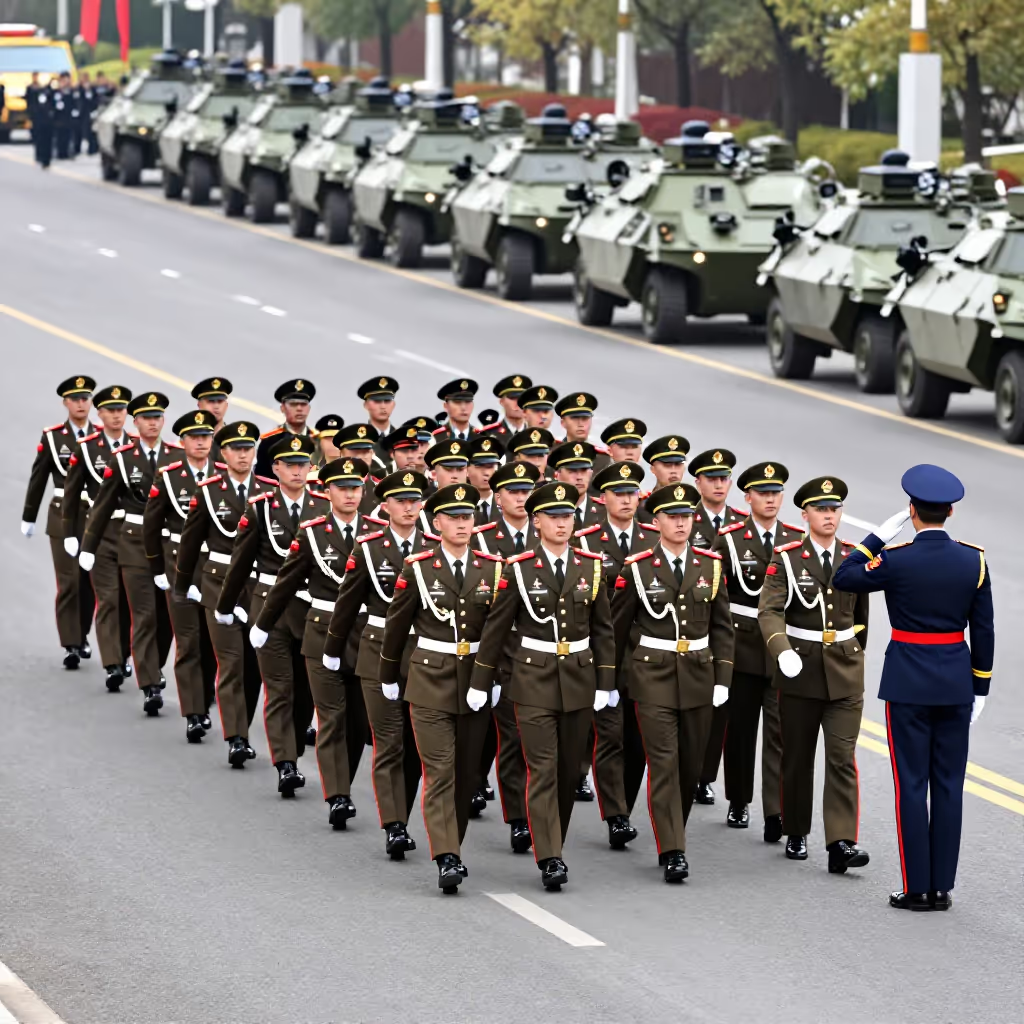
In a military context, people often speak of 'eine Parade abhalten' (to hold a parade) or 'eine Parade abnehmen' (to review/inspect a parade).
EXAMPLE
Der Präsident wird die Parade zum Nationalfeiertag abnehmen.
The president will review the parade for the national holiday.
Context clue (sports)
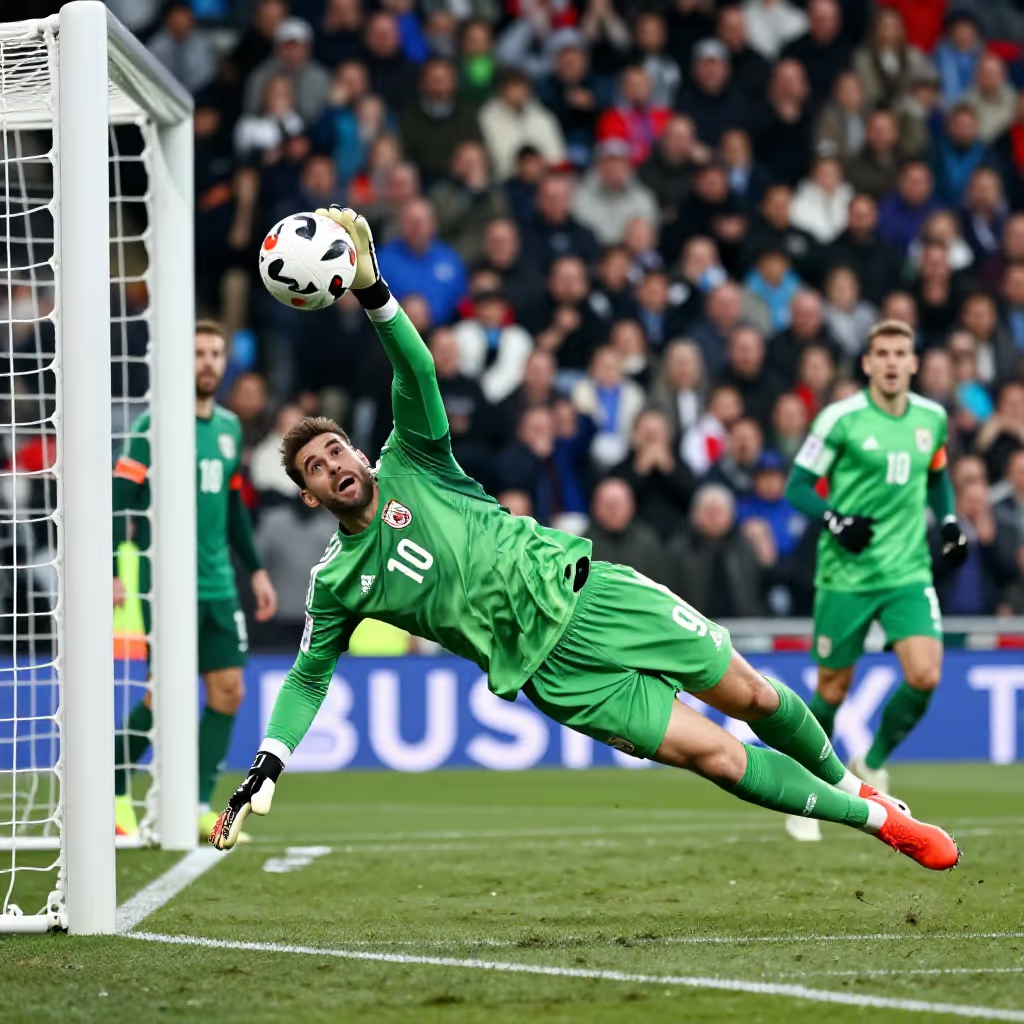
This meaning is used almost exclusively in sports, usually in football/soccer. It describes a great defensive action by the goalkeeper. Typical adjectives are 'glänzend' (brilliant), 'spektakulär' (spectacular), or 'unglaublich' (incredible).
EXAMPLE
Der Torwart rettete sein Team mit einer spektakulären Parade.
The goalkeeper saved his team with a spectacular save.
Context clue (fencing)
In fencing, 'Parade' (parry) is a defensive movement with the weapon. You can recognize this meaning from words like 'Fechter' (fencer), 'Klinge' (blade), 'Angriff' (attack), or 'Stoß' (thrust).
EXAMPLE
Sie wehrte den Stoß des Gegners mit einer schnellen Parade ab.
She blocked her opponent's thrust with a quick parry.
Compare with
near_synonym · confusable
Parade vs Umzug
move / parade
'der Umzug' and 'die Parade' can both mean a group of people publicly moving through streets. In German, 'Umzug' is very typical for Carnival, shooting festivals, or other local festivals. 'Parade' often sounds larger, more planned, and more like a public display; it can also be military. The words can be confused because both can be festive. For Carnival, however, people usually say 'Umzug', while for a large celebration with music, floats, or soldiers, 'Parade' often fits.
Parade
Zur Feier des Nationalfeiertags zog eine große Parade durch die Hauptstraße.
To celebrate the national holiday, a large parade moved along the main street.
Umzug
Am Sonntag sehen wir uns den Karnevalsumzug in der Innenstadt an.
On Sunday, we are going to watch the Carnival parade in the city center.