

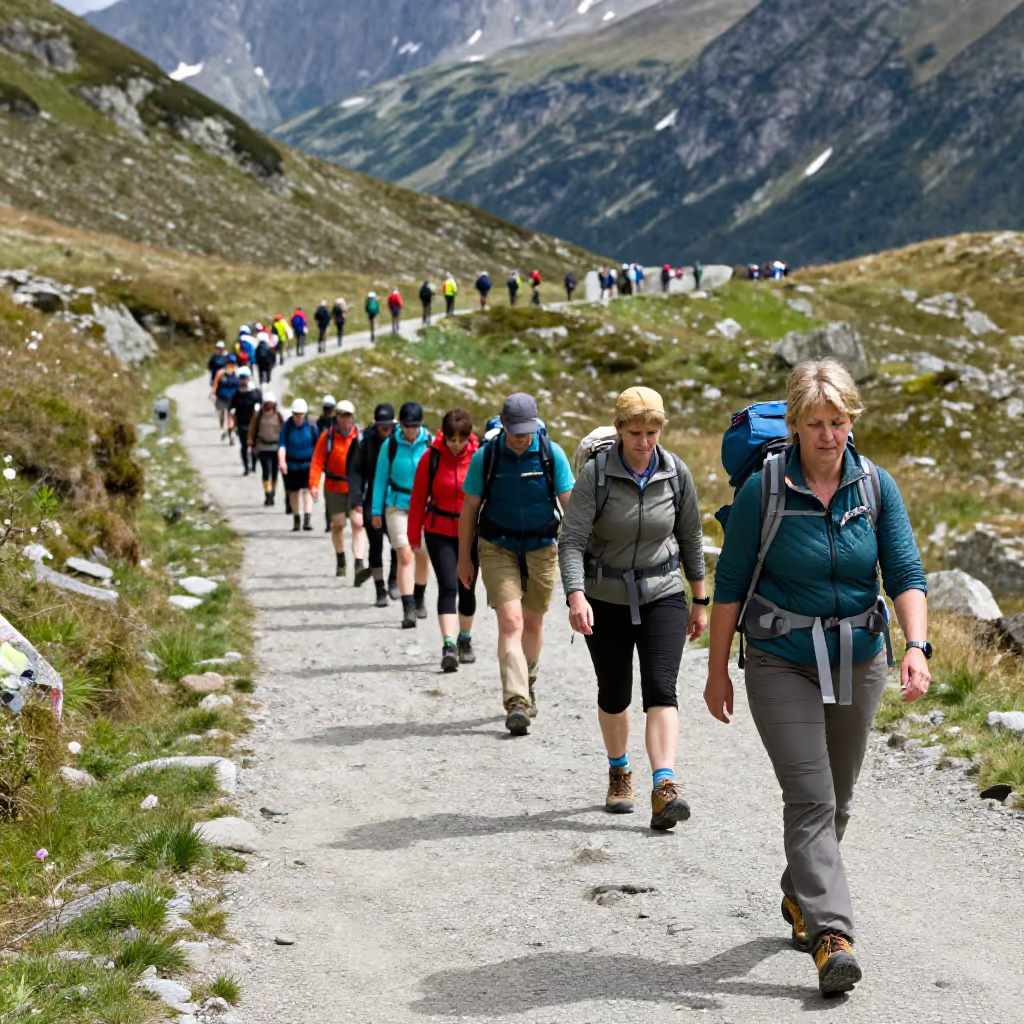
der Marsch
march
A long, organized walk, often by a group of people such as soldiers, protesters, or hikers.
Die Soldaten legten einen dreitägigen Marsch durch die Berge zurück.
The soldiers completed a three-day march through the mountains.
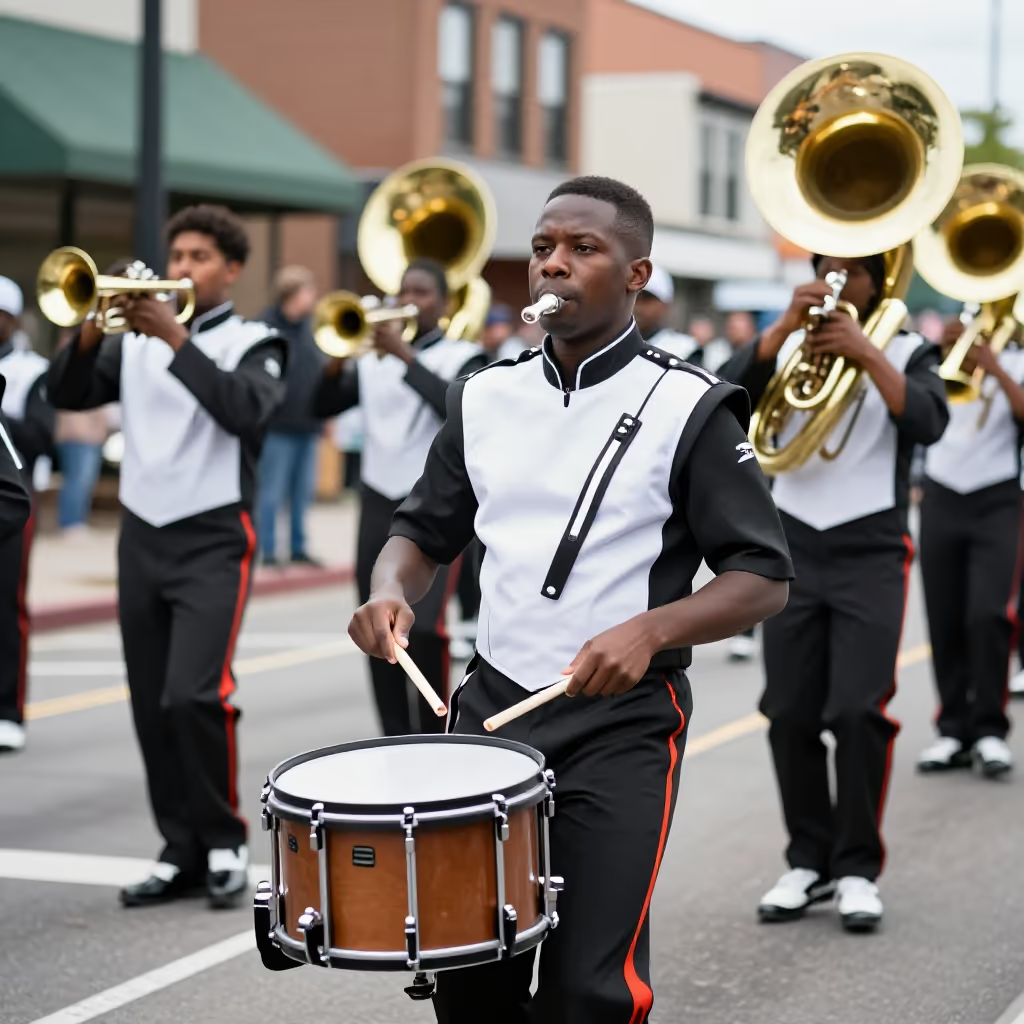

march
Loading your saved state.
march
A long, organized walk, often by a group of people such as soldiers, protesters, or hikers.
Die Soldaten legten einen dreitägigen Marsch durch die Berge zurück.
The soldiers completed a three-day march through the mountains.
'Der Marsch' (march) is the noun related to the verb 'marschieren' (to march). When people 'marschieren' (march), they do a 'Marsch' (march).
Die Wandergruppe marschierte den ganzen Tag.
The hiking group marched all day.
Whether it means the walk or the piece of music is usually indicated by the verb. You can 'machen' (do) or 'antreten' (set out on) a 'Marsch' (march) when referring to a walk, but also 'spielen' (play) or 'komponieren' (compose) a 'Marsch' (march) when referring to music.
Die Demonstranten machten einen langen Marsch zum Rathaus.
The protesters made a long march to city hall.
In the meaning of walking, 'Marsch' (march) is often used with verbs such as 'antreten' (to set out on), 'zurücklegen' (to cover), or 'machen' (to do). Typical adjectives are 'lang' (long), 'anstrengend' (strenuous), or 'schnell' (fast).
Nach einem anstrengenden Marsch erreichten sie endlich die Hütte.
After a strenuous march, they finally reached the hut.
The idiom 'jemandem den Marsch blasen' (to give someone a telling-off) is a fixed unit. The person being criticized is always in the dative case.
Als ich zu spät kam, hat mir meine Mutter ordentlich den Marsch geblasen.
When I came home late, my mother really gave me a telling-off.
The expression 'jemandem den Marsch blasen' (to give someone a telling-off) clearly belongs to colloquial language. In formal or written contexts, it would generally be avoided.
Warte nur, bis der Vater das erfährt, der wird dir den Marsch blasen!
Just wait until Dad hears about this—he'll give you a telling-off!
move / parade
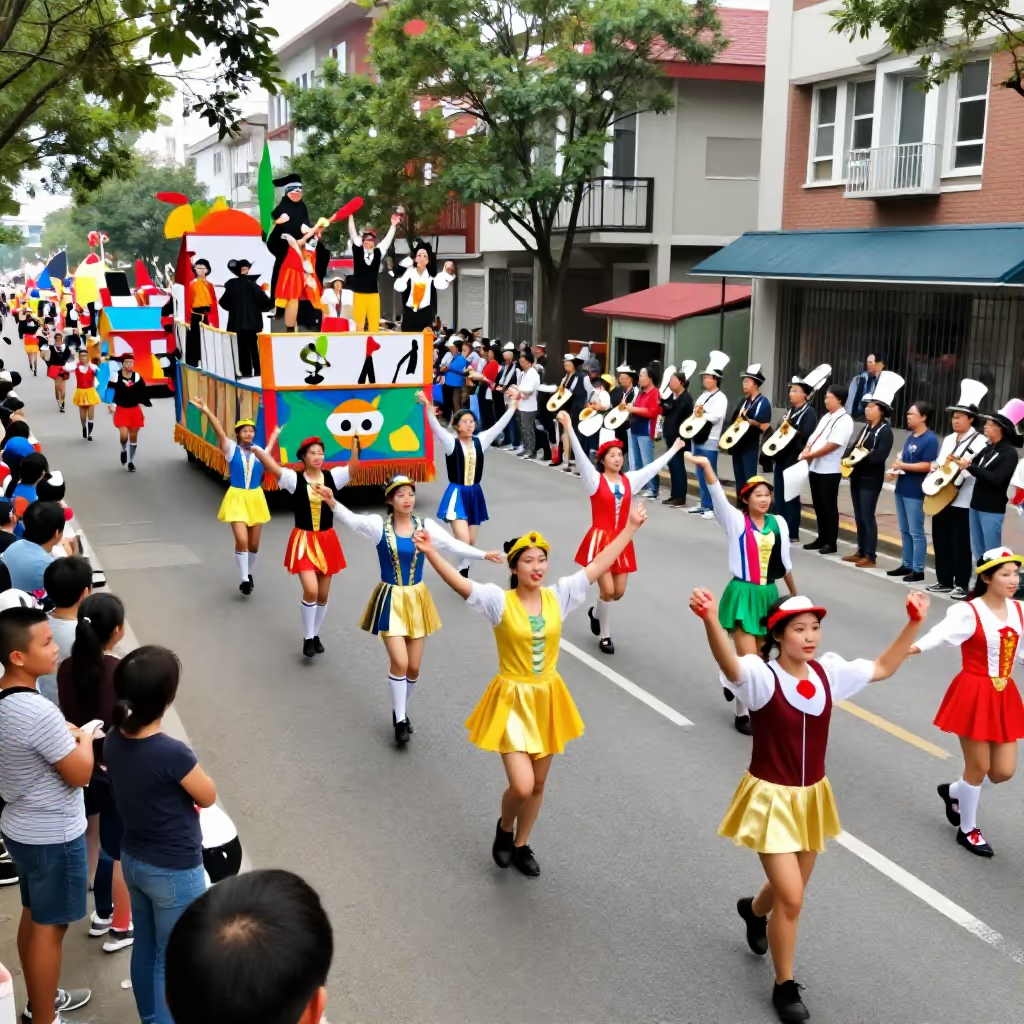
'der Umzug' and 'der Marsch' can both describe a group of people walking together through streets or along a route. 'Der Umzug' is usually festive or ceremonial, for example at Carnival, with music, costumes, or floats. 'Der Marsch' puts more emphasis on organized walking over a longer distance, often by soldiers, protesters, or hikers. The words can be confused because in both cases many people are walking together. If the mood is festive and there are spectators, 'Umzug' fits better. If the route, order, or effort is important, 'Marsch' is more precise.

Der lange Marsch durch den Wald dauerte fast drei Stunden.
The long march through the forest lasted almost three hours.
Am Sonntag schauen wir uns den bunten Umzug in der Innenstadt an.
On Sunday, we are going to watch the colorful parade in the city center.