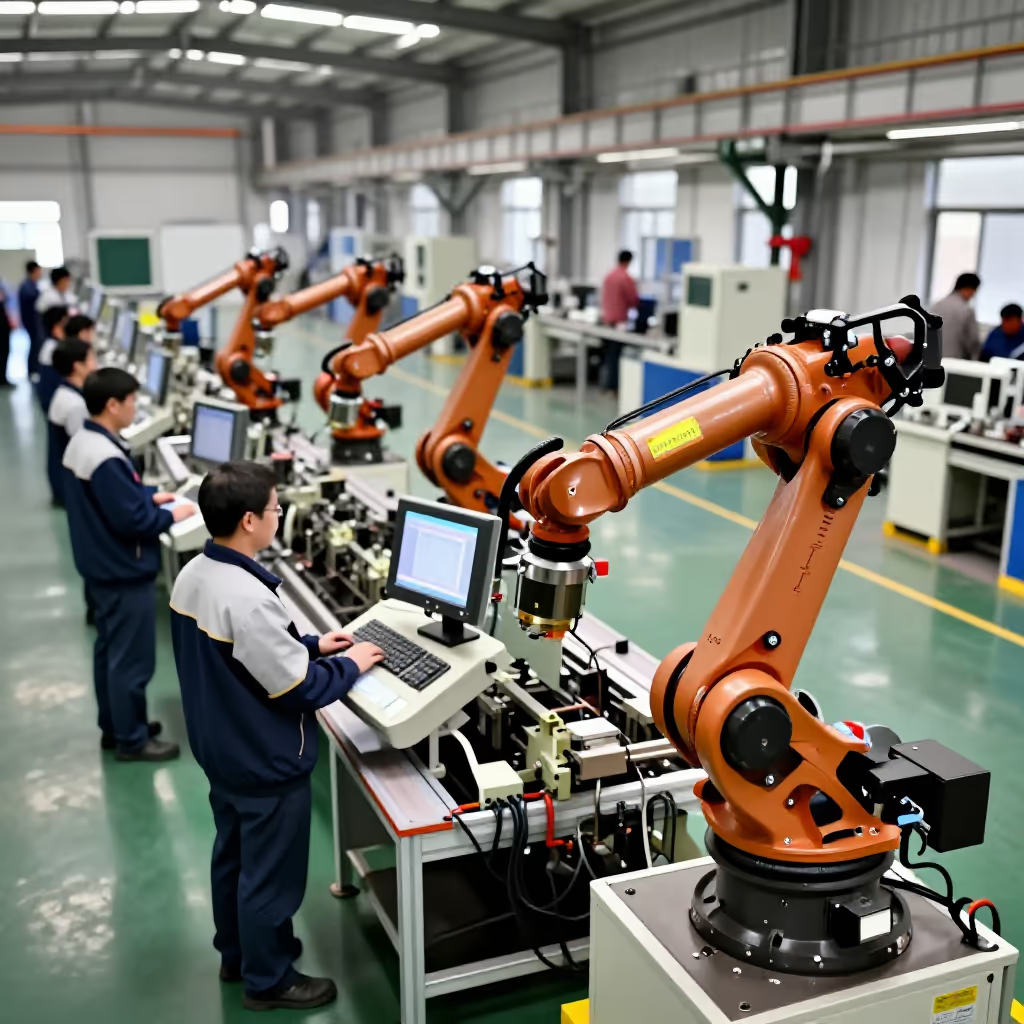
A fundamental change in thinking, assumptions, or methods within a society, a science, or a field. This shift leads to a completely new perspective on existing problems and phenomena.
example
Die Entdeckung des Internets führte zu einem Paradigmenwechsel in der Kommunikation.
The discovery of the internet led to a paradigm shift in communication.

Usage tips
Compound structure
The word is composed of 'Paradigma' (paradigm; plural: Paradigmen) and 'Wechsel' (change/shift). So it literally describes a change in the fundamental patterns of thought or models.
EXAMPLE
Die Einführung der künstlichen Intelligenz stellt für viele Branchen einen Paradigmenwechsel dar.
The introduction of artificial intelligence represents a paradigm shift for many industries.
Register
'Paradigmenwechsel' (paradigm shift) is a word used in educated and specialized language. It is rarely used in normal everyday speech, but it is common in discussions about science, technology, or social change.
EXAMPLE
In der Podiumsdiskussion sprach der Soziologe von einem bevorstehenden Paradigmenwechsel.
In the panel discussion, the sociologist spoke of an impending paradigm shift.
Typical collocations
The word is often used with verbs such as 'einleiten' (to initiate), 'vollziehen' (to carry out/undergo), or 'darstellen' (to represent). People often speak of a 'Paradigmenwechsel in' (paradigm shift in) a particular area.
EXAMPLE
Die Energiewende leitet einen Paradigmenwechsel in der Wirtschaft ein.
The energy transition is initiating a paradigm shift in the economy.
Context clue
You can recognize this specific philosophy-of-science meaning from the context. If the text refers to particular disciplines such as physics or astronomy, or to theorists like Thomas Kuhn, this narrower meaning is usually intended.
EXAMPLE
Der Übergang von der Newtonschen Physik zur Relativitätstheorie war ein klassischer Paradigmenwechsel.
The transition from Newtonian physics to the theory of relativity was a classic paradigm shift.
Compare with
near_synonym · confusable
Paradigmenwechsel vs Revolution
revolution
'die Revolution' and 'der Paradigmenwechsel' both describe a very fundamental change. 'Revolution' is especially fitting when a political order is overthrown or when an area changes very quickly and dramatically, for example through new technology. 'Paradigmenwechsel' is more about a new way of looking at the world: people think differently, work with different assumptions, or use new methods. Learners may confuse the words because both sound like a major change. As a simple guide: with power, protest, or a strong innovation, 'Revolution' often fits; with a new way of thinking, 'Paradigmenwechsel' is more likely to fit.
Paradigmenwechsel
In der Medizin führte die neue Forschung zu einem Paradigmenwechsel.
In medicine, the new research led to a paradigm shift.
Revolution
Die digitale Revolution hat unseren Alltag stark verändert.
The digital revolution has greatly changed our everyday lives.