

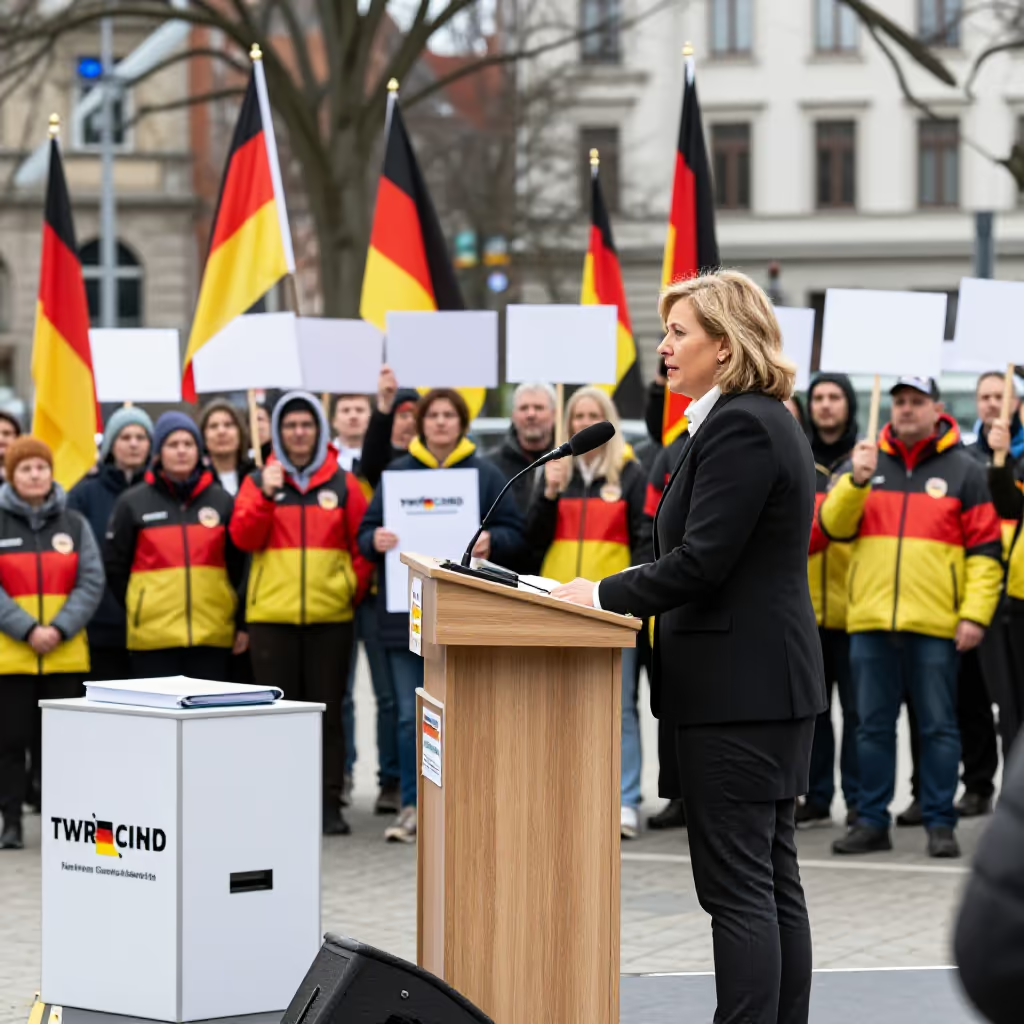
die Partei
party
A political organization of people with similar goals that takes part in elections in order to gain political power.
EXAMPLE
Er ist Mitglied in einer großen politischen Partei.
He is a member of a large political party.
party / party to
Loading your saved state.
party
A political organization of people with similar goals that takes part in elections in order to gain political power.
Er ist Mitglied in einer großen politischen Partei.
He is a member of a large political party.
party
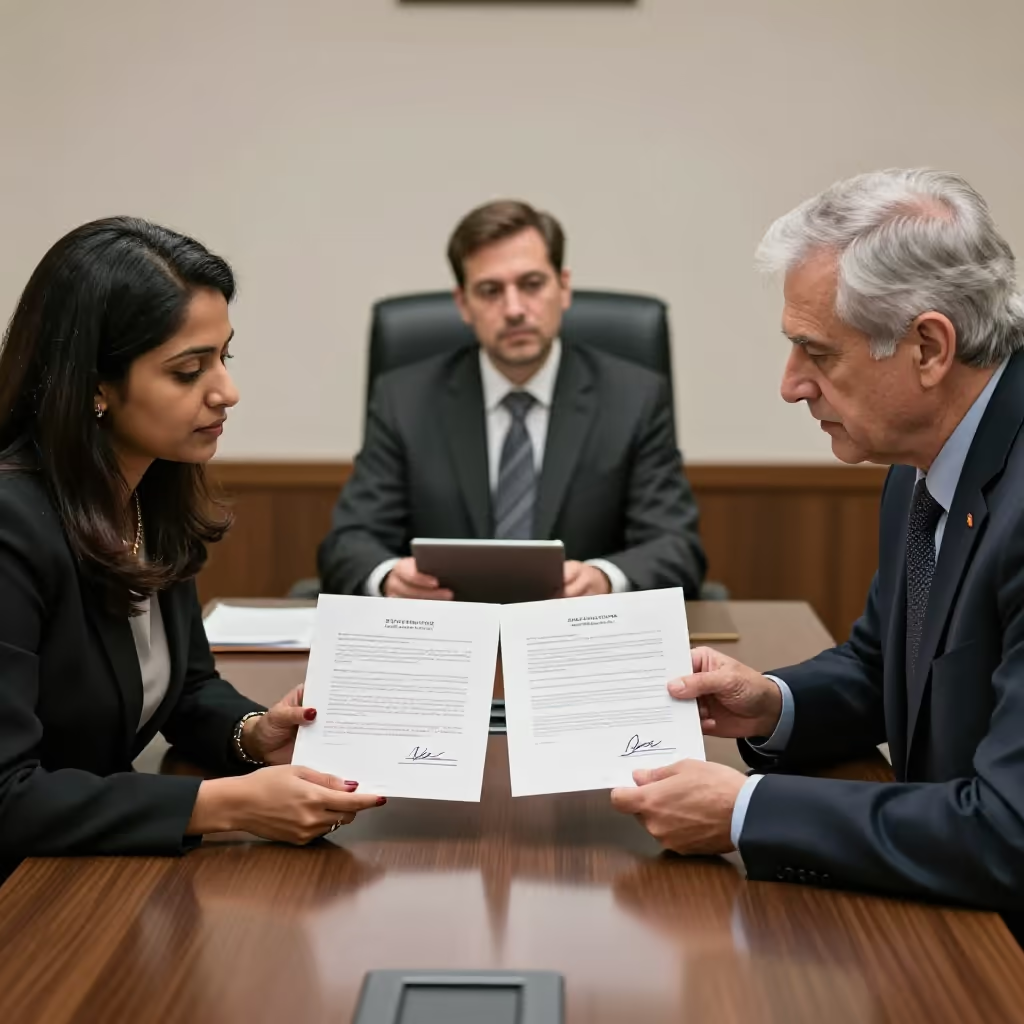
A person or group involved in a contract, legal dispute, or conflict.
Der Anwalt vertritt seine Partei vor Gericht.
The lawyer represents his party in court.

to take sides
To side with someone in an argument or dispute and support them.
Wenn sich meine Eltern streiten, versuche ich, für niemanden Partei zu ergreifen.
When my parents argue, I try not to take sides with anyone.
game / round
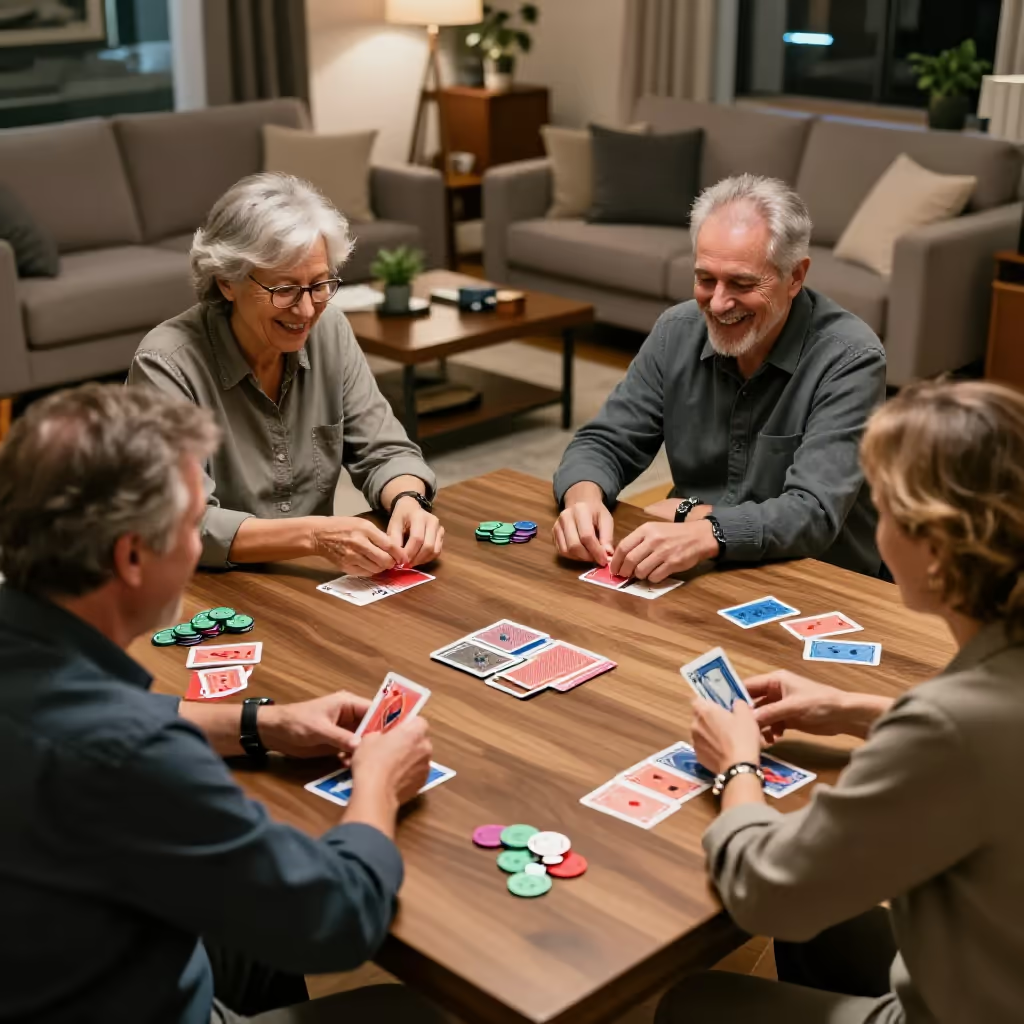
A group of people taking part together in a game (e.g. chess, cards) or an undertaking.
Nach dem Abendessen spielten wir noch eine Partei Karten.
After dinner, we played another round of cards.
Careful: 'die Partei' never means a celebration or social event. A party is 'die Party' or 'die Feier' in German. 'Die Partei' is usually a political organization.
Am Samstag gehe ich auf eine Party, nicht zu einer Partei.
On Saturday I'm going to a party, not to a political party.
In a political context, 'Partei' (party) is often used with verbs like 'wählen' (to vote for), 'gründen' (to found), or 'einer Partei beitreten' (to join a party) / 'in einer Partei sein' (to be in a party).
Viele junge Leute wollen einer politischen Partei beitreten.
Many young people want to join a political party.
The meaning 'Vertragspartner' (contracting party) or 'Prozessbeteiligter' (party to proceedings) is technical language. You can recognize this meaning through signal words like 'Vertrag' (contract), 'Gericht' (court), 'Anwalt' (lawyer), or 'Konflikt' (conflict).
Beide Parteien müssen den Vertrag unterschreiben.
Both parties must sign the contract.
The fixed expression is 'Partei ergreifen für' + accusative (to take sides with / in favor of). It means that you side with someone in an argument and support that person.
In dem Streit ergriff er Partei für seinen besten Freund.
In the argument, he took sides with his best friend.
When 'Partei' is mentioned in connection with a board game or card game, it means a single round or a single game.
Wollen wir noch eine Partei Schach spielen, bevor du gehst?
Do we want to play another game of chess before you leave?
page / side
Both Seite and Partei can refer to a group in a conflict or dispute. Seite mainly names the position within the opposition, while Partei places greater emphasis on the clearly defined participant, especially in a legal dispute. Use Seite for a general position and Partei for a specific participant.

Im Rechtsstreit erklärte die Partei der Mieter ihre Forderungen.
In the legal dispute, the tenants’ party stated its demands.
Im Streit um die Miete stellte sich die Nachbarin auf die Seite der Mieter.
In the dispute over the rent, the neighbor took the tenants’ side.