

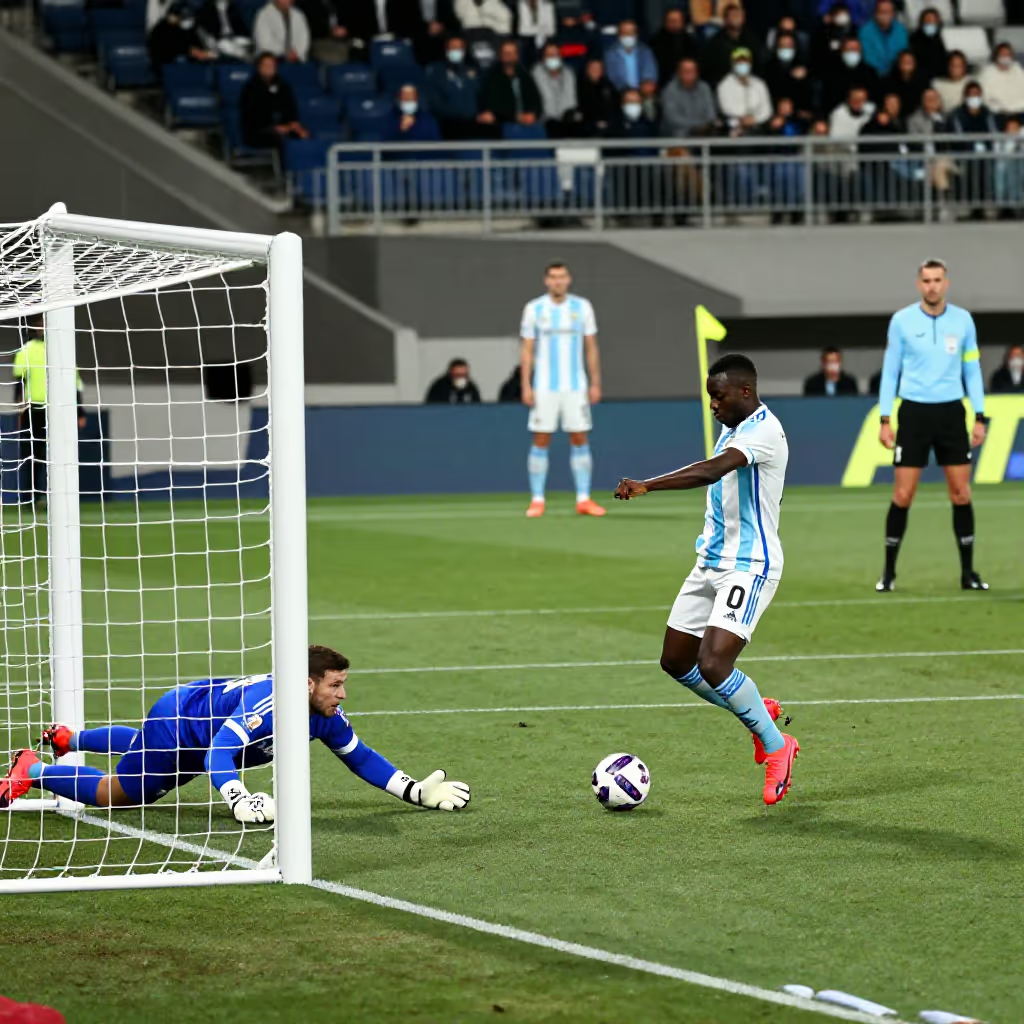
A penalty in certain sports such as soccer or ice hockey, where a player gets a direct chance to shoot at the goal from close range. In soccer, this is a penalty kick.
example
Im Finale wurde das Spiel durch einen Penalty in der letzten Minute entschieden.
In the final, the game was decided by a penalty in the last minute.
Usage tips
Origin of the word
'Penalty' is a loanword from English. It is therefore also pronounced in the English way and has become established as a technical term in German sports.
EXAMPLE
Der Schiedsrichter entschied auf Penalty.
The referee awarded a penalty.
Register and context
This word is a technical term from sports. It is used especially often in ice hockey or handball to describe a penalty situation.
EXAMPLE
Im Eishockey gibt es nach einem Foul oft einen Penalty.
In ice hockey, there is often a penalty after a foul.
Typical verbs
Typical verbs combined with 'Penalty' (penalty) are 'einen Penalty schießen' (to take a penalty), 'einen Penalty verwandeln' (to score from a penalty), or 'einen Penalty halten' (to save the shot).
EXAMPLE
Der Torwart konnte den Penalty sicher halten.
The goalkeeper was able to save the penalty confidently.
Compare with
near_synonym · confusable
Penalty vs Elfmeter
penalty
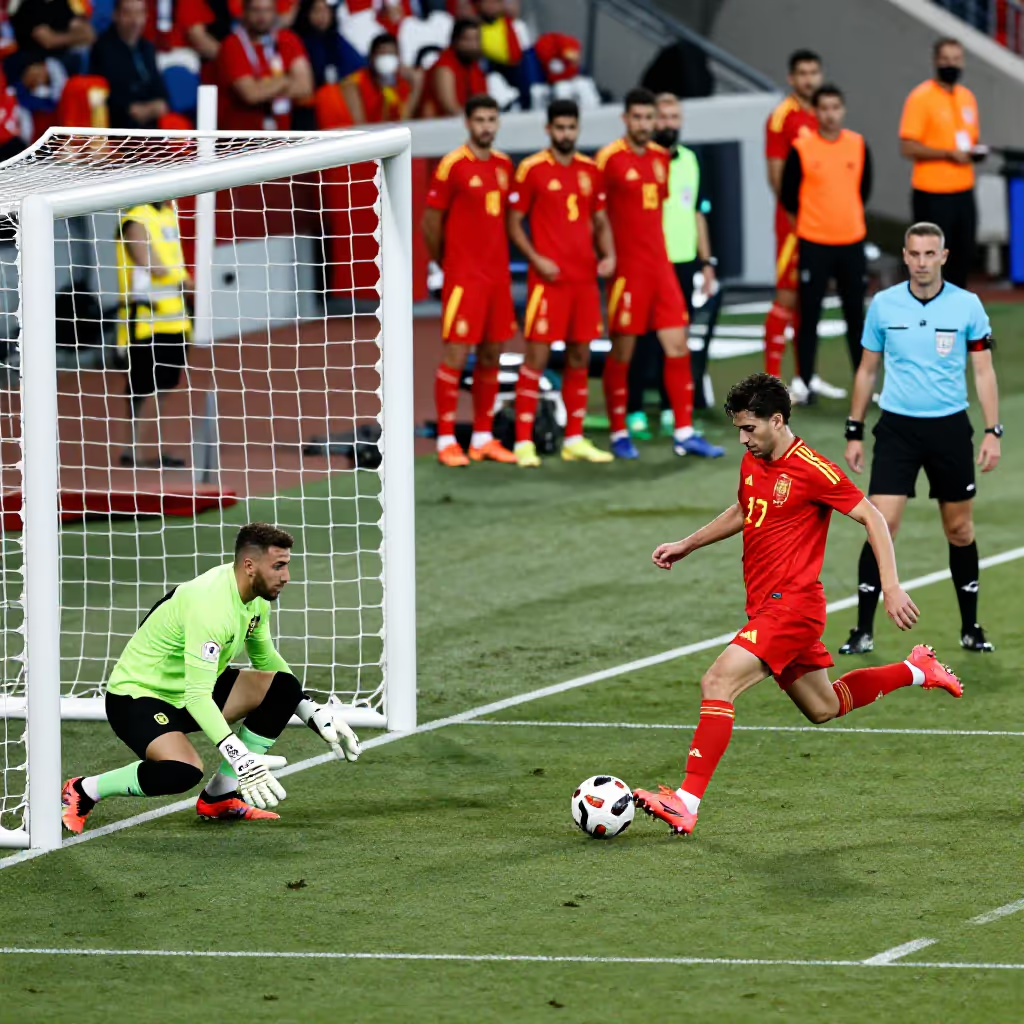
'Elfmeter' and 'Penalty' can mean the same thing in soccer: a direct shot at goal as a penalty. 'Elfmeter' is the normal and precise word in German soccer, because the ball is placed eleven meters from the goal. 'Penalty' is also understood, but it sounds different depending on the region or sport; in ice hockey, 'Penalty' is especially common. The words can be confused because both describe a direct chance to score after a penalty. In German soccer, 'Elfmeter' is usually more natural.
Penalty
Beim Eishockey verwandelte der Stürmer den Penalty sicher.
In ice hockey, the forward converted the penalty confidently.