
A historical writing material made from the unsplit, dried, and treated skin of animals, usually sheep, goats, or calves. Before paper became widespread, it was the most important writing material in Europe.
example
In der Bibliothek werden wertvolle mittelalterliche Handschriften auf Pergament aufbewahrt.
Valuable medieval manuscripts on parchment are kept in the library.
Usage tips
Correct preposition
Just as with paper, you use the preposition 'auf' (on) when talking about writing or printing on this material. So you say 'auf Pergament' (on parchment).
EXAMPLE
Die alte Urkunde wurde von Hand auf Pergament geschrieben.
The old document was written by hand on parchment.
Context clue
To distinguish the meanings, pay attention to the context. Words like 'Mittelalter' (Middle Ages), 'Handschrift' (manuscript), or 'historisch' (historical) point to the real animal material. Words like 'Urkunde' (certificate), 'Einladung' (invitation), or 'modern' point to the special paper.
EXAMPLE
Im Museum sahen wir eine Bibel aus dem Mittelalter, die auf Pergament geschrieben war.
In the museum, we saw a Bible from the Middle Ages that was written on parchment.
Typical collocations
In a historical context, 'Pergament' (parchment) is often associated with valuable or old things. Typical combinations are 'mittelalterliche Handschriften auf Pergament' (medieval manuscripts on parchment), 'kostbares Pergament' (precious parchment), or 'antike Schriftrollen' (ancient scrolls).
EXAMPLE
Der Mönch verbrachte Jahre damit, die Texte auf Pergament zu kopieren.
The monk spent years copying the texts onto parchment.
Typical use
When the modern specialty paper is meant, it is often used for official or ceremonial occasions. Common combinations are 'eine Urkunde auf Pergament' (a certificate on parchment), 'eine Speisekarte auf Pergament' (a menu on parchment), or 'edles Pergamentpapier' (fine parchment paper).
EXAMPLE
Das Restaurant hatte eine sehr stilvolle Speisekarte auf Pergament.
The restaurant had a very stylish menu on parchment paper.
Compare with
near_synonym · confusable
Pergament vs Papier
paper
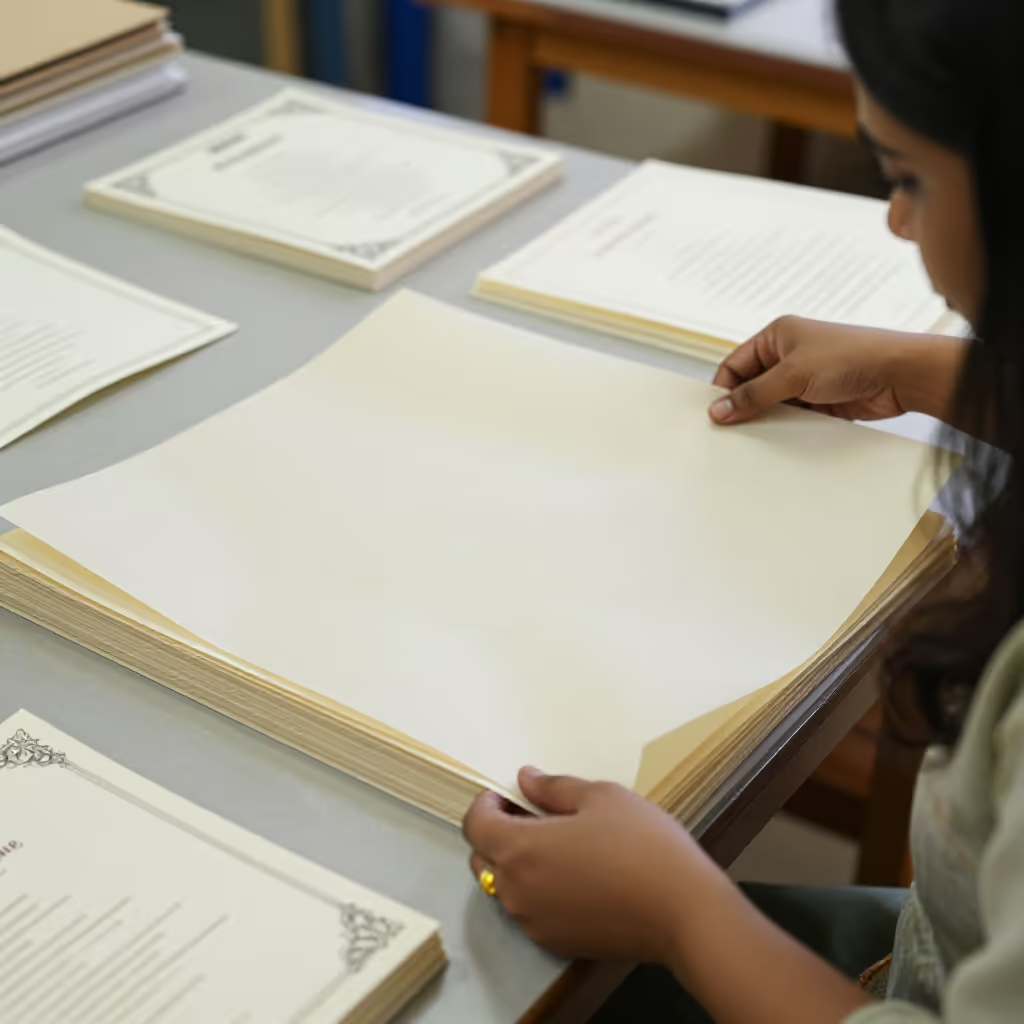
'das Papier' and 'das Pergament' can both be materials for writing or printing. 'Papier' is the normal everyday material, for example for letters, notebooks, or printers. 'Pergament' is more specific: it can mean an old writing material made from animal skin, or a high-quality paper that looks especially old or elegant. Learners may confuse the words because modern parchment can also be used like paper. In everyday life, you almost always say 'Papier'; 'Pergament' fits better with old texts, certificates, or special invitations.
Pergament
Die Einladung zur Feier wurde auf hellem Pergament gedruckt.
The invitation to the celebration was printed on light-colored parchment.