

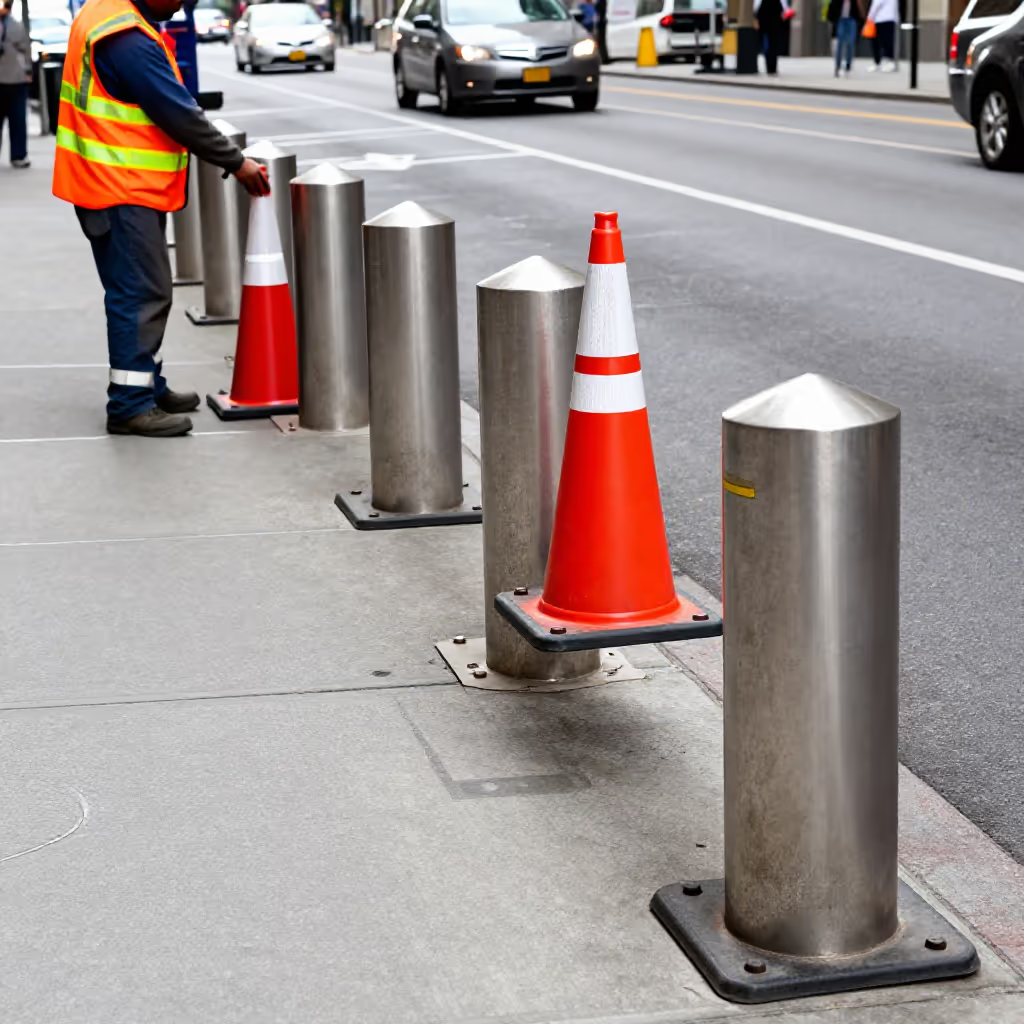
permanent
Continuing, uninterrupted, or remaining for a long time; lasting.
EXAMPLE
Wegen des Wasserschadens ist die Straße permanent gesperrt.
Because of the water damage, the road is permanently closed.
Loading your saved state.
Continuing, uninterrupted, or remaining for a long time; lasting.
Wegen des Wasserschadens ist die Straße permanent gesperrt.
Because of the water damage, the road is permanently closed.
'Permanent' can stand as an adjective before a noun, describe a verb as an adverb, or be used with 'sein' (to be). This flexibility makes it very useful in formal contexts.
Wir suchen eine permanente Lösung für das Problem.
We are looking for a permanent solution to the problem.
Be careful with hairstyles: a perm, often called a 'perm' or 'permanent wave' in English, is called 'die Dauerwelle' in German, not 'die Permanente'.
Sie hat sich beim Friseur eine Dauerwelle machen lassen.
She got a perm at the hairdresser's.
The word is often combined with states or situations. Typical collocations are 'permanenter Stress' (permanent stress), 'permanente Überwachung' (permanent surveillance), 'eine permanente Ausstellung' (a permanent exhibition), or 'permanent verfügbar sein' (to be permanently available).
Durch seine Arbeit steht er unter permanentem Stress.
Because of his work, he is under permanent stress.
'Permanent' belongs more to written language or to a more formal style. It often sounds more objective and technical.
Die Datenbank wird permanent aktualisiert.
The database is updated permanently.
constant
Ständig and permanent can both express an ongoing presence or a recurring event. Ständig also allows for frequent repetitions with short pauses, while permanent tends to emphasize a continuous, uninterrupted presence or something lasting a long time. Use permanent when no interruption or temporary state is intended.

Im Büro ist permanent Lärm, weil die laute Maschine ohne Pause läuft.
The office is permanently noisy because the loud machine runs without a break.
Im Büro ist ständig Lärm, weil immer wieder jemand die Tür zuschlägt.
There is constant noise in the office because someone keeps slamming the door.