

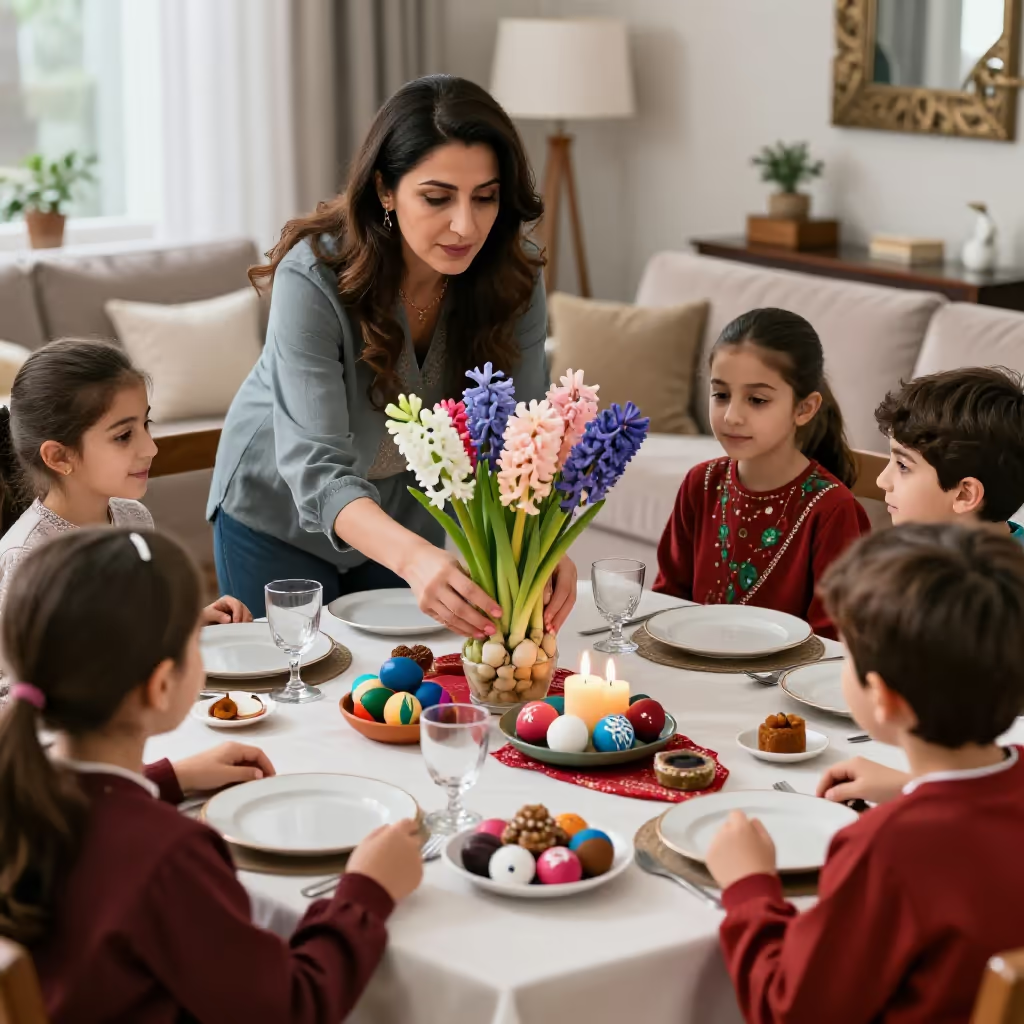
Refers to Persia (modern-day Iran), its people, its culture, or the Persian language (Farsi).
example
Zum Nachtisch gab es ein persisches Dessert mit Safran und Pistazien.
For dessert, there was a Persian dessert with saffron and pistachios.
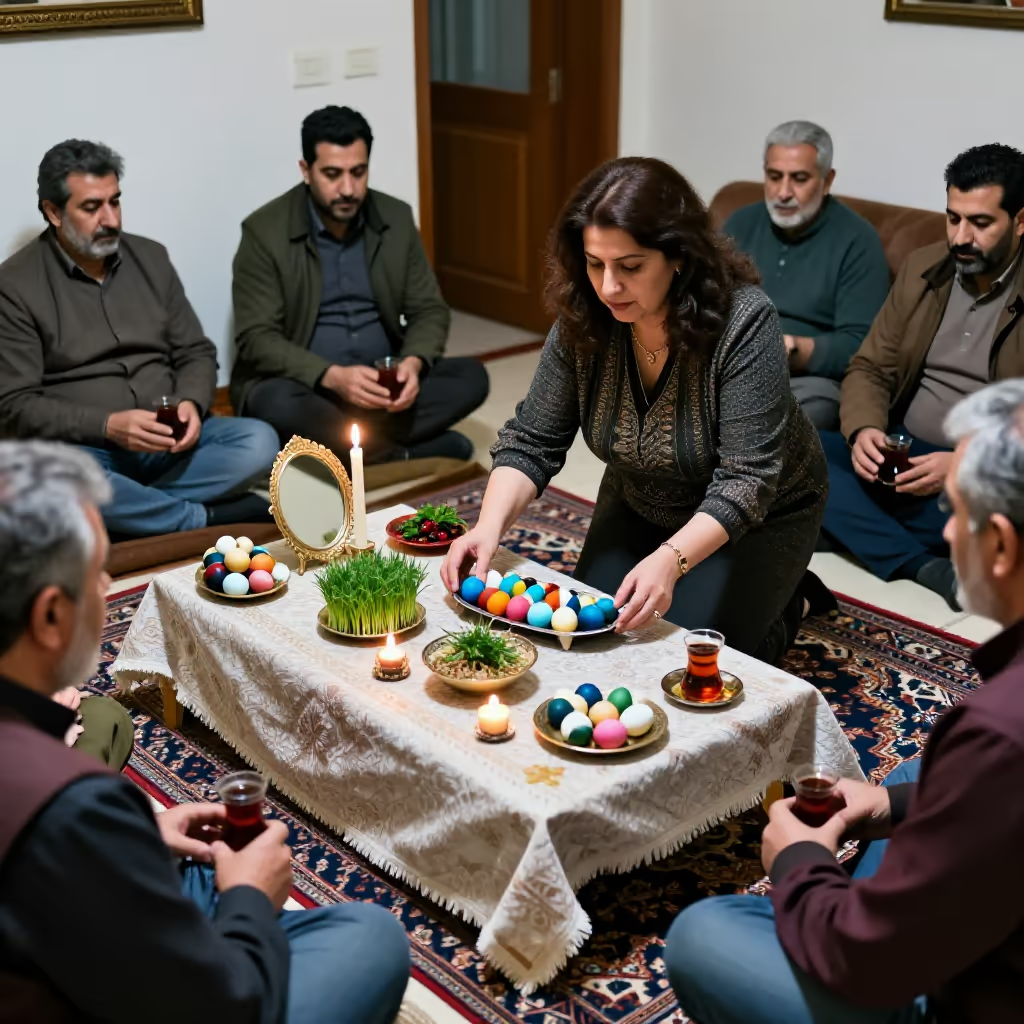
Usage tips
Word formation
The ending '-isch' is often used in German to form adjectives from geographic names or countries. So 'Persien' (Persia) becomes the adjective 'persisch' (Persian).
EXAMPLE
Sie lernt die persische Sprache, weil ihre Familie aus dem Iran kommt.
She is learning the Persian language because her family comes from Iran.
Lowercase spelling
Adjectives derived from geographic names and ending in '-isch' are written in lowercase. So you write 'der persische Teppich' (the Persian rug), not 'der Persische Teppich'.
EXAMPLE
Ich liebe die persische Küche wegen ihrer vielfältigen Gewürze.
I love Persian cuisine because of its varied spices.
Typical collocations
The adjective 'persisch' (Persian) is often connected with cultural or country-specific things. Common combinations are: persischer Teppich (Persian rug), persische Kultur (Persian culture), persische Dichtung (Persian poetry), or das Persische Reich (the Persian Empire).
EXAMPLE
Ein echter persischer Teppich kann sehr teuer sein.
A genuine Persian rug can be very expensive.
Compare with
confusable
persisch vs arabisch
Arabic
'arabisch' and 'persisch' can both be connected with languages and cultures from the Near or Middle East. 'arabisch' refers to the Arab world or the Arabic language. 'persisch' refers to Persia, modern-day Iran, its culture, or the Persian language, Farsi. The words are sometimes confused because the regions are close to each other. The important point is: Persian is not Arabic, and Iran is not an Arab country.
persisch
In der Pause hat Ali ein persisches Lied vorgespielt.
During the break, Ali played a Persian song.
arabisch
Laura übersetzt bei der Arbeit einen kurzen arabischen Text.