

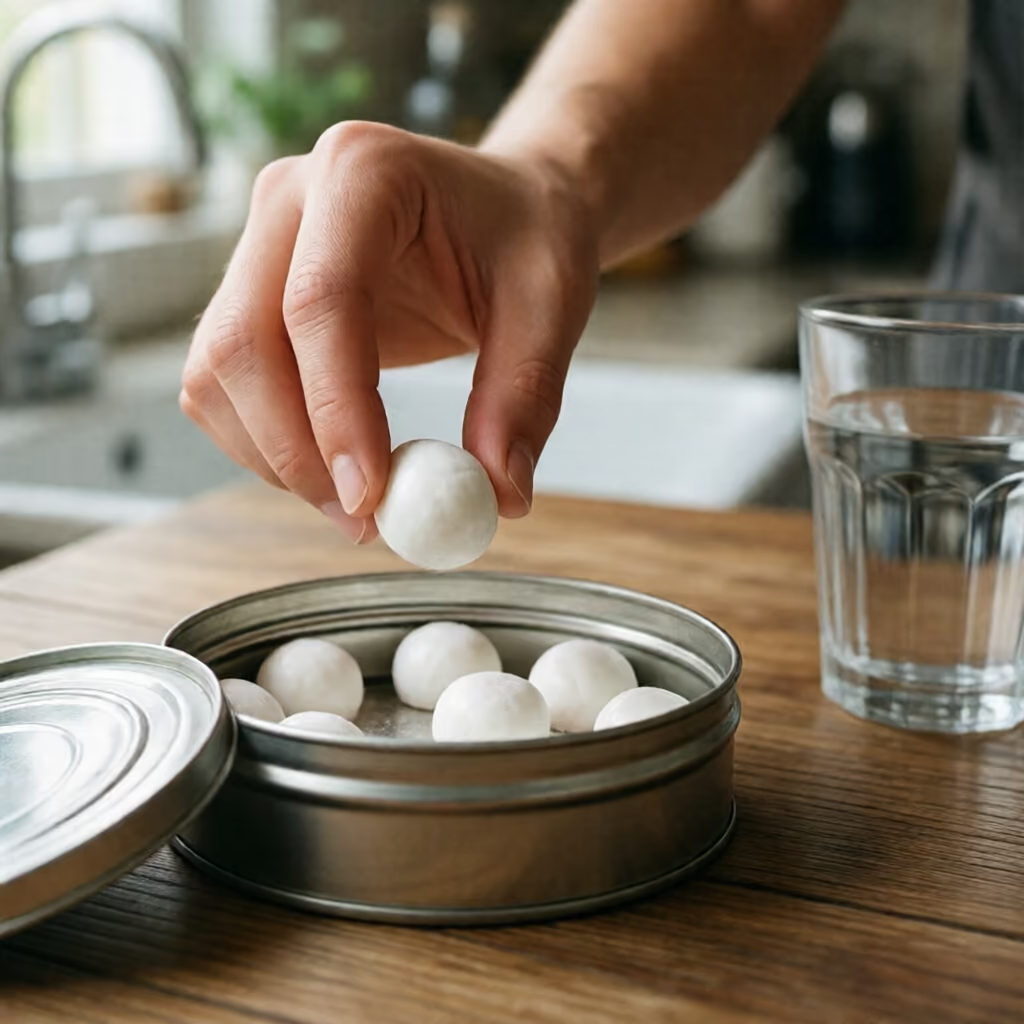
das Pfefferminz
peppermint candy
A candy with the refreshing, slightly spicy taste of peppermint.
Sie nahm ein Pfefferminz aus der Dose und ließ es im Mund zergehen.
She took a peppermint candy from the tin and let it dissolve in her mouth.
peppermint
das Pfefferminz, die Pfefferminze
Loading your saved state.

peppermint candy
A candy with the refreshing, slightly spicy taste of peppermint.
Sie nahm ein Pfefferminz aus der Dose und ließ es im Mund zergehen.
She took a peppermint candy from the tin and let it dissolve in her mouth.
| gender | neuter das |
|---|---|
| plural | die Pfefferminze |
| genitive | des Pfefferminzes |
| singular | plural | |
|---|---|---|
| nominative | das Pfefferminz | die Pfefferminze |
| accusative | das Pfefferminz | die Pfefferminze |
| dative | dem Pfefferminz | den Pfefferminzen |
| genitive | des Pfefferminzes | der Pfefferminze |
The article changes with the case; it is shown in colour.
| gender | masculine der |
|---|---|
| plural | die Pfefferminz |
| genitive | des Pfefferminzes |
| singular | plural | |
|---|---|---|
| nominative | der Pfefferminz | die Pfefferminz |
| accusative | den Pfefferminz | die Pfefferminz |
| dative | dem Pfefferminz | den Pfefferminz |
| genitive | des Pfefferminzes | der Pfefferminz |
The article changes with the case; it is shown in colour.
Typical expressions include 'ein Pfefferminz lutschen' (to suck on a peppermint candy) and 'ein Pfefferminz im Mund zergehen lassen' (to let a peppermint candy dissolve in your mouth). Both describe how to slowly dissolve the candy in your mouth.
Auf der Fahrt lutschte sie ein Pfefferminz.
She sucked on a peppermint candy during the journey.
You can use 'jemandem ein Pfefferminz anbieten' (to offer someone a peppermint candy) to describe wanting to share a candy with someone. The person you offer it to is in the dative case.
Sie bot ihrem Kollegen ein Pfefferminz an.
She offered her colleague a peppermint candy.
The expression 'ein Pfefferminz für frischen Atem' (a peppermint candy for fresh breath) is common in everyday speech and advertising. 'für frischen Atem' (for fresh breath) states the intended purpose.
Nach dem Mittagessen nahm er ein Pfefferminz für frischen Atem.
After lunch, he took a peppermint candy for fresh breath.