

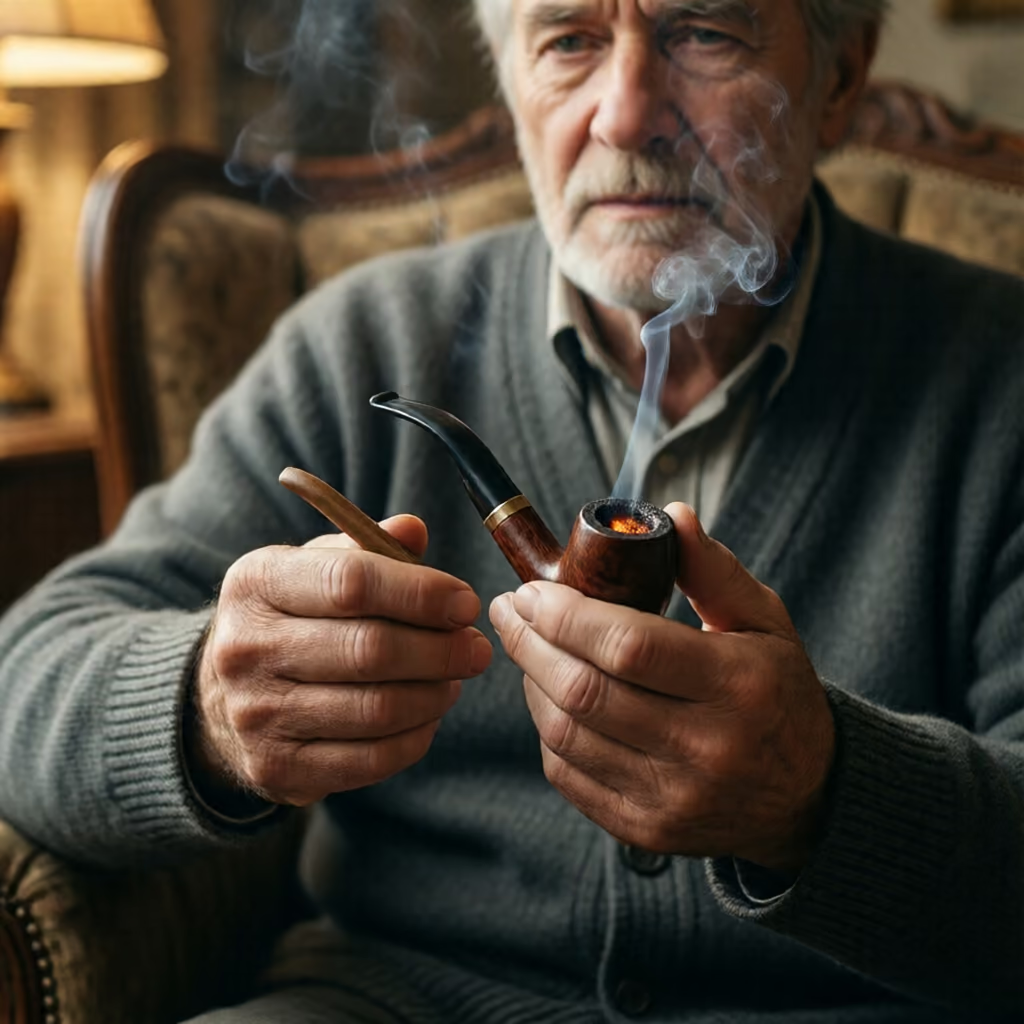
die Pfeife
pipe
A device for smoking tobacco. It usually consists of a bowl in which the tobacco burns and a stem with a mouthpiece.
EXAMPLE
Mein Großvater raucht abends gern eine Pfeife.
My grandfather enjoys smoking a pipe in the evenings.
pipe / whistle
die Pfeife, die Pfeifen
Loading your saved state.
pipe
A device for smoking tobacco. It usually consists of a bowl in which the tobacco burns and a stem with a mouthpiece.
Mein Großvater raucht abends gern eine Pfeife.
My grandfather enjoys smoking a pipe in the evenings.
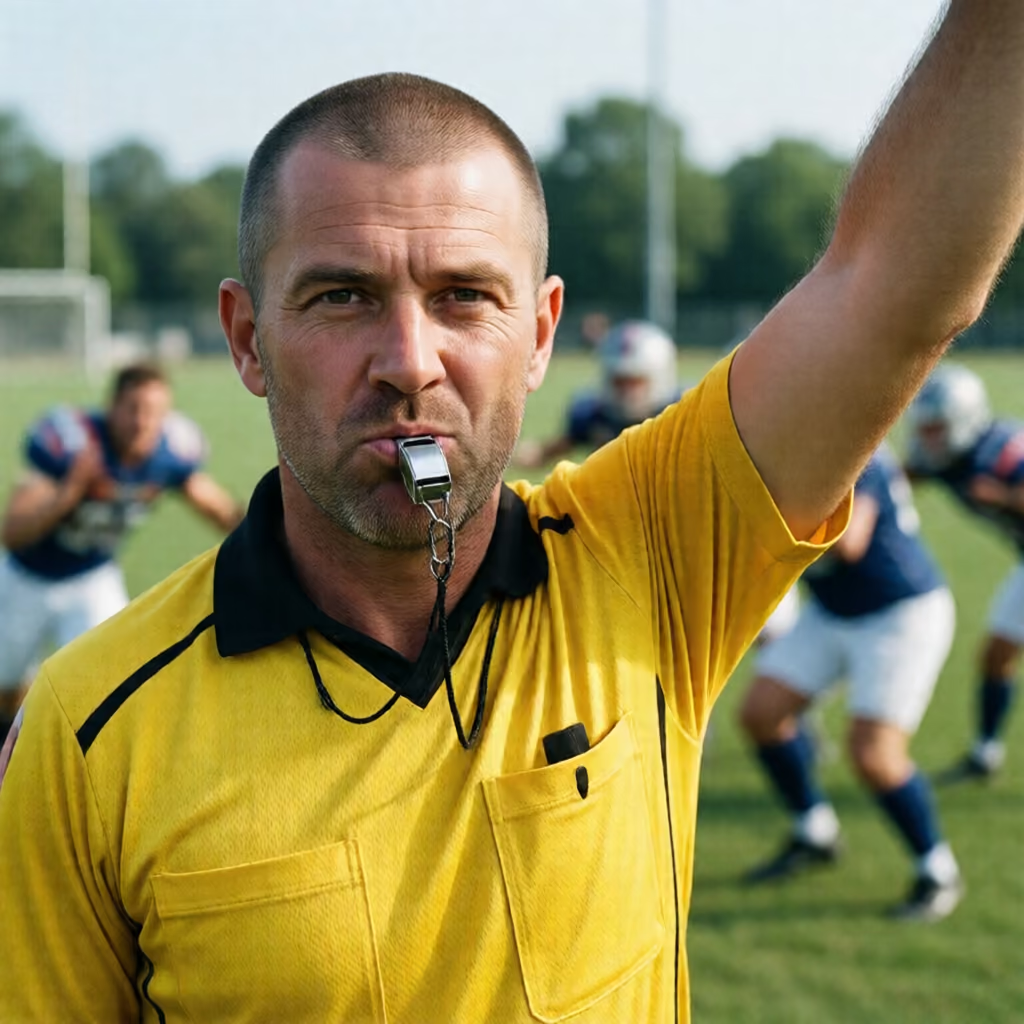
whistle
A small device that produces a high, loud sound when you blow into it. It is used especially for giving signals.
Der Schiedsrichter blies in seine Pfeife und beendete das Spiel.
The referee blew his whistle and ended the game.

loser / incompetent person
Colloquial and derogatory: a person considered incompetent or who performs a task very poorly.
Unser neuer Torwart ist eine totale Pfeife und lässt jeden Ball durch.
Our new goalkeeper is completely useless and lets every ball through.
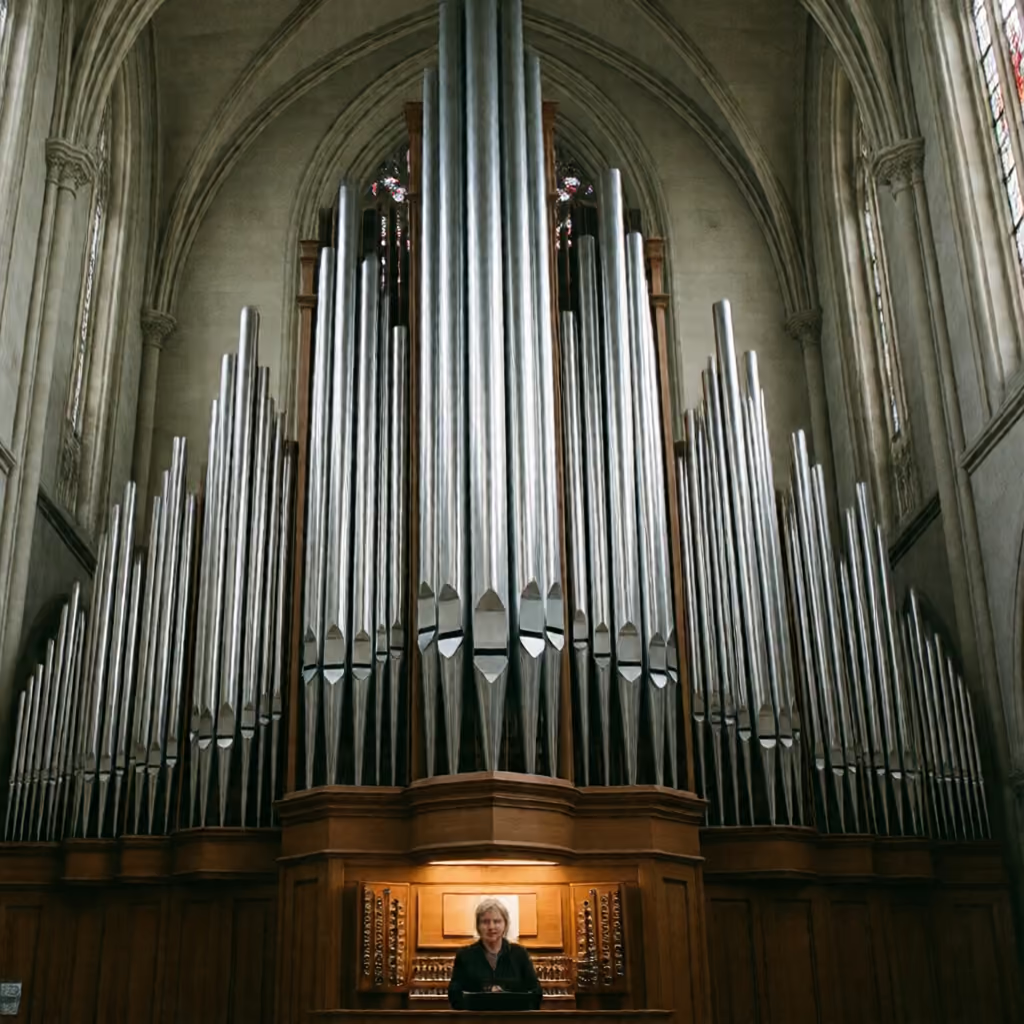
organ pipe
A pipe in which a flow of air produces a musical note, especially as part of an organ.
Die größte Pfeife dieser Orgel erzeugt einen besonders tiefen Ton.
The largest pipe in this organ produces an especially deep note.

to dance to someone's tune
To follow another person's wishes or orders completely. The expression usually criticizes this dependence.
Ich werde nicht länger nach deiner Pfeife tanzen und alles tun, was du verlangst.
I won't dance to your tune any longer and do everything you demand.
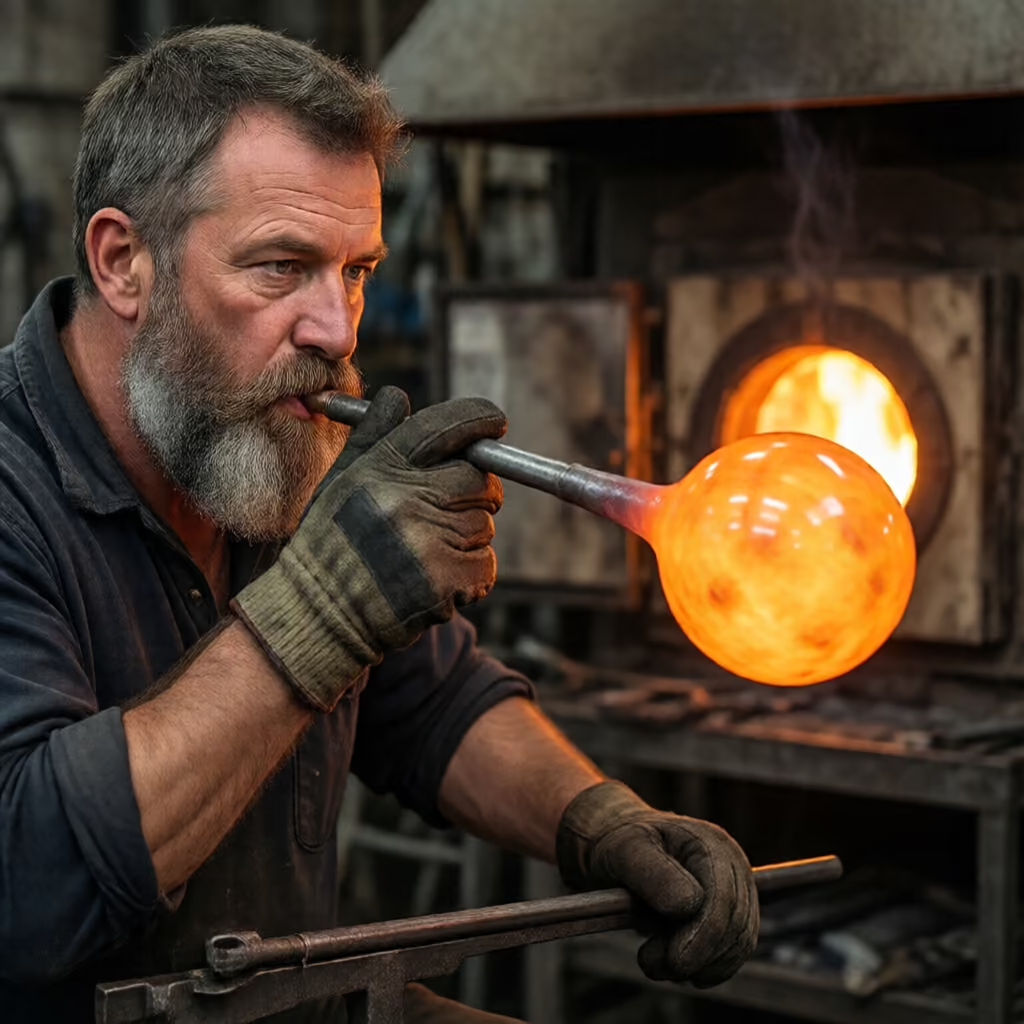
blowpipe
In glassmaking: a long metal tube used to collect molten glass and shape it into a hollow object by blowing into it.
Die Glasmacherin nahm mit der Pfeife flüssiges Glas aus dem Ofen und blies es zu einer Kugel.
The glassmaker used the blowpipe to take liquid glass from the furnace and blew it into a sphere.
| gender | feminine die |
|---|---|
| plural | die Pfeifen |
| genitive | der Pfeife |
| singular | plural | |
|---|---|---|
| nominative | die Pfeife | die Pfeifen |
| accusative | die Pfeife | die Pfeifen |
| dative | der Pfeife | den Pfeifen |
| genitive | der Pfeife | der Pfeifen |
The article changes with the case; it is shown in colour.
With 'Pfeife' (pipe / whistle), the accompanying words indicate the intended meaning: 'Tabak' (tobacco) and 'rauchen' (to smoke) point to the smoking device, 'Schiedsrichter' (referee) and 'Signal' (signal) to the instrument, 'Orgel' (organ) to a part of the organ, and 'Glashütte' (glassworks) to the glassmaking tool. When used to describe an incompetent person, 'Pfeife' is usually part of a derogatory judgment.
Im Museum sahen wir eine alte Pfeife neben einer Sammlung von Tabakdosen.
At the museum, we saw an old pipe next to a collection of tobacco tins.
Die Bademeisterin gab mit der Pfeife ein Signal, und alle verließen das Becken.
The lifeguard gave a signal with the whistle, and everyone left the pool.
For the smoking device, 'Pfeife' (pipe) frequently occurs with verbs such as 'rauchen' (to smoke), 'stopfen' (to fill) and 'anzünden' (to light). 'Tabak in eine Pfeife stopfen' (to fill a pipe with tobacco) is also a typical collocation.
Er stopfte die Pfeife mit aromatischem Tabak und setzte sich ans Fenster.
He filled the pipe with aromatic tobacco and sat down by the window.
The signal whistle is often used in situations where a short, loud sound is meant to attract attention. Typical collocations are 'in die Pfeife blasen' (to blow into the whistle) and 'in die Pfeife pusten' (to blow into the whistle).
Die Trainerin blies kräftig in die Pfeife und unterbrach das Training.
The coach blew hard into the whistle and interrupted the training session.
When used to describe a person, 'Pfeife' (loser / incompetent person) is colloquial and clearly derogatory. The word is often intensified by 'eine totale' (a total) or 'eine komplette' (a complete).
Als Projektleiter ist er eine komplette Pfeife.
As a project manager, he is completely useless.
In organ music, 'Pfeife' (organ pipe) often appears in compound nouns or together with details about pitch and sound. Typical collocations are 'Orgelpfeife' (organ pipe), 'eine Pfeife stimmen' (to tune a pipe) and 'eine Pfeife ersetzen' (to replace a pipe).
Der Orgelbauer musste eine beschädigte Pfeife stimmen und anschließend wieder einbauen.
The organ builder had to tune a damaged pipe and then install it again.
In 'nach jemandes Pfeife tanzen' (to dance to someone's tune), 'Pfeife' (tune) follows 'nach' in the dative. The person whose wishes take priority is in the genitive or is expressed with a possessive article, for example 'nach der Pfeife seines Chefs' (to dance to his boss's tune) or 'nach seiner Pfeife' (to dance to his tune). The expression is usually used critically.
Im Büro tanzt niemand gern nach der Pfeife des neuen Abteilungsleiters.
Nobody in the office likes dancing to the new department head's tune.
In glassmaking, 'Pfeife' (blowpipe) refers to a tool, so the word is found mainly in descriptions of glassblowing or in museum texts. Typical collocations are 'mit der Pfeife Glas aufnehmen' (to collect glass with the blowpipe) and 'durch die Pfeife blasen' (to blow through the blowpipe).
Durch die lange Pfeife blies der Glasbläser vorsichtig Luft in die glühende Glasmasse.
Using the long blowpipe, the glassblower carefully blew air into the glowing glass mass.