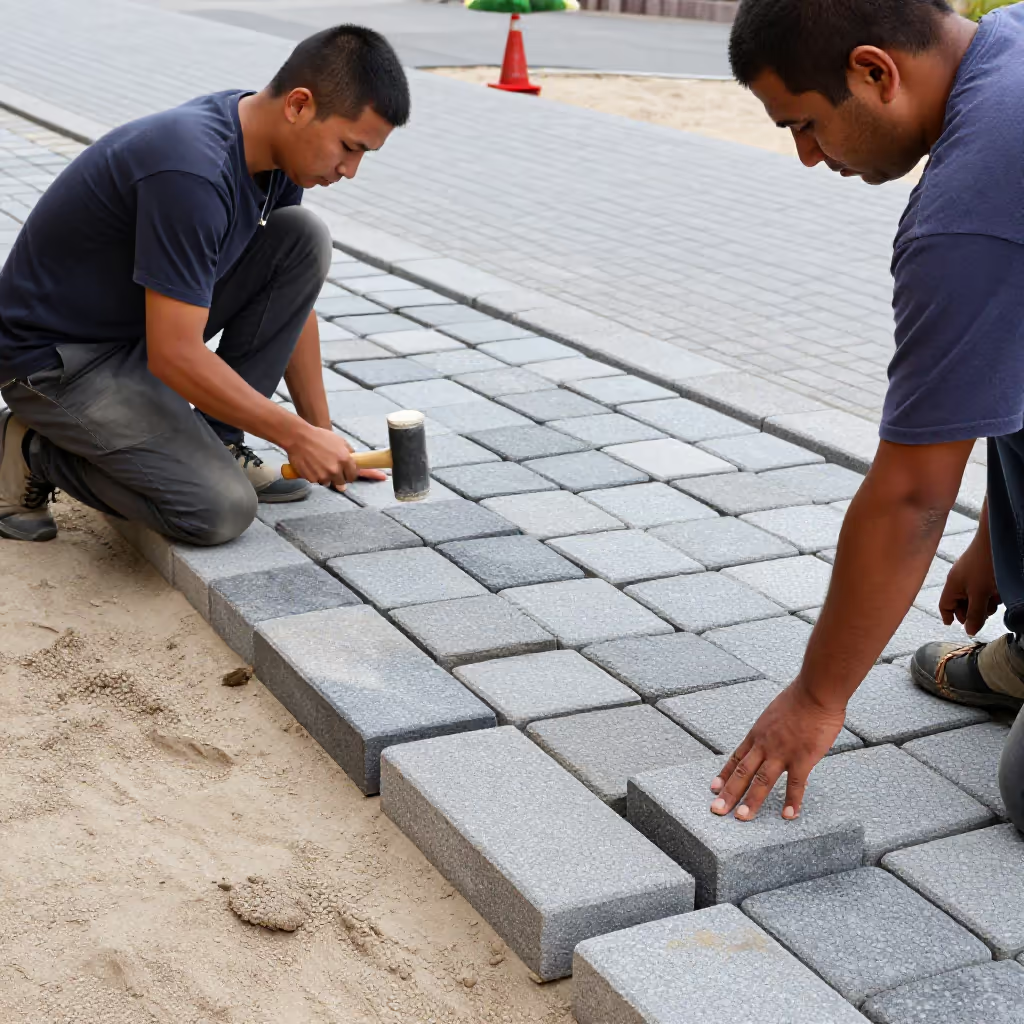
To cover a surface such as a street, path, or square with stones (paving stones) in order to make it solid and suitable for walking or driving on.
example
Die Gemeinde lässt den alten Marktplatz neu pflastern.
The municipality is having the old market square repaved.

Usage tips
Word family
The verb 'pflastern' (to pave) is derived from the noun 'das Pflaster' (pavement/paving), which here means 'Pflasterstein' (paving stone) or 'Straßenbelag' (road surface). So it describes the activity of covering ground with paving stones.
EXAMPLE
Früher wurden viele alte Gassen mit Kopfsteinpflaster gepflastert.
In the past, many old alleys were paved with cobblestones.
Context clues
You can recognize the literal meaning from concrete places like 'Straße' (street), 'Weg' (path), or 'Platz' (square). The figurative meaning is almost always used in the passive form 'ist mit etwas gepflastert' (is paved with something) and with abstract nouns like 'Erfolg' (success), 'Schwierigkeiten' (difficulties), or 'Leichen' (corpses).
EXAMPLE
Die Einfahrt zum Haus wurde neu gepflastert.
The driveway to the house was repaved.
Sentence structure and usage
In the literal meaning, the thing that is being paved is in the accusative. The material is also often named with the preposition 'mit' (with) and the dative.
EXAMPLE
Die Bauarbeiter pflastern den Gehweg mit neuen Steinen.
The construction workers are paving the sidewalk with new stones.
Fixed expression
The figurative meaning is used almost exclusively in the fixed expression 'jemandes Weg ist mit etwas gepflastert' (someone's path is paved with something). This construction describes which circumstances or sacrifices accompany a life path or process.
EXAMPLE
Der Weg in den Krieg ist oft mit guten Absichten gepflastert.
The road to war is often paved with good intentions.
Compare with
near_synonym · confusable
pflastern vs belegen
to book / prove / top
'belegen' and 'pflastern' can both mean that a surface is covered with something. The difference lies in the material and the context. Here, 'belegen' is used mainly with food, for example when you top bread with cheese or sausage. 'pflastern' is used for paths, streets, or squares that are made solid with paving stones. Figuratively, 'pflastern' can also mean that something is very densely covered. Learners may confuse the words because both have to do with 'bedecken' (to cover). As a practical rule: you use 'belegen' for bread, and 'pflastern' for paths.
pflastern
Die Arbeiter pflastern den Weg zum Haus mit grauen Steinen.
The workers are paving the path to the house with gray stones.
belegen
Für die Pause belegt Mehmet zwei Brötchen mit Käse und Tomaten.
For the break, Mehmet tops two rolls with cheese and tomatoes.