


verlegen
to move / reschedule
To move something to another place or to another time.
EXAMPLE
Können wir unseren Termin auf nächste Woche verlegen?
Can we move our appointment to next week?
to move / lay / misplace
Loading your saved state.
to move / reschedule
To move something to another place or to another time.
Können wir unseren Termin auf nächste Woche verlegen?
Can we move our appointment to next week?
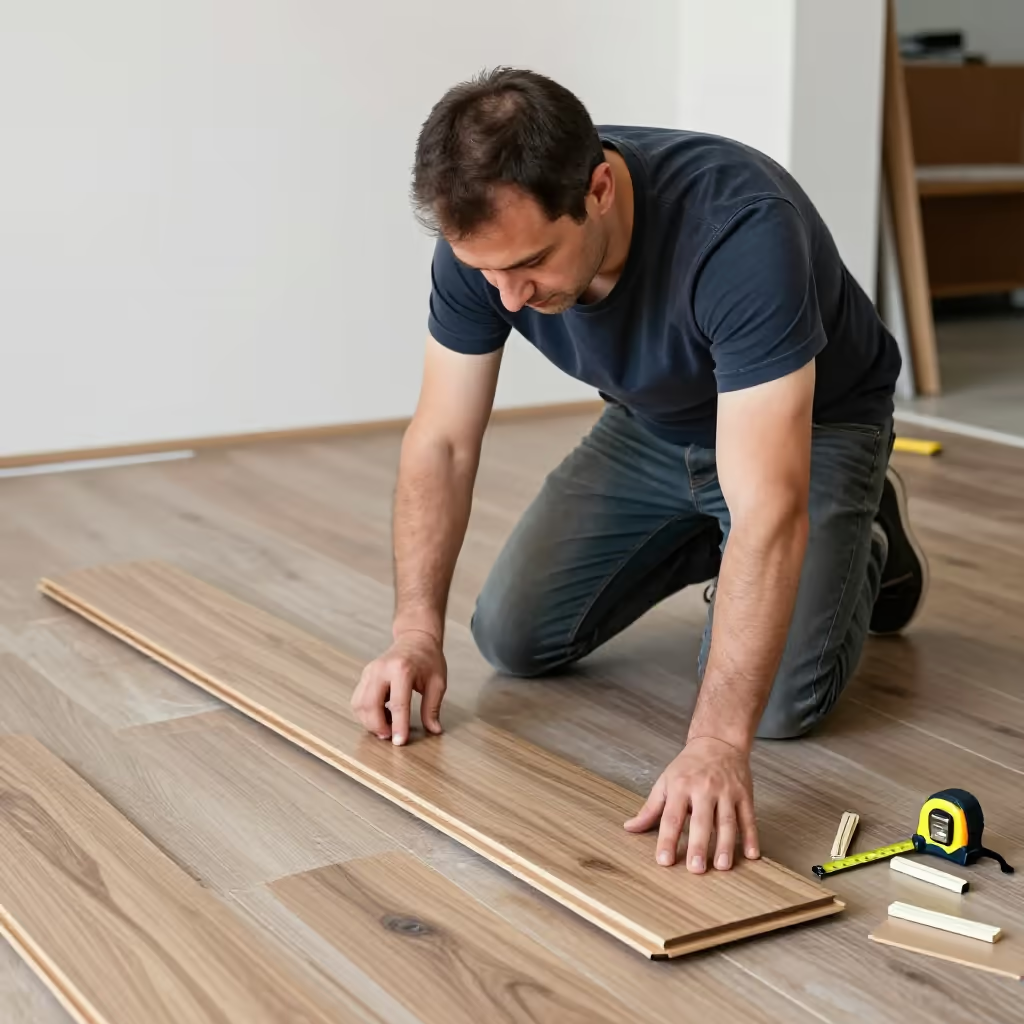
to lay / install
To place or install something on a surface, especially flooring, cables, or pipes.
Die Elektriker haben im ganzen Haus neue Kabel verlegt.
The electricians laid new cables throughout the house.

to misplace
To put an object somewhere and then no longer remember where that place is.
Ich glaube, ich habe meinen Schlüssel schon wieder verlegt.
I think I've misplaced my key again.
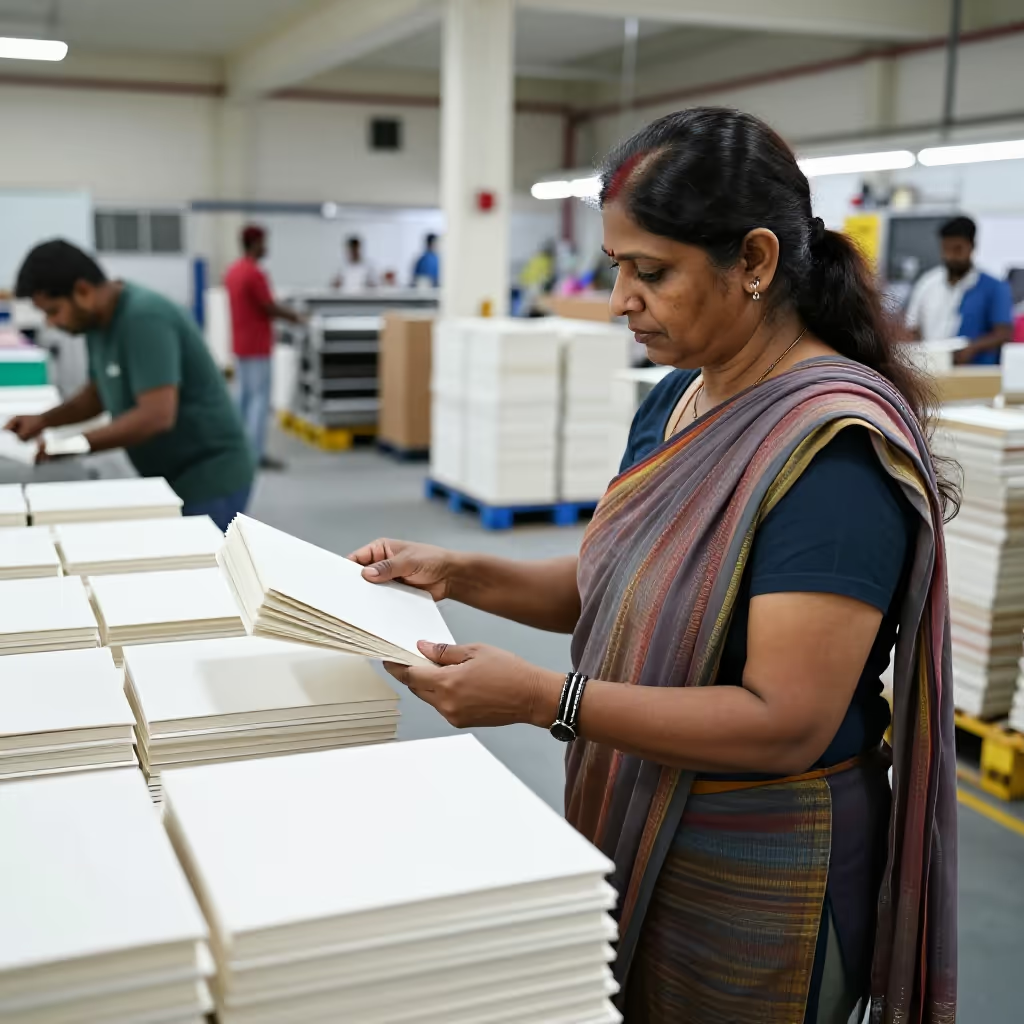
to publish
As a publishing house, to take on the publication and distribution of books, magazines, or other media.
Dieser bekannte Verlag verlegt hauptsächlich Kriminalromane.
This well-known publishing house mainly publishes crime novels.
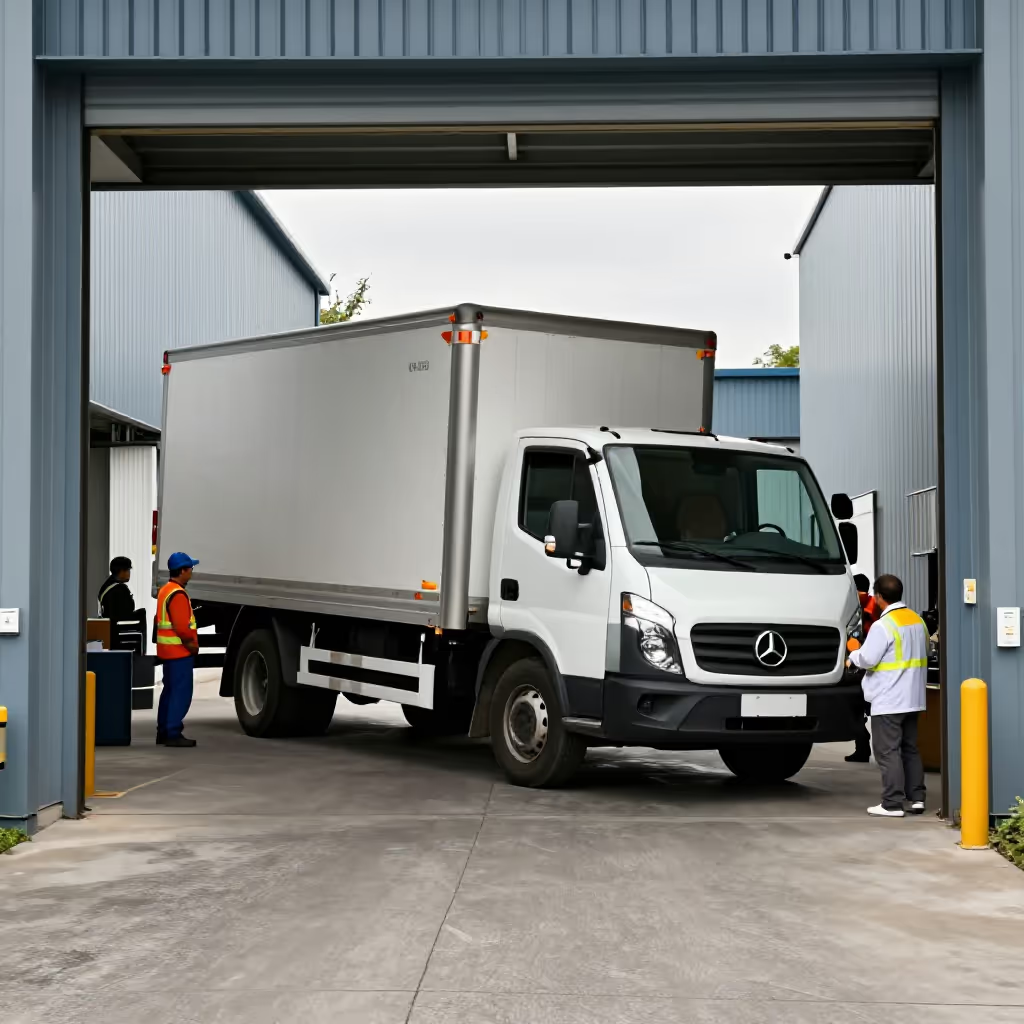
to block
To block or obstruct a path, access road, or passage.
Ein umgestürzter Baum verlegt die einzige Zufahrtsstraße zum Dorf.
A fallen tree is blocking the only access road to the village.
'Verlegen' is an inseparable verb. The prefix 'ver-' always remains attached to the stem 'legen' and is not placed at the end of the sentence.
Er verlegt gerade das neue Laminat im Wohnzimmer.
He is laying the new laminate in the living room right now.
You can recognize the meaning of 'verlegen' from the object: you 'verlegt' an appointment (move/reschedule it), you 'verlegt' a key (misplace it), and you 'verlegt' a carpet (lay/install it).
Wir müssen das Treffen leider verlegen.
Unfortunately, we have to reschedule the meeting.
When you move or reschedule an appointment or event, use the preposition 'auf' followed by an accusative to indicate the new time.
Das Konzert wurde wegen des schlechten Wetters auf nächsten Monat verlegt.
The concert was moved to next month because of the bad weather.
In the context of construction work or renovations, 'verlegen' means to install something. Typical objects are cables, pipes, lines, tiles, or floor coverings such as carpet and parquet.
Ein Fachmann sollte die elektrischen Kabel verlegen.
A professional should lay the electrical cables.
This meaning is used for small personal objects that you put somewhere and then can no longer find. Typical examples are: 'die Brille verlegen' (to misplace one's glasses), 'den Schlüssel verlegen' (to misplace the key), or 'die Geldbörse verlegen' (to misplace the wallet).
Hast du mein Handy gesehen? Ich habe es anscheinend verlegt.
Have you seen my phone? I seem to have misplaced it.
When the subject is a publishing house ('der Verlag'), 'verlegen' always means 'publizieren' (to publish). It is then about the publication of books, magazines, or music.
Der Thienemann-Verlag verlegt viele bekannte Kinderbücher.
Thienemann Verlag publishes many well-known children's books.
to lose
Verlegen means that you put an object somewhere yourself and then forgot where you put it. Verlieren is more general and can more strongly suggest that the object went missing while you were out. So when a key is probably still somewhere at home, Verlegen is the better choice.

Zu Hause habe ich meinen Schlüssel verlegt.
I misplaced my key at home.
Auf der Zugfahrt habe ich meinen Schlüssel verloren.
I lost my key on the train journey.