

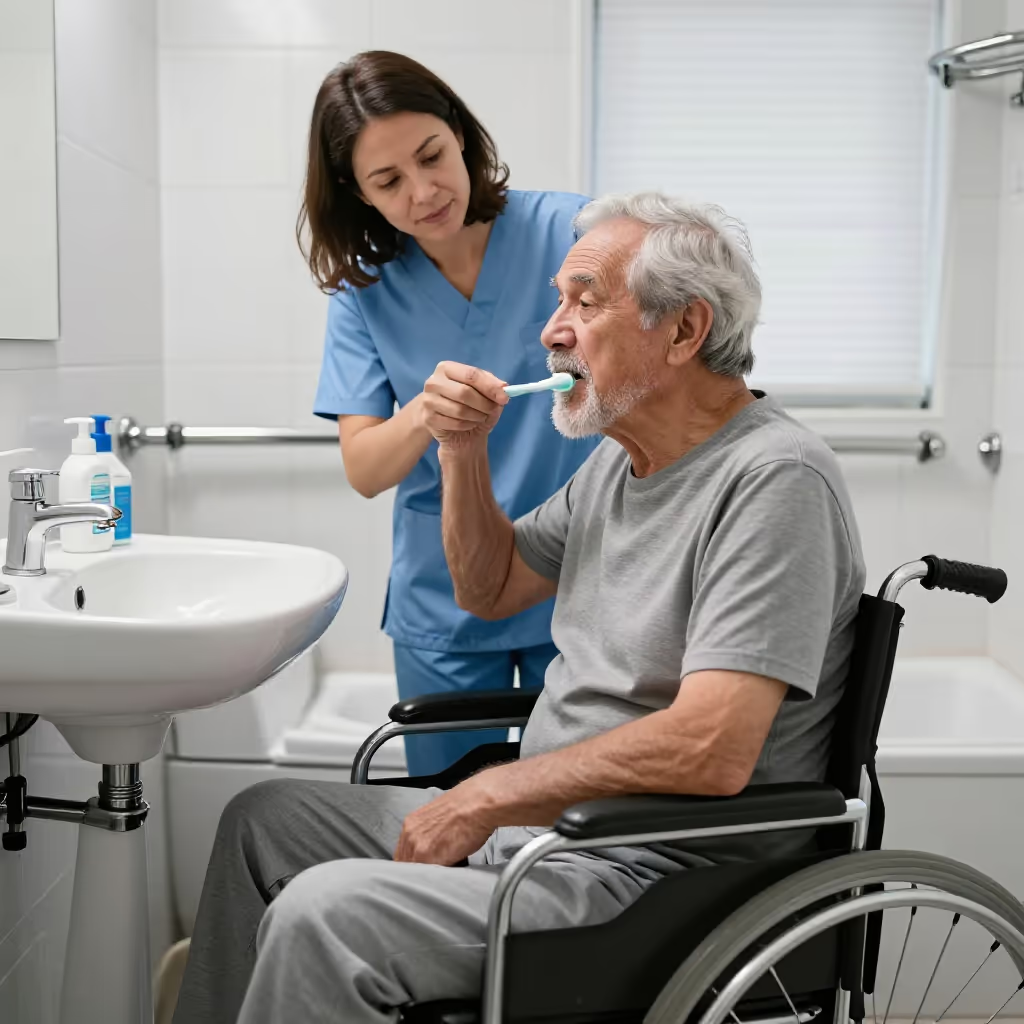
A male person who, due to a physical, mental, or psychological illness or disability, permanently needs help with the ordinary and regularly recurring tasks of daily life. It is a nominalized adjective.
example
Als anerkannter Pflegebedürftiger hat er Anspruch auf Leistungen aus der Pflegeversicherung.
As a recognized person in need of care, he is entitled to benefits from long-term care insurance.
Usage tips
Word structure
This word is a nominalized adjective. It is derived from the adjective 'pflegebedürftig' (in need of care), which is composed of 'Pflege' (care) and 'bedürftig' (in need of something).
EXAMPLE
Nach dem Unfall war er vorübergehend pflegebedürftig.
After the accident, he was temporarily in need of care.
Grammar: declension
Because it is a nominalized adjective, it is declined like an adjective. The ending changes depending on the article, case, and gender.
EXAMPLE
Ein Pflegebedürftiger benötigt oft Hilfe im Alltag.
A person in need of care often needs help in everyday life.
Register
'Pflegebedürftiger' (person in need of care) is a formal and official term used mainly in administration, insurance, and the medical field.
EXAMPLE
Um Leistungen zu erhalten, muss man offiziell als Pflegebedürftiger eingestuft werden.
In order to receive benefits, one must be officially classified as a person in need of care.
Compare with
near_synonym · confusable
Pflegebedürftige vs Patient
patient
'der Patient' and 'der Pflegebedürftige' can both mean a person who needs help because of health problems or illness. However, the focus is different. A patient receives medical treatment, for example from a doctor, in a medical practice, or in a hospital. A person in need of care needs ongoing help in everyday life, for example with washing, getting dressed, or eating. Learners may confuse the words because both can have to do with illness and help. When it is about treatment, you say 'Patient'. When it is about regular care in daily life, 'Pflegebedürftiger' is more precise.
Pflegebedürftige
Zu Hause hilft der Pflegedienst dem Pflegebedürftigen jeden Morgen beim Anziehen.
At home, the care service helps the person in need of care get dressed every morning.
Patient
Der Patient wartet im Krankenhaus auf das Gespräch mit der Ärztin.
The patient is waiting in the hospital for the conversation with the doctor.