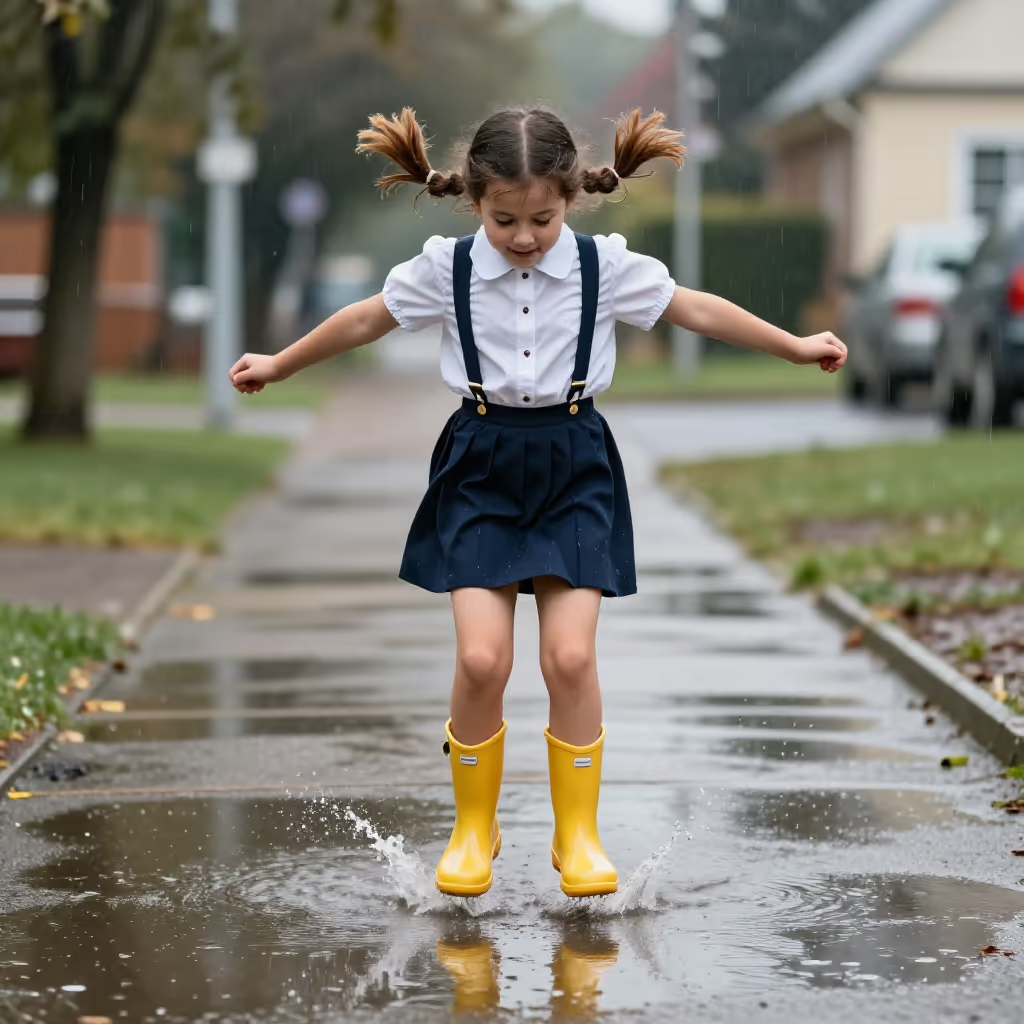
A small, shallow accumulation of liquid, usually water, on the ground or another surface, typically formed after rain.
example
Die Kinder sprangen nach dem Gewitter vergnügt in die Pfützen.
After the thunderstorm, the children happily jumped in the puddles.

Usage tips
Context clue
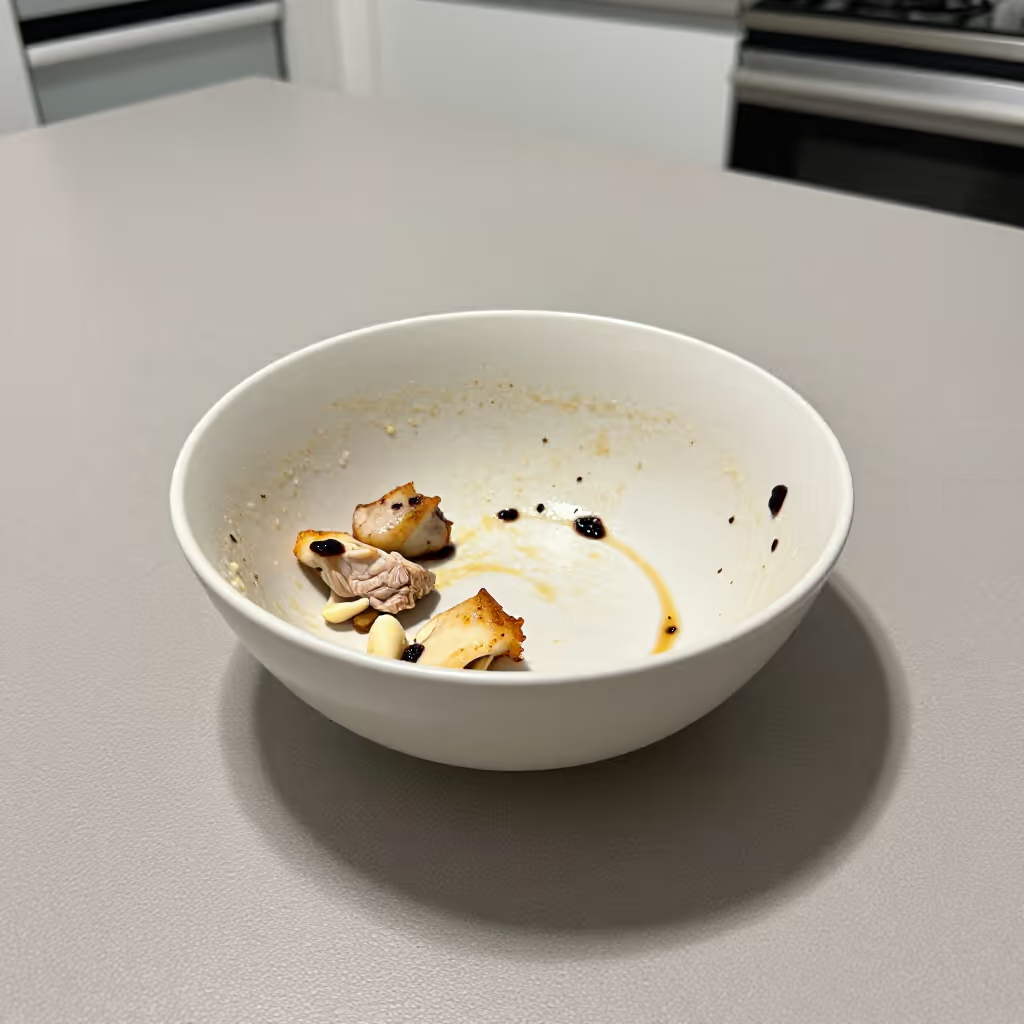
You can recognize the meaning from the location. A 'Pfütze' on the street, path, or ground is a puddle of water after rain. A 'Pfütze' in a cup or glass is a colloquial term for a small remaining amount of liquid.
EXAMPLE
Vorsicht, tritt nicht in die große Pfütze auf dem Gehweg!
Careful, don't step in the big puddle on the sidewalk!
Typical collocations
'Pfütze' is often associated with rain and children. Typical verbs are 'in eine Pfütze springen' (to jump into a puddle) or 'in eine Pfütze treten' (to step into a puddle).
EXAMPLE
Nach dem Regen lieben es die Kinder, in die Pfützen zu springen.
After the rain, children love jumping in the puddles.
Register and style
Using 'Pfütze' for a small remaining amount of liquid in a container is colloquial. In a formal context, you would choose other formulations.
EXAMPLE
Mach mir bitte einen neuen Tee, hier ist nur noch eine Pfütze drin.
Please make me a new tea; there's only a puddle left in here.
Compare with
near_synonym · confusable
Pfütze vs Tropfen
drop
'der Tropfen' and 'die Pfütze' both have to do with small amounts of liquid. A 'Tropfen' is a single very small amount, often round and falling, for example water, oil, or medicine. A 'Pfütze' is a shallow accumulation of liquid on the ground or on a surface, usually after rain. Colloquially, 'Pfütze' can also mean a very small amount in a glass, but then it sounds rather casual or slightly negative. Learners may confuse the words because both can be small. The important point is: a 'Tropfen' is one small piece of liquid, while a 'Pfütze' is already a small area or accumulation.
Pfütze
Nach dem Regen sprang das Kind lachend in die Pfütze.
After the rain, the child jumped laughing into the puddle.