

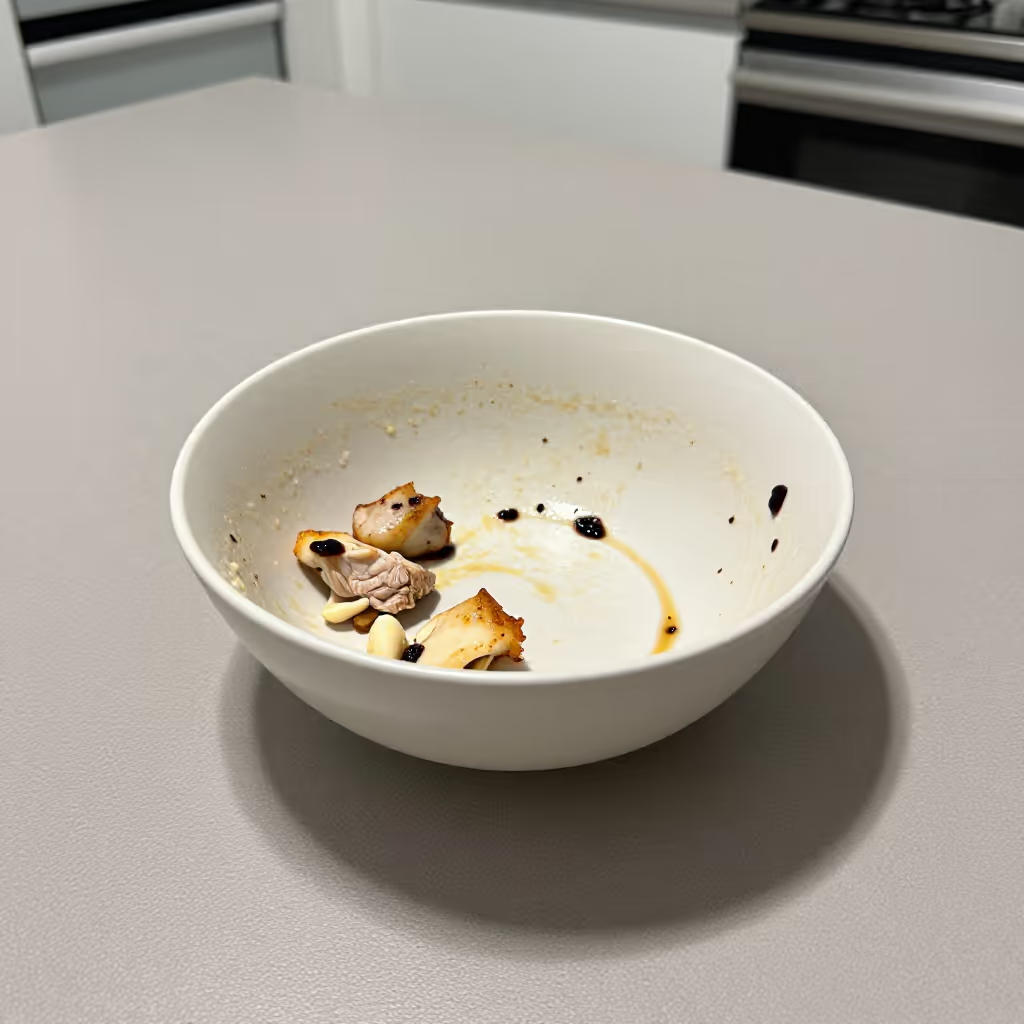
der Rest
rest / remainder
The part that remains after something else has been taken away or used up; the remainder.
EXAMPLE
Den Rest des Kuchens hebe ich für morgen auf.
I'll save the rest of the cake for tomorrow.
rest / remainder
Loading your saved state.
rest / remainder
The part that remains after something else has been taken away or used up; the remainder.
Den Rest des Kuchens hebe ich für morgen auf.
I'll save the rest of the cake for tomorrow.

rest
Refers to the remaining people in a group.
Anna und ich gehen schon mal vor, der Rest kommt dann nach.
Anna and I will go ahead, and the rest will come along later.

to finish someone off
To be the final, decisive strain that leads someone or something to exhaustion, collapse, or defeat.
Nach dem langen Arbeitstag hat mir der Stau auf dem Heimweg den Rest gegeben.
After the long workday, the traffic jam on the way home finished me off.
'Der Rest' means 'the remainder' or 'the rest of it'. It should not be confused with the English verb 'to rest' ('sich ausruhen') or the noun 'rest' ('Ruhe', 'Erholung').
Den Rest des Tages möchte ich einfach nur entspannen.
For the rest of the day, I just want to relax.
'Der Rest' can refer both to remaining things and to the remaining people in a group. The context makes clear what is meant.
Ich esse die Suppe, du kannst den Rest haben.
I'll eat the soup; you can have the rest.
To say what something is the rest of, you use the genitive or 'von' + dative. The construction with 'von' is more common in spoken language.
Der Rest des Films war leider nicht so spannend.
The rest of the film was unfortunately not that exciting.
The idiom 'jemandem den Rest geben' means that one final negative thing is too much and brings someone to their emotional or physical limit. The person affected is in the dative.
Die unerwartete Rechnung hat mir für diesen Monat wirklich den Rest gegeben.
The unexpected bill really finished me off for this month.
backlog / deficit / residue
Rest is a general term for an amount that remains after something has been used up. Rückstand is especially suitable for a small amount of a substance that remains or settles after a process. „Rest“ is therefore neutral for unused soup, while „Rückstand“ is more appropriate for the greasy layer at the bottom of the pot.

Nach dem Essen blieb ein Rest Suppe im Topf.
Some soup was left in the pot after the meal.
Nach dem Kochen blieb ein fettiger Rückstand am Topfboden.
A greasy residue remained on the bottom of the pot after cooking.