

die Phantasie
imagination
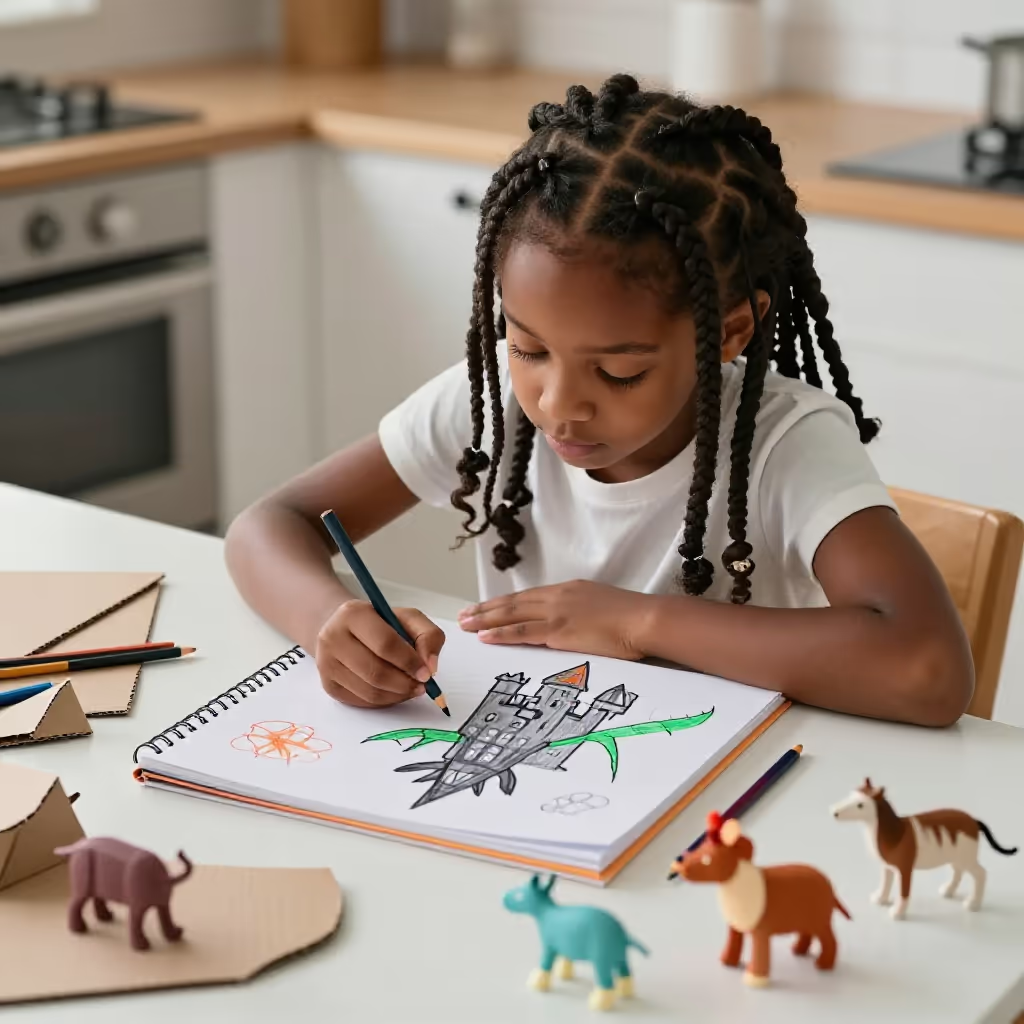
The human ability to imagine things that are not real or that one does not perceive; imagination and creativity.
EXAMPLE
Kinder haben oft eine sehr lebhafte Phantasie.
Children often have a very vivid imagination.
imagination / fantasy
Loading your saved state.
imagination
The human ability to imagine things that are not real or that one does not perceive; imagination and creativity.
Kinder haben oft eine sehr lebhafte Phantasie.
Children often have a very vivid imagination.
fantasy
A thought or idea that does not correspond to reality; a product of the imagination, a figment of the mind.
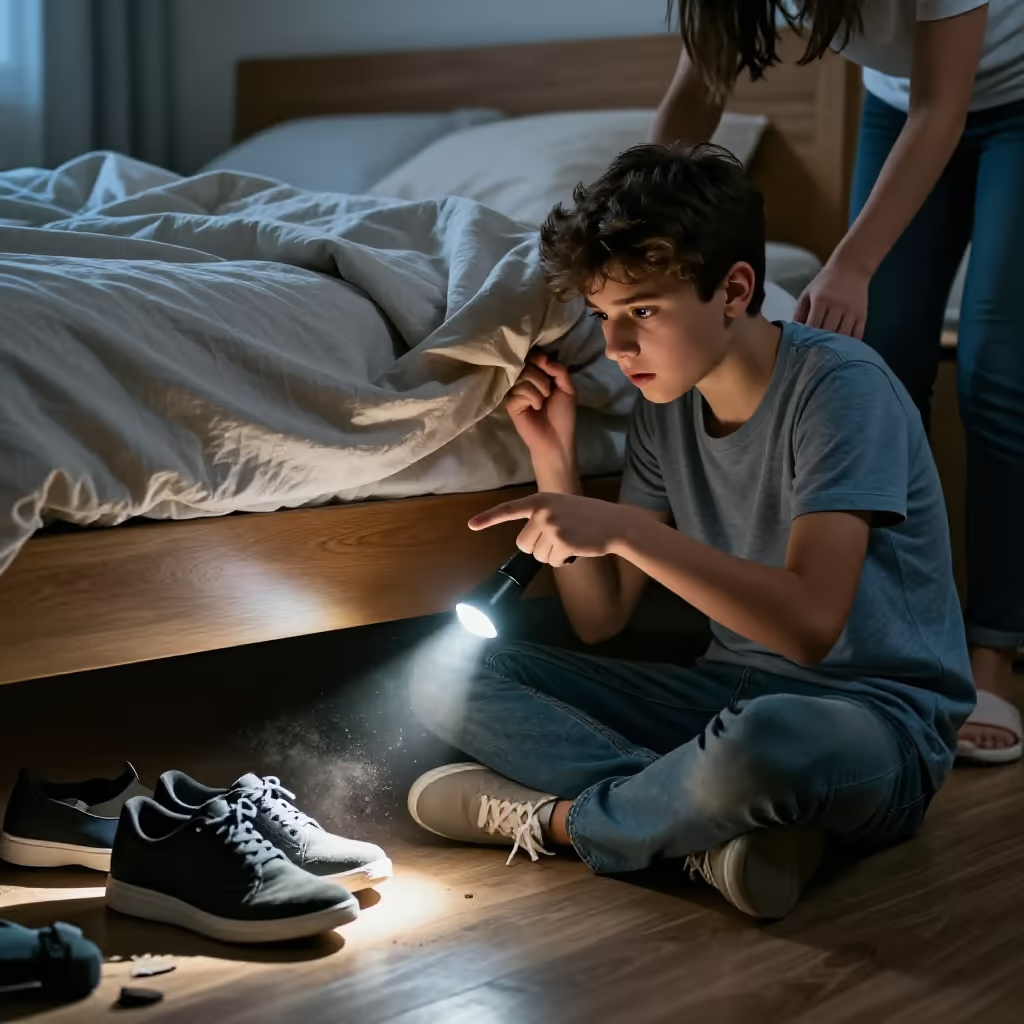
Seine Angst vor Monstern unter dem Bett war reine Phantasie.
His fear of monsters under the bed was pure fantasy.
Besides 'Phantasie', the spelling 'Fantasie' is also correct and is even more common nowadays. Duden recommends the spelling with 'F'.
In modernen Büchern liest man meistens „Fantasie“.
In modern books, you usually read 'Fantasie'.
The word family includes the verb 'fantasieren' (to fantasize, to imagine something, to dream) and the adjective 'fantasievoll' (imaginative, creative).
Er ist ein sehr fantasievoller Künstler.
He is a very imaginative artist.
To describe imagination, 'Phantasie' (imagination) is often combined with adjectives like 'lebhaft' (vivid), 'blühend' (fertile), or 'reich' (rich). A fixed expression is 'seiner Phantasie freien Lauf lassen' (to let one's imagination run free).
Der Autor hat eine blühende Phantasie.
The author has a fertile imagination.
In this meaning, it is often emphasized that something is not real. Watch for signal words like 'reine' (pure), 'bloße' (mere), or 'nur' (only).
Die Gefahr existiert nur in deiner Phantasie.
The danger exists only in your imagination.
idea / performance / introduction
Both words can refer to an inner image or an idea. „Vorstellung“ is neutral and can refer to something real or invented, whereas „Phantasie“ especially emphasizes creative or unreal content. „Vorstellung“ is appropriate for an ordinary inner image, while „Phantasie“ is more appropriate for an invented scene.

Mit etwas Phantasie stellte sich Laura einen Garten voller Zauberwesen vor.
With a little imagination, Laura pictured a garden full of magical creatures.
Meine Vorstellung von dem neuen Haus war ziemlich genau.
My idea of the new house was quite precise.