

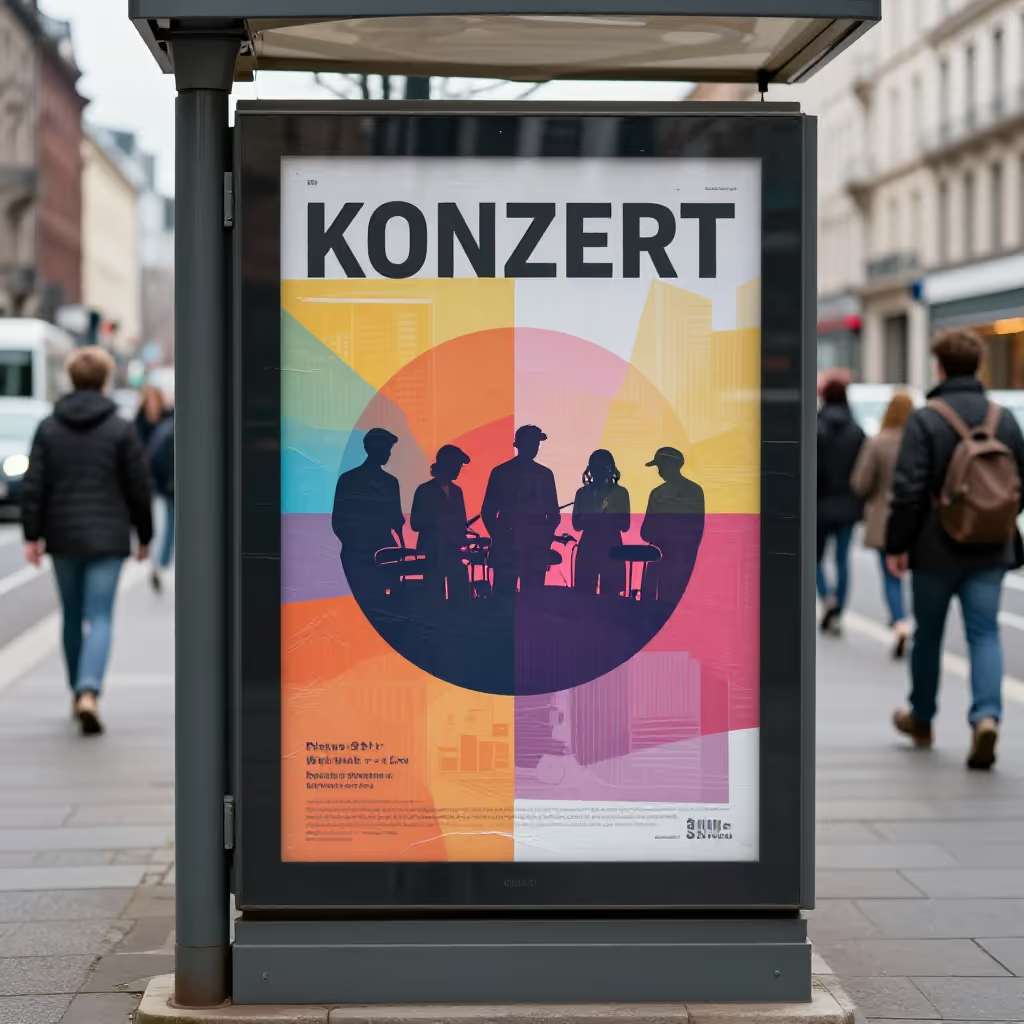
A large printed sheet of paper or cardboard that is put up in a public place to advertise, inform, or decorate.
example
An der Litfaßsäule hing ein Plakat für das neue Theaterstück.
There was a poster for the new play on the advertising column.

Usage tips
Word family
The verb 'plakatieren' is derived from the noun 'das Plakat' (poster), and means to put up posters in public places.
EXAMPLE
Es ist verboten, an dieser Mauer zu plakatieren.
It is forbidden to put up posters on this wall.
Typical verbs
Typical actions are associated with posters. You can 'aufhängen' (hang them up), 'ankleben' (stick them up), 'gestalten' (design them), or 'entwerfen' (draft/design them).
EXAMPLE
Für unsere Band müssen wir noch ein paar coole Plakate entwerfen.
We still need to design a few cool posters for our band.
Typical places
Posters are found in certain places. You say: 'ein Plakat hängt an der Wand' (a poster is hanging on the wall), 'an einer Tür' (on a door), or 'an einer Litfaßsäule' (on an advertising column). The preposition is 'an' with the dative.
EXAMPLE
Überall in der Stadt hängen Plakate für das Konzert.
Posters for the concert are hanging all over the city.
Compare with
confusable
Plakat vs Anzeige
advertisement / report / display
'die Anzeige' and 'das Plakat' can both be used for advertising or information. An 'Anzeige' is usually a short published text, for example in a newspaper or on a website. A 'Plakat' is a large printed sheet that you see in a public place, for example on a wall or at a bus stop. The words can be confused because both make something known. When it is about a printed or digital text in a medium, you are more likely to say 'Anzeige'. When something is hung up and clearly visible, 'Plakat' fits better.
Plakat
An der Bushaltestelle hängt ein Plakat für das Sommerfest.
There is a poster for the summer festival at the bus stop.
Anzeige
In der Zeitung findet ihr eine Anzeige für eine kleine Wohnung.
In the newspaper, you will find an advertisement for a small apartment.