

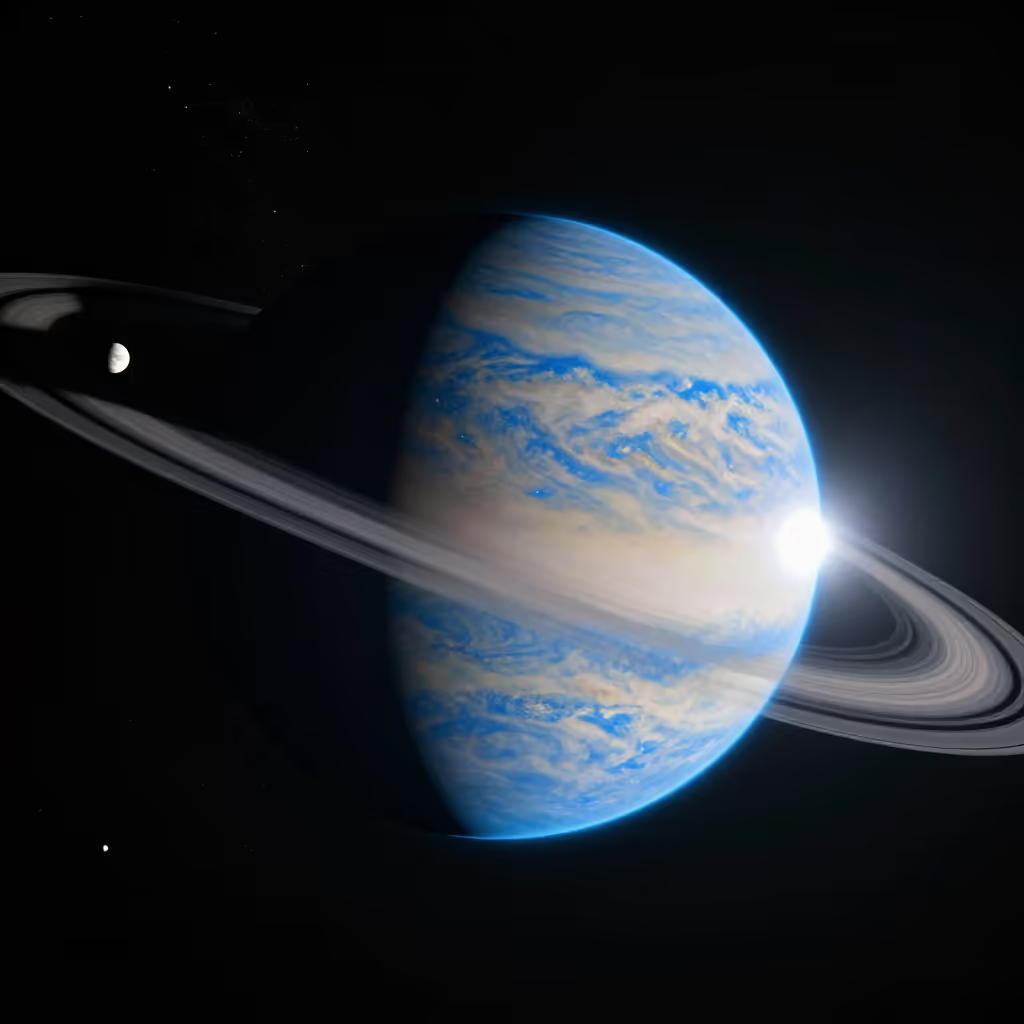
der Planet
planet
A large celestial body that moves in an orbit around a star and does not shine by itself.
EXAMPLE
Der Mars ist als der „rote Planet“ bekannt.
Mars is known as the 'red planet'.
planet
Loading your saved state.
planet
A large celestial body that moves in an orbit around a star and does not shine by itself.
Der Mars ist als der „rote Planet“ bekannt.
Mars is known as the 'red planet'.
'Planet' (planet) is a masculine noun of the N-declension. This means it takes the ending '-en' in the genitive, dative, and accusative singular, as well as throughout the plural.
Die Raumsonde fliegt zu einem fernen Planeten.
The space probe is flying to a distant planet.
In an astronomical context, 'Planet' (planet) is often used with verbs such as 'einen Planeten entdecken' (to discover a planet), 'einen Planeten umkreisen' (to orbit a planet), or 'auf einem Planeten landen' (to land on a planet).
Forscher haben einen neuen Planeten entdeckt, der unsere Sonne umkreist.
Researchers have discovered a new planet that orbits our sun.
The noun 'Planet' (planet) is the basis for other words. The related adjective is 'planetarisch' (planetary) and describes things that have to do with planets.
Die Anziehungskraft verursacht die planetarische Bewegung.
Gravity causes planetary motion.
star
A Stern and a Planet can both look like bright points in the night sky. A Stern is made of hot gas and produces its own light, while a Planet orbits a star and does not produce its own light. Visible light alone is therefore not always enough to tell them apart.
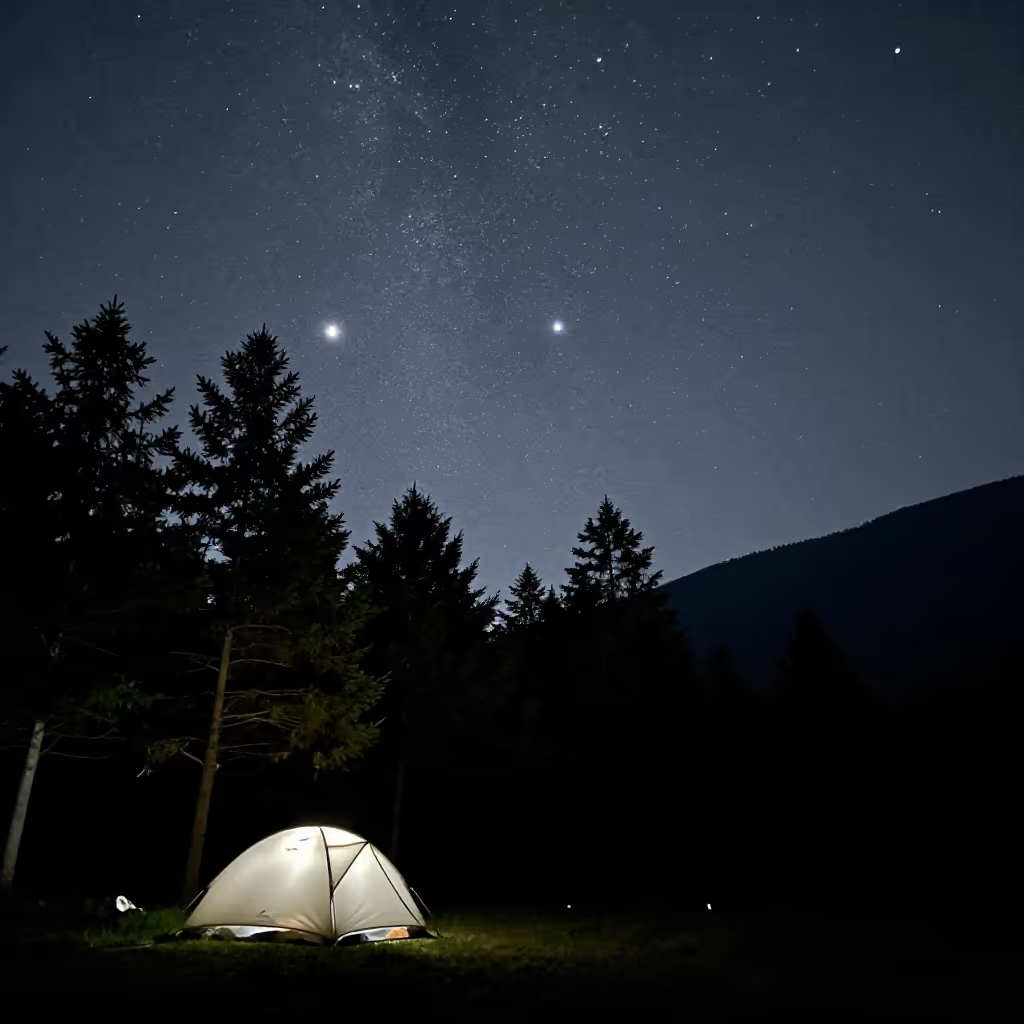
Die Venus ist ein Planet, weil sie die Sonne umkreist und nicht selbst leuchtet.
Venus is a planet because it orbits the sun and does not produce its own light.
Die Sonne ist ein Stern, weil sie selbst Licht erzeugt.
The sun is a star because it produces its own light.