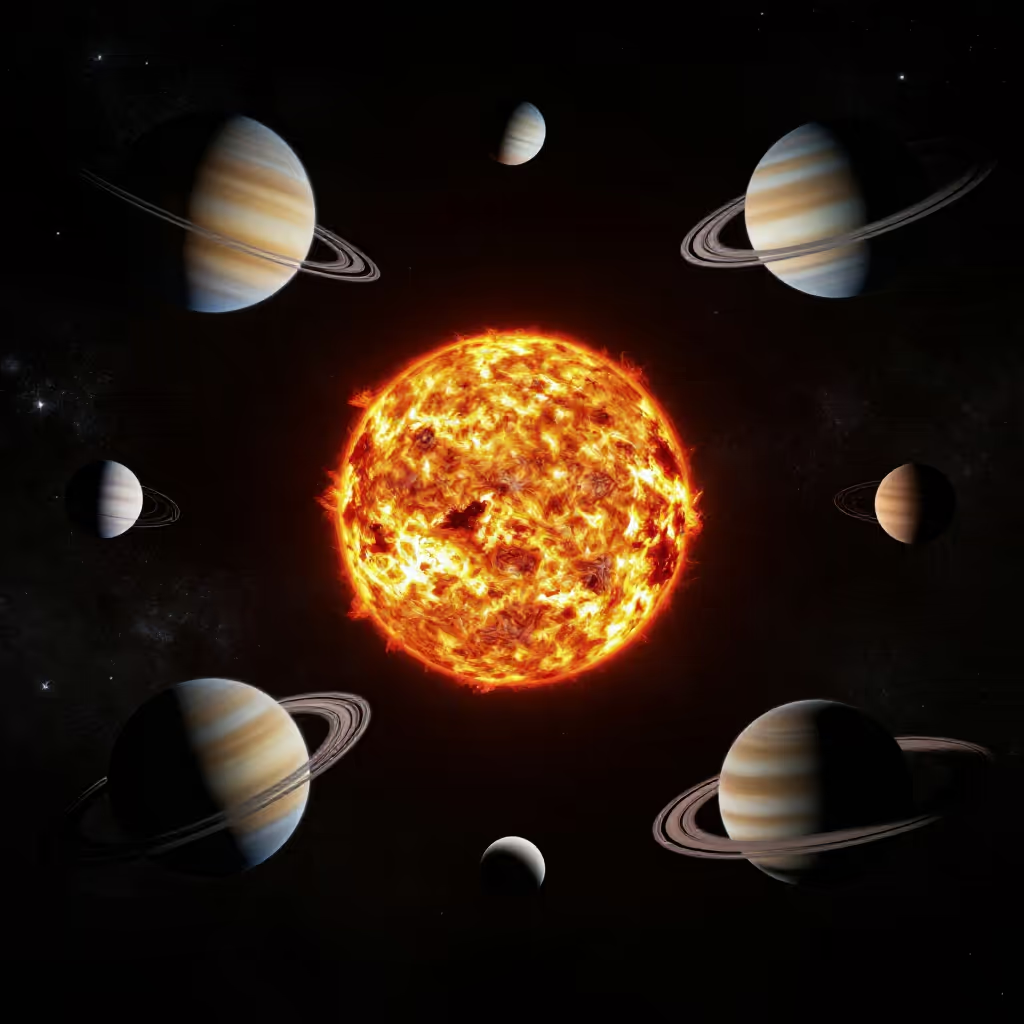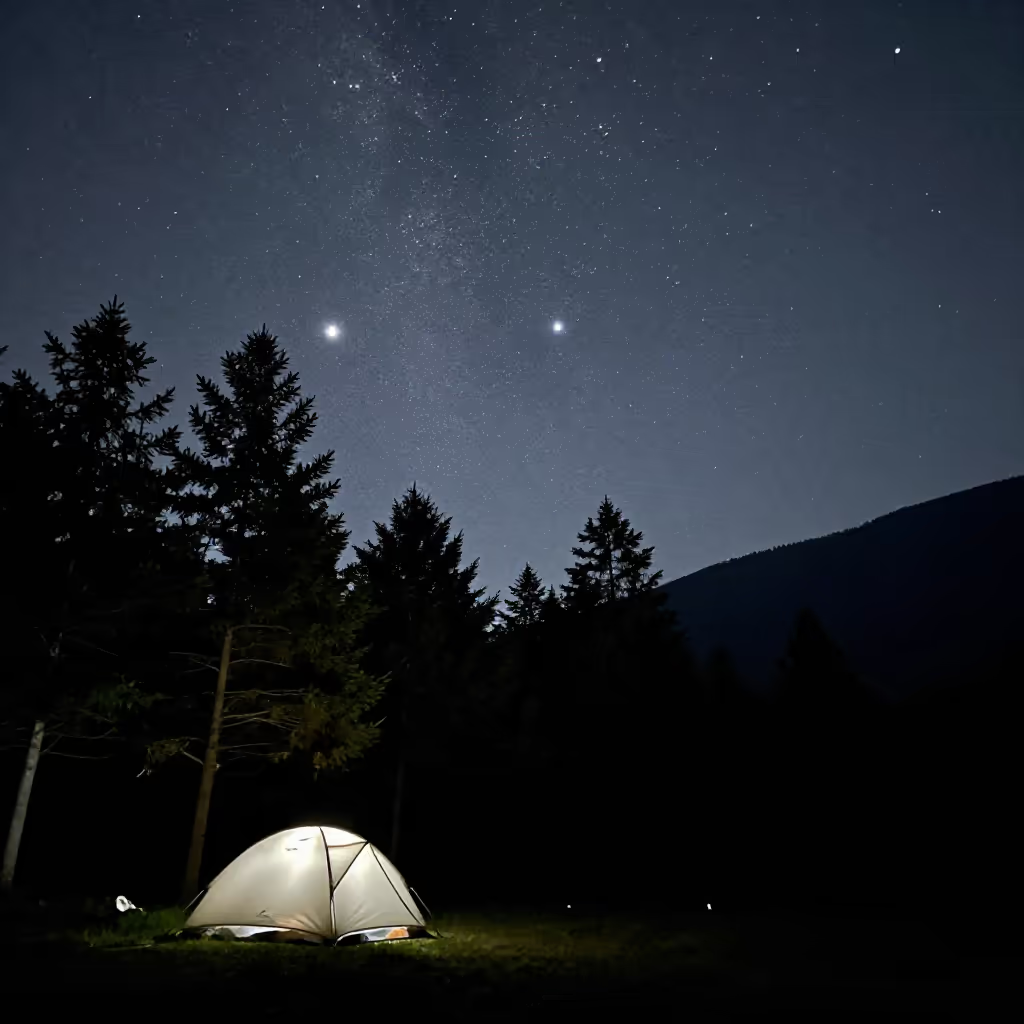
A celestial body made of hot gas that gives off its own light and is visible as a point of light in the night sky.
example
In einer klaren Nacht kann man Tausende von Sternen am Himmel sehen.
On a clear night, you can see thousands of stars in the sky.

Usage tips
False friend
The German word 'Stern' (star/celestial body) should not be confused with the English adjective 'stern' (serious, strict). The English word for 'Stern' is 'star'.
EXAMPLE
In dieser Gegend gibt es so wenig Licht, dass man nachts die Sterne gut sehen kann.
There is so little light in this area that you can see the stars well at night.
Context clue
You can recognize the meaning of 'Stern' (star) from the context. If it is about the sky or astronomy, it refers to the celestial body. In the context of film, music, or sports, it means a famous person. With hotels or restaurants, it refers to a quality rating.
EXAMPLE
Der Polarstern ist ein wichtiger Navigationspunkt am Nordhimmel.
The North Star is an important navigation point in the northern sky.
Productive compounds
The word 'Stern' (star) is the basis for many compound nouns. Examples are 'Sternenhimmel' (starry sky), 'Sternschnuppe' (shooting star), or 'Sternstunde' (hour of glory).
EXAMPLE
Eine Sternschnuppe zu sehen, soll Glück bringen.
Seeing a shooting star is said to bring good luck.
Typical collocations
In the astronomical sense, 'Stern' (star) is often used with verbs like 'beobachten' (to observe) or 'sehen' (to see). A common phrase is also to sleep or sit 'unter dem Sternenhimmel' (under the starry sky).
EXAMPLE
Mit einem Teleskop kann man die Sterne noch besser beobachten.
With a telescope, you can observe the stars even better.
Use in ratings
When it comes to ratings, the construction 'mit ... Sternen auszeichnen/bewerten' (to award/rate with ... stars) is often used. With hotels, people often speak of a 'Fünf-Sterne-Hotel' (five-star hotel).
EXAMPLE
Das Restaurant wurde vom Kritiker mit drei Sternen bewertet.
The restaurant was rated with three stars by the critic.
Fixed expression
The idiom 'nach den Sternen greifen' (to reach for the stars) is a fixed unit. It describes someone having very ambitious or almost unattainable goals.
EXAMPLE
Mit seiner Idee für ein fliegendes Auto greift er wirklich nach den Sternen.
With his idea for a flying car, he is really reaching for the stars.
Compare with
near_synonym · confusable
Stern vs Sonne
sun
'die Sonne' and 'der Stern' can both mean a shining celestial body. The important difference is: our sun is a specific star, namely the star that gives the Earth light and warmth. 'der Stern' is more general and refers to many such celestial bodies, especially the points of light in the night sky. Learners may confuse the words because, astronomically, the sun is a star. In everyday language, however, you say 'die Sonne' when talking about our bright celestial body during the day, and 'der Stern' when talking about other stars in the sky.
Stern
Am Abend zeigt Lisa ihrem Bruder einen hellen Stern über dem Haus.
In the evening, Lisa shows her brother a bright star above the house.
Sonne
Die Sonne steht schon hoch am Himmel, deshalb wird es schnell warm.
The sun is already high in the sky, so it is getting warm quickly.