

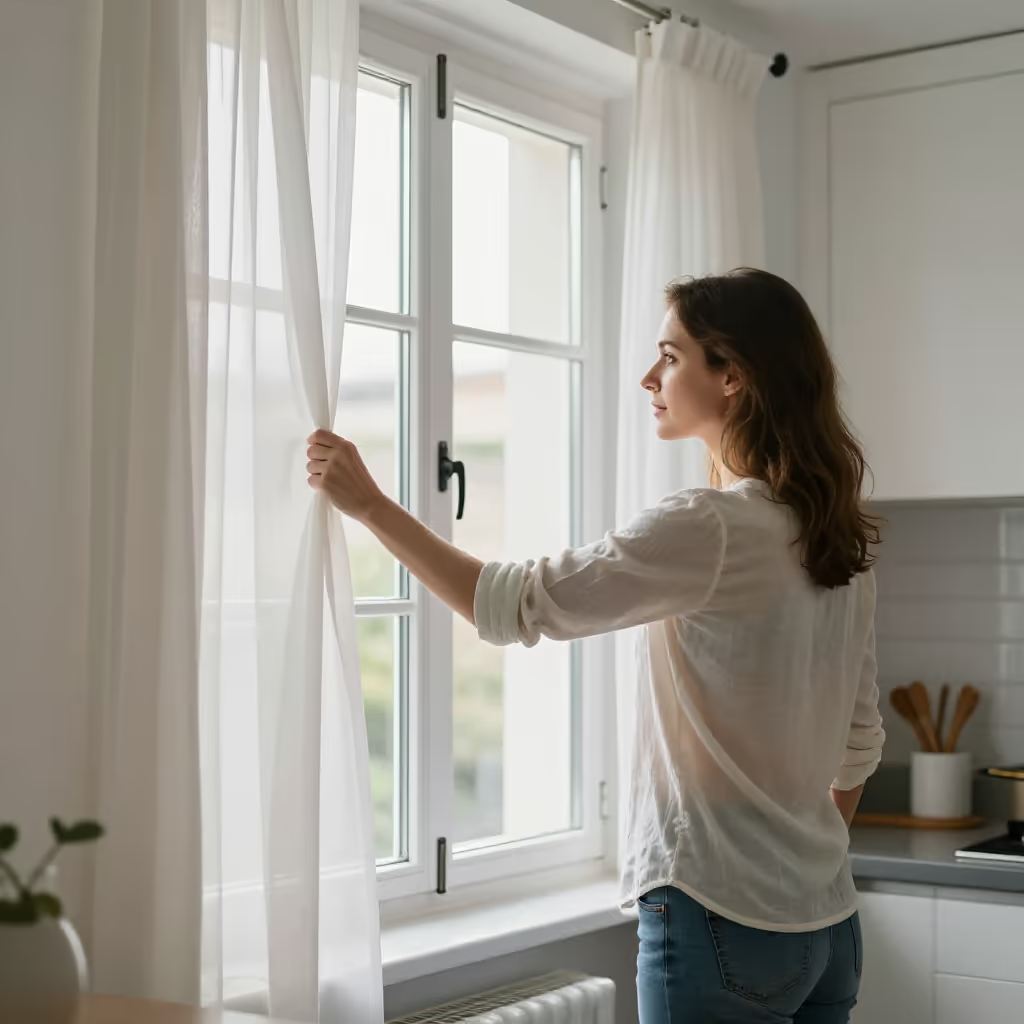
offen
open
Not closed, locked, or covered.
EXAMPLE
Kannst du bitte das offene Fenster schließen? Es zieht.
Can you please close the open window? There's a draft.
open
Loading your saved state.
open
Not closed, locked, or covered.
Kannst du bitte das offene Fenster schließen? Es zieht.
Can you please close the open window? There's a draft.

open
Honest, direct, and without hiding anything; sincere.
Wir sollten ein offenes Gespräch über unsere Probleme führen.
We should have an open conversation about our problems.

open
Not yet decided, clarified, or completed.
Die Frage, wer die Reise bezahlt, ist immer noch offen.
The question of who will pay for the trip is still open.

open
Receptive and responsive to new ideas, suggestions, or experiences.
Sie ist eine sehr kreative Person und immer offen für neue Ansätze.
She is a very creative person and always open to new approaches.

open
Refers to a job that is unfilled and available.
In unserer Abteilung gibt es eine offene Stelle für einen Projektmanager.
In our department, there is an open position for a project manager.
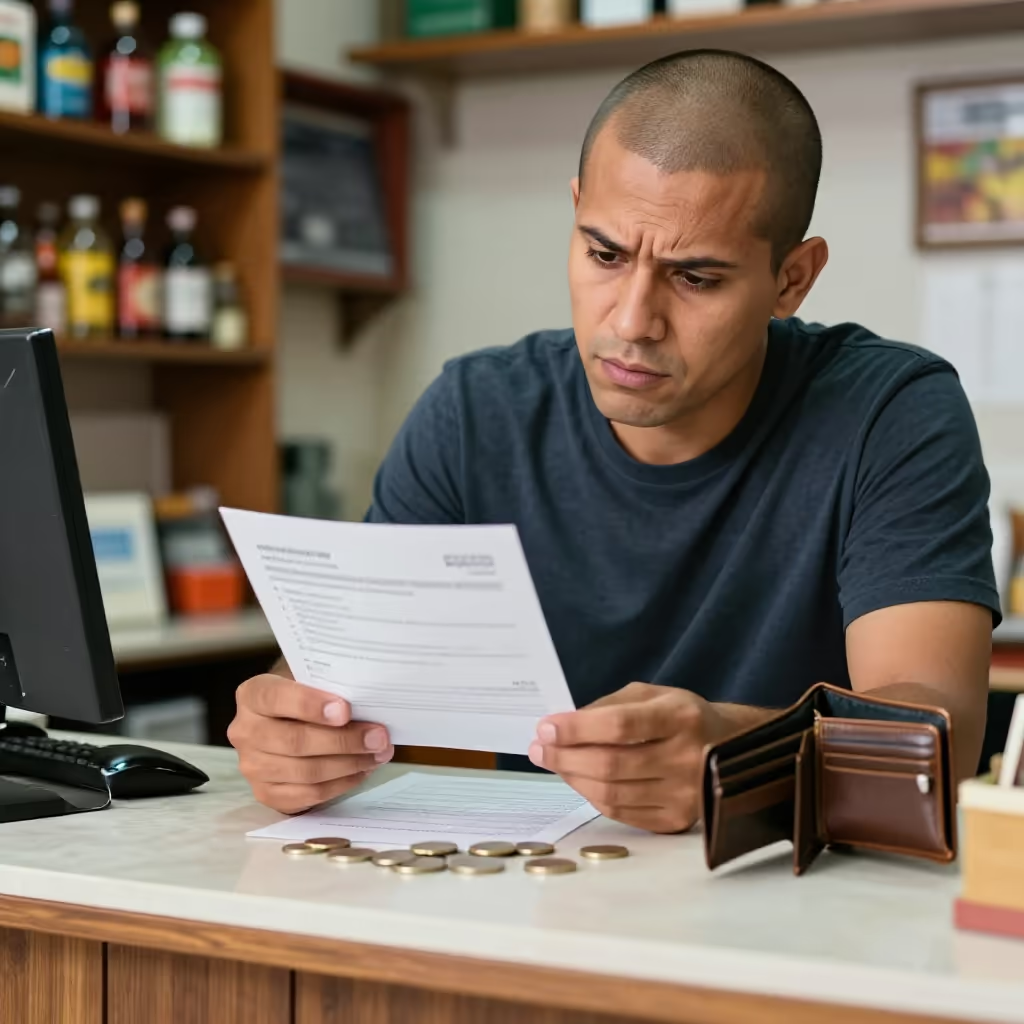
outstanding
Describes an invoice or debt that has not yet been paid.
Bitte begleichen Sie die noch offene Rechnung bis Ende des Monats.
Please settle the still outstanding invoice by the end of the month.
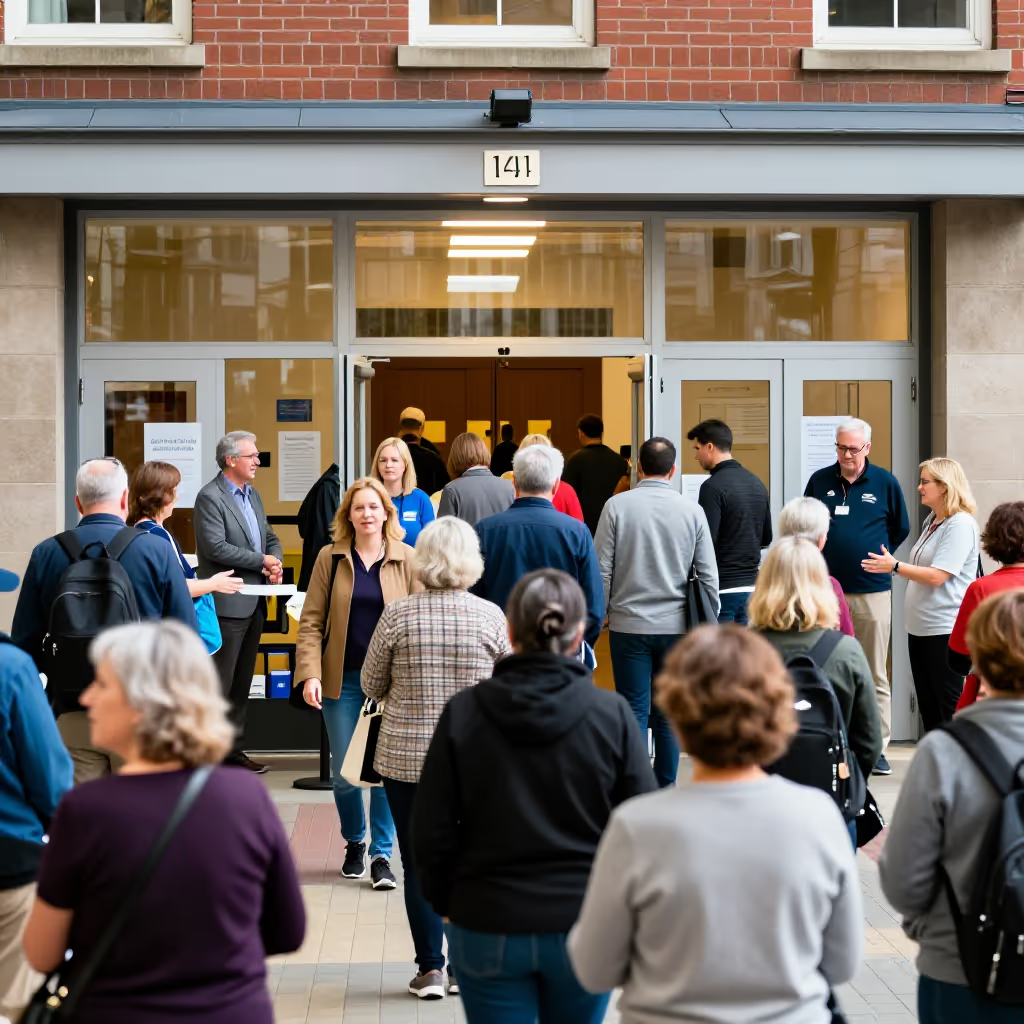
open
Accessible to everyone; public and without restrictions.
Der Wettbewerb ist offen für Teilnehmer aus allen Ländern.
The competition is open to participants from all countries.
The adjective 'offen' (open) belongs to the word family of the verb 'öffnen' (to open). This connection helps you understand the basic meaning 'not closed', which is still recognizable in many figurative meanings.
Könntest du bitte die Flasche für mich öffnen?
Could you please open the bottle for me?
In its literal meaning, 'offen' (open) is often combined with things that can be physically closed: ein offenes Fenster (an open window), eine offene Tür (an open door), ein offener Briefumschlag (an open envelope), or ein offenes Buch (an open book).
Er saß mit offenem Mund da und staunte.
He sat there with his mouth open, amazed.
When it is about honesty, 'offen' (open) is often connected with words of communication. Typical phrases are 'ein offenes Gespräch' (an open conversation), 'offene Worte' (open words/frank words), or the fixed combination 'offen und ehrlich' (open and honest).
Ich schätze an ihr, dass sie immer offen und ehrlich ihre Meinung sagt.
What I appreciate about her is that she always says her opinion openly and honestly.
To express that something has not yet been decided, 'offen' (open) is often used with abstract nouns. Common combinations are 'eine offene Frage' (an open question), 'ein offener Punkt' (an open point/unresolved issue), or 'ein offenes Ergebnis' (an open result).
Es ist noch eine offene Frage, ob wir die Reise wirklich machen können.
It is still an open question whether we can really take the trip.
When 'offen' means open-mindedness or receptiveness, it is almost always used with the preposition 'für' and the accusative. The structure is: 'offen für etwas sein' (to be open to something).
Ich bin immer offen für neue Ideen und Vorschläge.
I am always open to new ideas and suggestions.
The meaning 'unfilled' is typical in the context of the workplace. People speak of an 'offene Stelle' (open position) or an 'offene Position' (open position) when a company is looking for new employees.
Unsere Firma hat zurzeit zwei offene Stellen in der IT-Abteilung.
Our company currently has two open positions in the IT department.
In the meaning 'unpaid', 'offen' (outstanding/unpaid) is used almost exclusively in connection with finances and debts. Typical collocations are 'eine offene Rechnung' (an outstanding invoice) or 'offene Forderungen' (outstanding claims/receivables).
Ich habe noch eine offene Rechnung vom Handwerker zu bezahlen.
I still have an outstanding invoice from the handyman to pay.
on / onto / open
Auf and offen can both mean that something is not closed. Auf is more colloquial and is used mainly to describe a state; offen is the neutral and more versatile choice. With a door, both forms are possible.
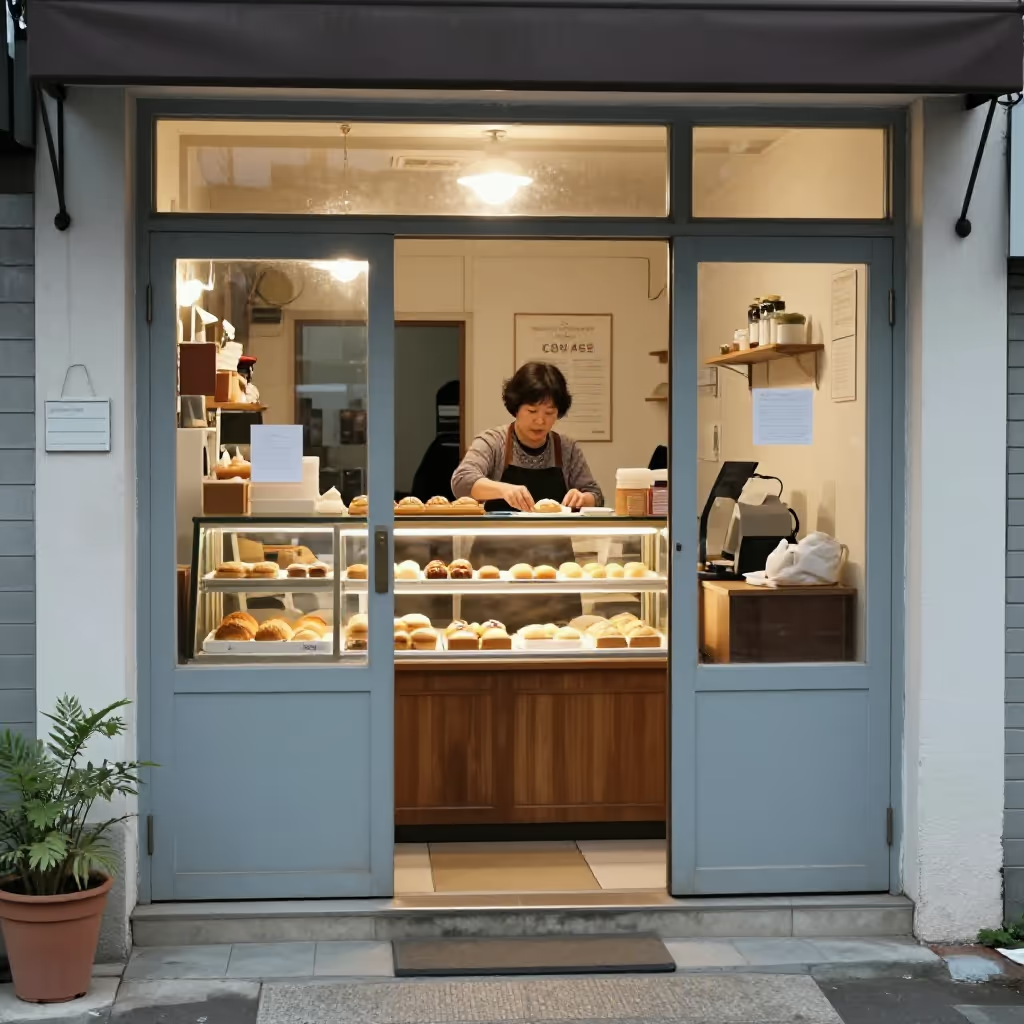
Die Tür zum Garten ist noch offen.
The door to the garden is still open.
Die Tür zum Garten ist noch auf.
The door to the garden is still open.