

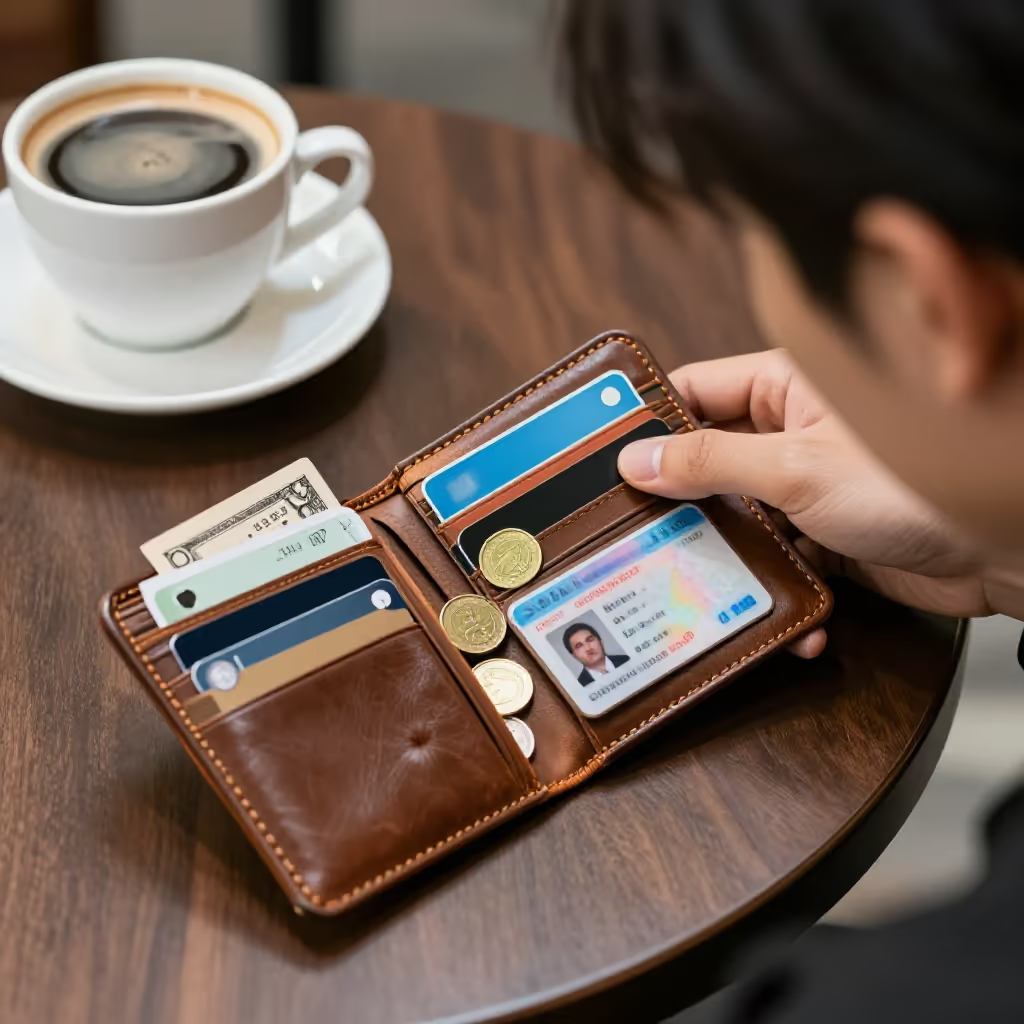
A small pouch or case, usually made of leather or fabric, in which you keep money, cards, and ID documents. Also referred to as a purse or billfold.
example
Ich glaube, ich habe mein Portemonnaie im Auto liegen lassen.
I think I left my wallet in the car.
Usage tips
Word composition
The word comes from French and is made up of 'porter' (to carry) and 'monnaie' (coin, money). So it literally means 'money carrier'.
EXAMPLE
In meinem Portemonnaie ist leider nicht mehr viel Bargeld.
Unfortunately, there isn't much cash left in my wallet.
Prepositions and case
When you put something into the wallet, you use the accusative ('ins Portemonnaie' — into the wallet). When something is inside it or you take something out of it, you use the dative ('im/aus dem Portemonnaie' — in/out of the wallet).
EXAMPLE
Ich stecke den Geldschein in mein Portemonnaie.
I put the banknote into my wallet.
Typical verbs
Common verbs used with 'Portemonnaie' (wallet) are 'verlieren' (to lose), 'finden' (to find), 'stehlen' (to steal), and 'zücken' (to whip out quickly in order to pay).
EXAMPLE
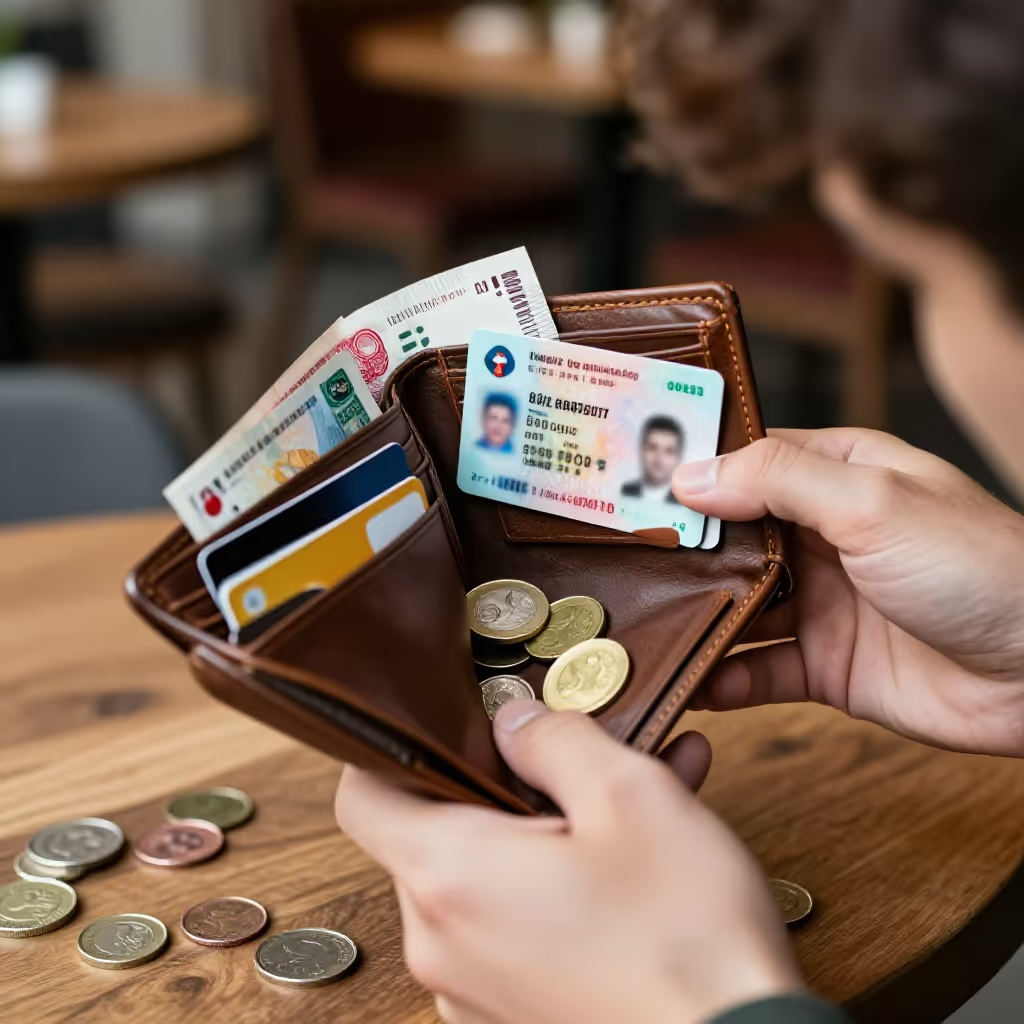
An der Kasse zückte sie ihr Portemonnaie, um die Rechnung zu bezahlen.
At the checkout, she whipped out her wallet to pay the bill.
Compare with
synonym
Portemonnaie vs Börse
stock exchange / market / purse
'die Börse' and 'das Portemonnaie' can both mean the small pouch or case for money, cards, and ID documents. In this meaning, they are synonyms. 'Portemonnaie' is very natural in everyday language and generally easy to understand. 'Börse' in this meaning is heard less often; it can sound old-fashioned or regional. In addition, 'Börse' can also mean a financial market or an exchange event. If you mean the object in your bag or pocket, 'Portemonnaie' is usually the clearer choice.
Portemonnaie
Ihr Portemonnaie liegt zu Hause auf dem Küchentisch.
Her wallet is at home on the kitchen table.
Börse
Beim Bezahlen suchte Herr Schneider lange nach seiner Börse.
When paying, Mr. Schneider spent a long time looking for his purse.