A syllable or word part (morpheme) that is added to the beginning of a word in order to change or specify its meaning. In German, 'un-', 'ver-', and 'be-' are typical prefixes.
example
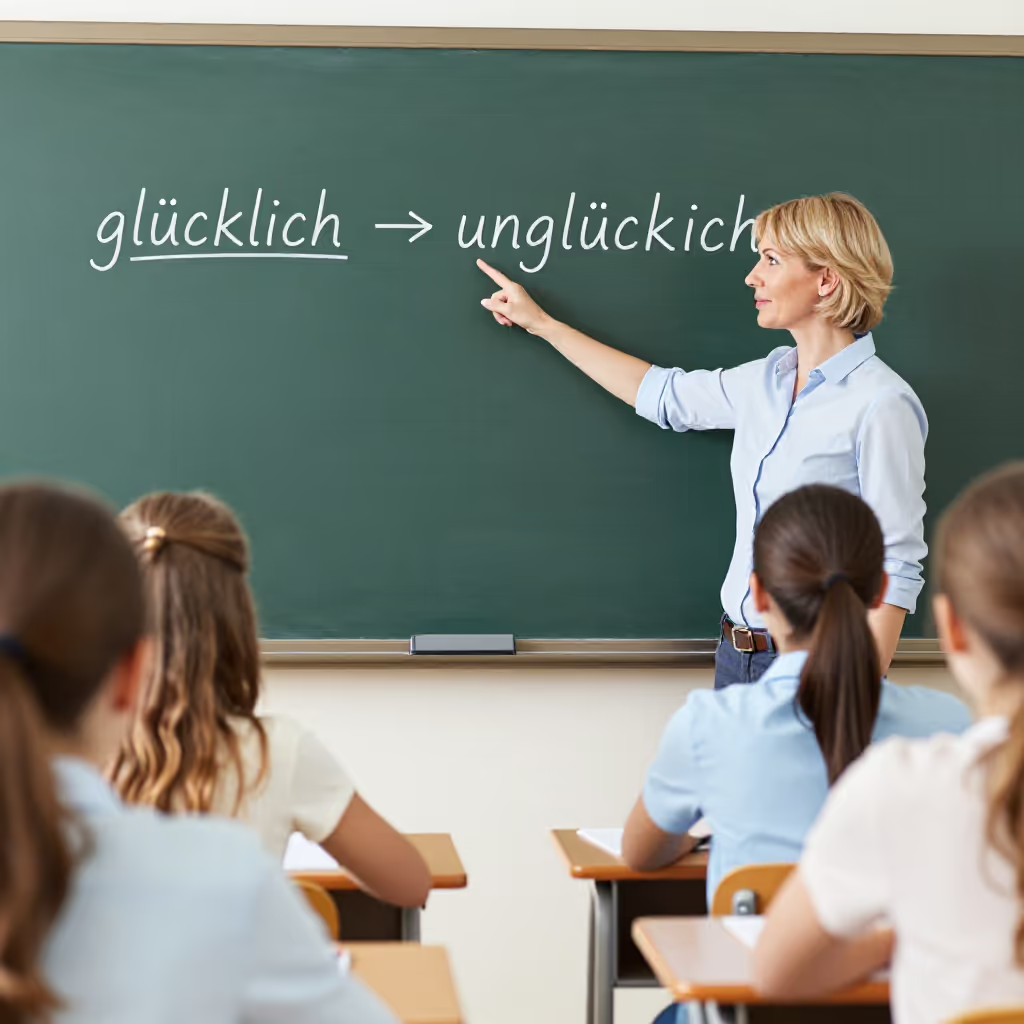
Das Präfix 'un-' in 'unglücklich' kehrt die Bedeutung des Wortes um.
The prefix 'un-' in 'unglücklich' reverses the meaning of the word.

Usage tips
Word structure
The word comes from Latin. 'Prä-' means 'before' and 'fix' means 'attached'. So a 'Präfix' (prefix) is something that is 'attached' to the front of a word.
EXAMPLE
Das Präfix „re-“ in „rekonstruieren“ deutet auf eine Wiederholung hin.
The prefix 're-' in 'rekonstruieren' indicates repetition.
Context clue
You can tell from context whether the linguistic or technical meaning is intended. Words like 'Verb' (verb), 'Bedeutung' (meaning), or 'Silbe' (syllable) point to linguistics. Words like 'Telefonnummer' (telephone number), 'Code' (code), or 'wählen' (to dial) point to technology.
EXAMPLE
Das Präfix „ver-“ kann die Bedeutung eines Verbs stark verändern.
The prefix 'ver-' can strongly change the meaning of a verb.
Typical collocations
In a linguistic context, people often speak of 'trennbaren' (separable) and 'untrennbaren' (inseparable) prefixes. Typical verbs are 'anfügen' (to attach), 'voranstellen' (to place before), or 'bilden' (to form).
EXAMPLE
Im Deutschen gibt es viele Verben, die mit einem Präfix gebildet werden.
In German, there are many verbs that are formed with a prefix.
Technical use
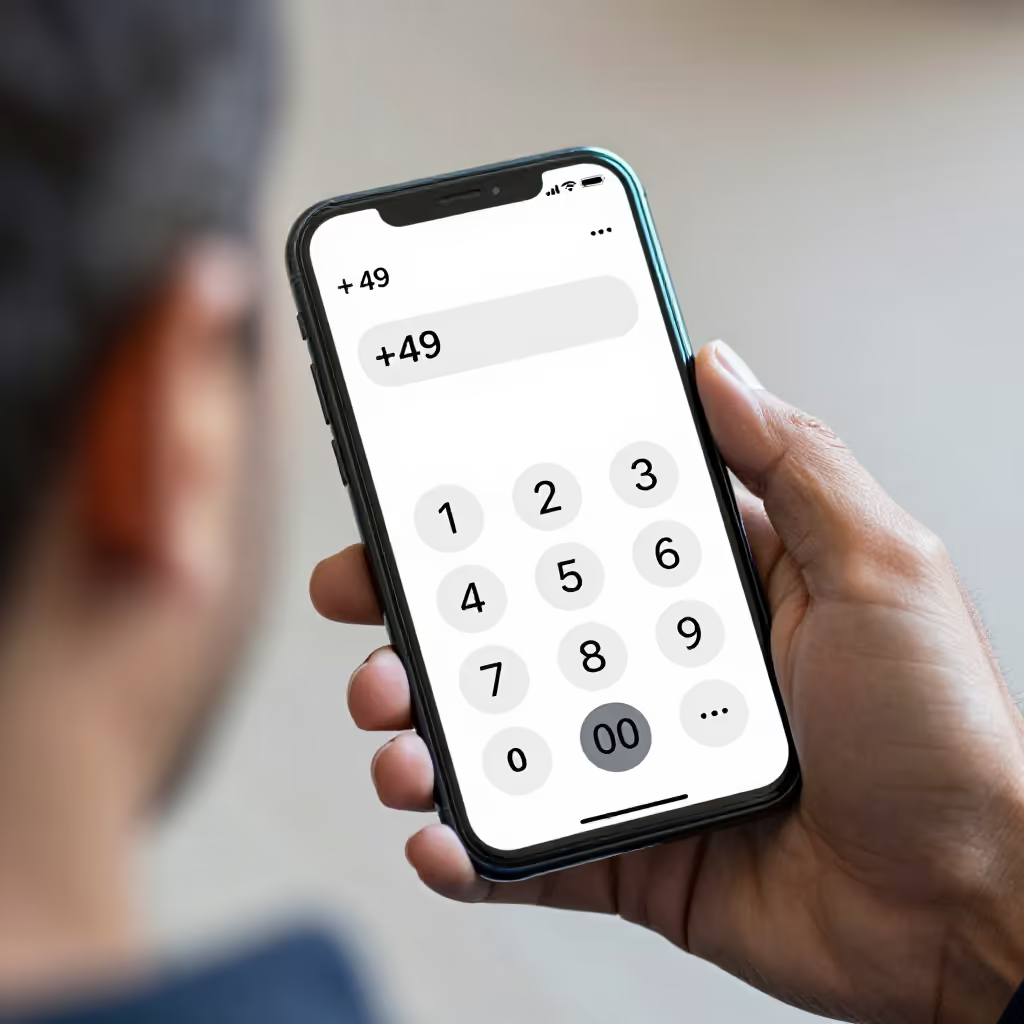
In the technical meaning, 'Präfix' (prefix) is often combined with 'wählen' (to dial), 'eingeben' (to enter), or 'voranstellen' (to place before). A common example is the country calling code, which is also called an 'internationales Präfix' (international prefix).
EXAMPLE
Jede Datei in diesem System hat ein spezielles Präfix im Dateinamen.
Every file in this system has a special prefix in the file name.
Compare with
antonym · confusable
Präfix vs Endung
ending
'die Endung' and 'das Präfix' refer to word parts in different positions. An ending stands at the end of a word and often indicates grammatical information. A prefix stands at the beginning of a word and changes or adds to the meaning. The words can be confused because both have to do with word parts. The most important difference is simple: Präfix at the front, Endung at the back.
Präfix
Das Präfix „un-“ macht aus „klar“ das Wort „unklar“.
The prefix 'un-' turns 'klar' into the word 'unklar'.
Endung
Bei „kleinen Kindern“ muss die Endung des Adjektivs zum Nomen passen.
In 'kleinen Kindern', the adjective ending has to match the noun.