

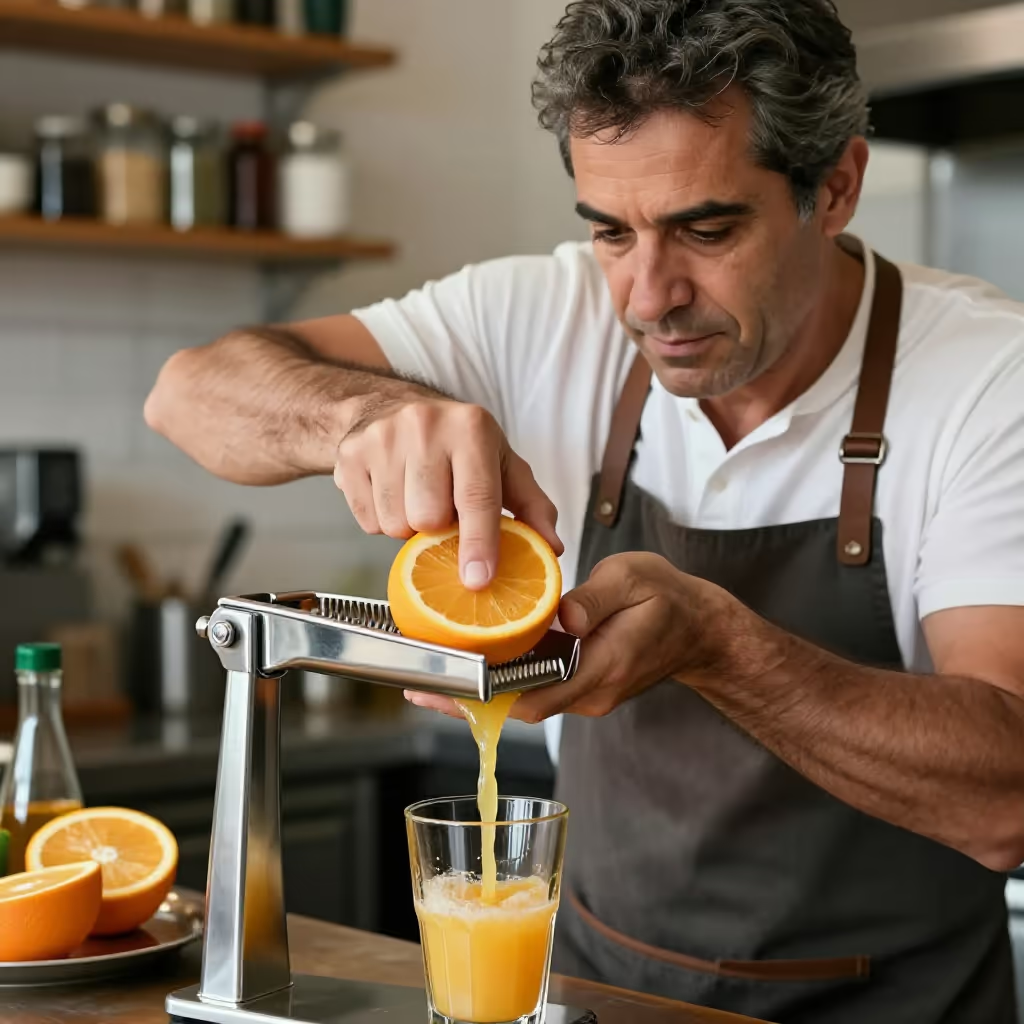
pressen
to press
To apply strong, even pressure to something, often in order to extract a liquid or shape something.
EXAMPLE
Für den frischen Saft müssen wir die Orangen kräftig pressen.
For the fresh juice, we have to press the oranges firmly.
to press
Loading your saved state.
to press
To apply strong, even pressure to something, often in order to extract a liquid or shape something.
Für den frischen Saft müssen wir die Orangen kräftig pressen.
For the fresh juice, we have to press the oranges firmly.

to squeeze
To force something with effort into a tight space or narrow shape.
Er presste seine ganze Kleidung in den kleinen Koffer.
He squeezed all his clothes into the small suitcase.
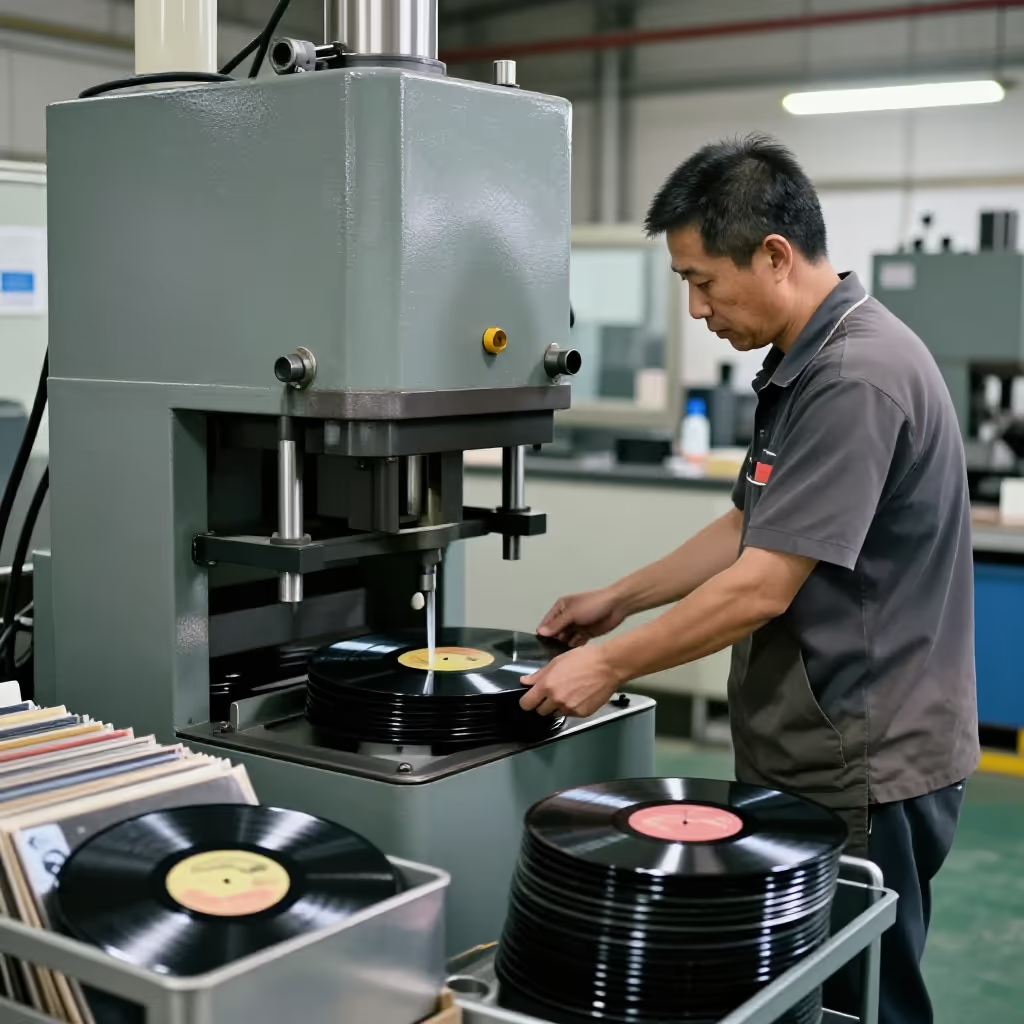
to press
To manufacture something industrially by applying pressure, for example records, CDs, or molded parts.
Die Fabrik presst täglich tausende von Kunststoffteilen.
The factory presses thousands of plastic parts every day.

to press oneself
To press yourself or a body part closely against something.
Die Menschenmenge presste sich in den überfüllten Zug.
The crowd pressed itself into the overcrowded train.
The verb 'pressen' (to press) is closely connected with the noun 'der Druck' (pressure). The basic idea is always to achieve an effect through pressure.
Unter hohem Druck wird das Material in die richtige Form gepresst.
Under high pressure, the material is pressed into the right shape.
When something is forced into a tight space, the structure 'etwas in einen Ort (Akkusativ) pressen' (to press/squeeze something into a place, accusative) is often used.
Ich habe es geschafft, alle Bücher in den kleinen Karton zu pressen.
I managed to squeeze all the books into the small box.
The verb can be used reflexively: 'sich pressen' (to press oneself). It is often followed by a preposition such as 'an' (against/to), 'gegen' (against), or 'durch' (through) to describe the direction or point of contact.
Das Kind presste sich ängstlich an seine Mutter.
The child pressed itself anxiously against its mother.
To extract a liquid, 'pressen' (to press) is often combined with fruit or plants. Typical phrases are: 'Saft pressen' (to press juice), 'Orangen pressen' (to press oranges), 'Öl pressen' (to press oil), or 'Knoblauch pressen' (to press garlic).
Wir haben die Trauben selbst gepresst, um Wein zu machen.
We pressed the grapes ourselves to make wine.
In the context of industrial production, 'pressen' means that something is mechanically pressed into a shape. Typical objects are 'CDs' (CDs), 'Schallplatten' (records), or 'Autoteile' (car parts).
Diese Firma presst Metallteile für die Automobilindustrie.
This company presses metal parts for the automotive industry.
to press / hug
Drücken is the general choice when applying pressure with your hand or fingers, for example briefly pressing a button. Pressen usually refers to strong, even, or sustained pressure that shapes something or extracts a liquid.

Lea presst den weichen Ton gleichmäßig in die Form.
Lea presses the soft clay evenly into the mold.
Lea drückt kurz mit dem Finger auf den weichen Ton.
Lea briefly presses the soft clay with her finger.