

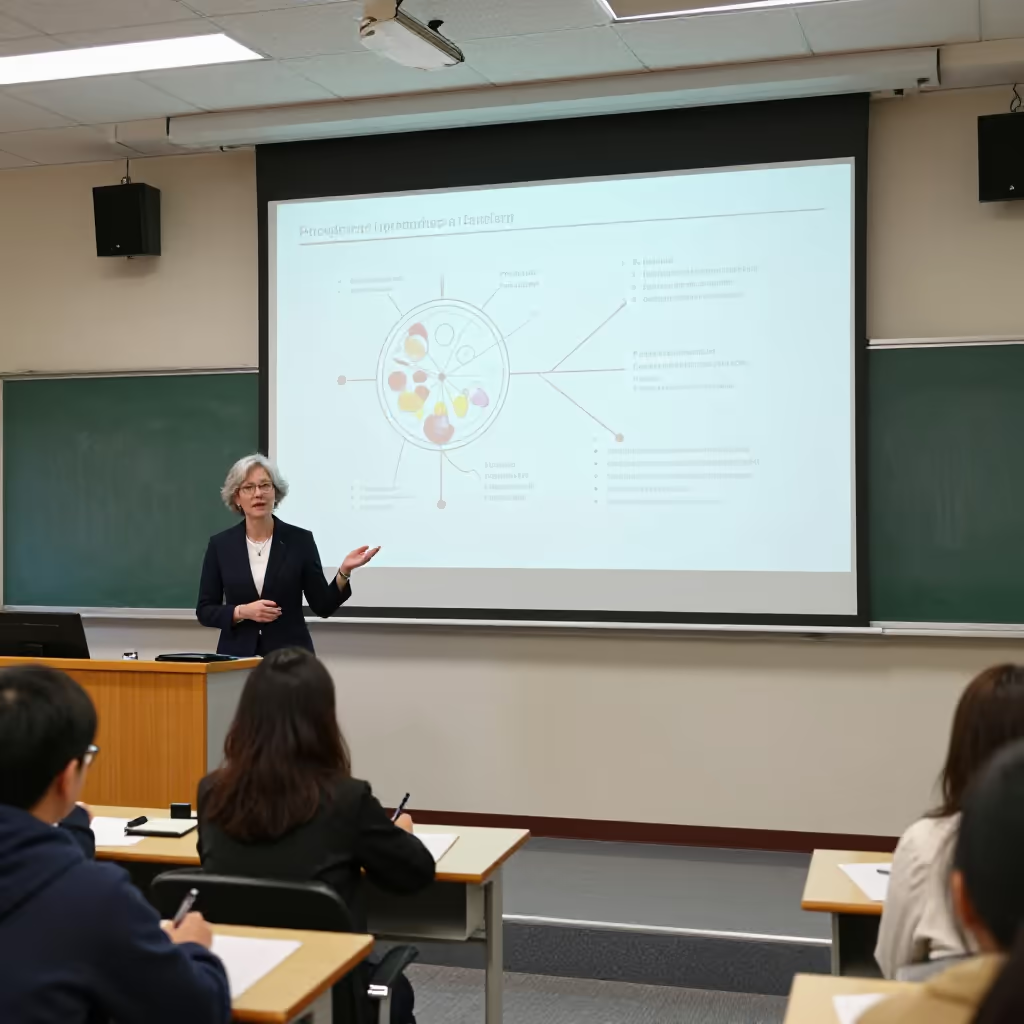
A woman who teaches and conducts research as the holder of a chair at a university or institution of higher education. It is the highest academic title for an office or position.
example
Die Professorin für mittelalterliche Geschichte hält heute ihre Antrittsvorlesung.
The professor of medieval history is giving her inaugural lecture today.
Usage tips
Word formation
The ending '-in' is the typical German way to form the feminine version of job titles and terms for people. The masculine form is 'der Professor' (professor).
EXAMPLE
Sie ist die erste Professorin in der Geschichte dieses Instituts.
She is the first female professor in the history of this institute.
Formal address
In an academic setting, the correct form of address is very important. A female professor is formally addressed as 'Frau Professorin' plus her last name.
EXAMPLE
Guten Tag, Frau Professorin Meier, haben Sie einen Moment Zeit?
Good afternoon, Professor Meier, do you have a moment?
Typical collocations
A professor typically works at a university or institution of higher education. Common verbs are 'lehren an' (to teach at), 'forschen über' (to research), or 'eine Vorlesung halten' (to give a lecture).
EXAMPLE
Die Professorin forscht über die Auswirkungen des Klimawandels.
The professor researches the effects of climate change.
Compare with
near_synonym · confusable
Professorin vs Professor
professor
'der Professor' and 'die Professorin' both refer to a person with a high academic position at a university or college. The important difference is gender and the article. 'der Professor' is used for a man, and 'die Professorin' for a woman. The words can easily be confused because the role and position are the same. So pay attention to which person you are talking about and which article you need.
Professorin
Die Professorin leitet ein großes Projekt an der Universität.
The professor leads a large project at the university.
Professor
Der Professor wird morgen über Klimaforschung sprechen.
The professor will speak about climate research tomorrow.