


To make a prediction about a future development based on data, facts, or scientific methods.
example
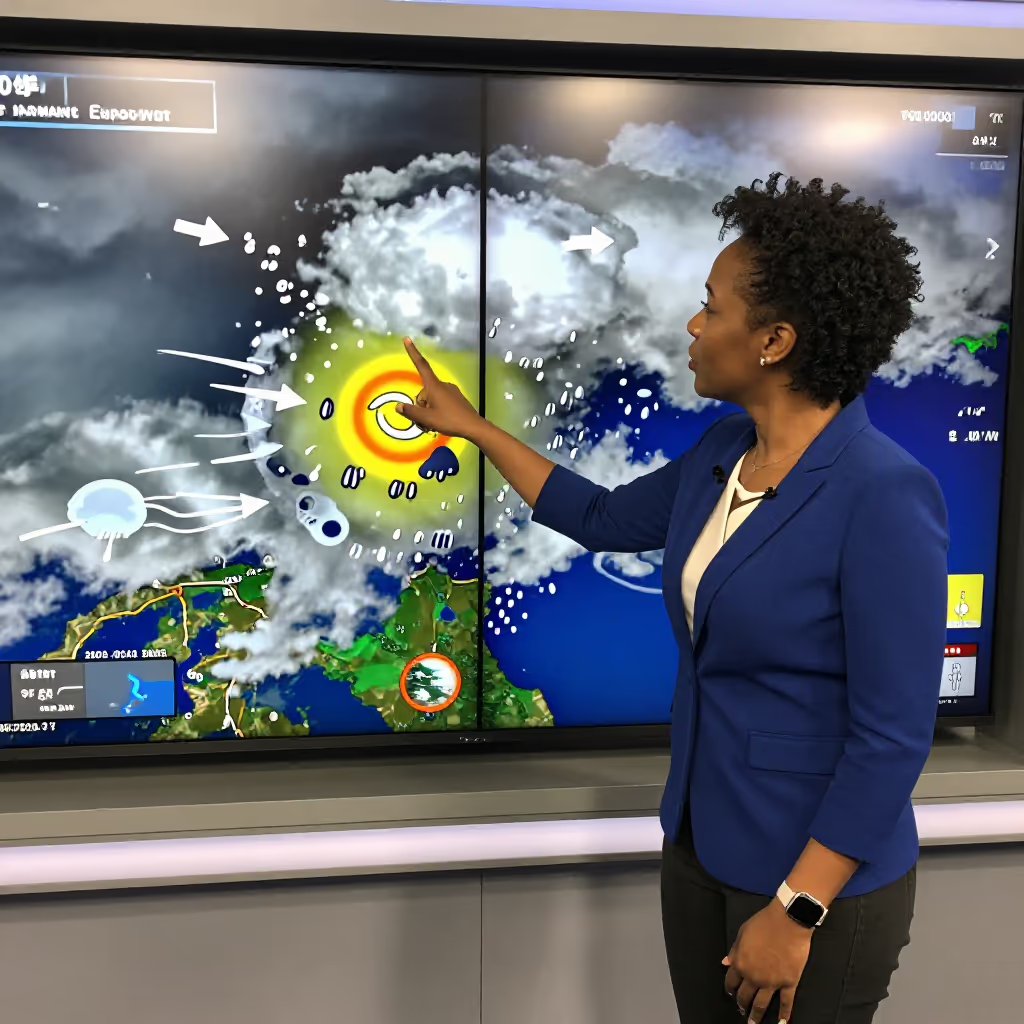
Meteorologen prognostizieren für das Wochenende schwere Gewitter.
Meteorologists are forecasting severe thunderstorms for the weekend.
Usage tips
Word family
'Prognostizieren' (to forecast) is the verb related to the noun 'die Prognose' (the forecast). If you know that 'die Prognose' is a prediction, you can easily work out the meaning of the verb.
EXAMPLE
Die Prognose für die nächsten Tage ist gut.
The forecast for the next few days is good.
Register and style
This verb belongs in a formal or technical context. It implies that the prediction is based on data and analysis, and is therefore used by experts, scientists, or in the news.
EXAMPLE
Wirtschaftsexperten prognostizieren ein baldiges Ende der Rezession.
Economic experts are forecasting an imminent end to the recession.
Sentence structure and usage pattern
The prediction can follow the verb as a direct accusative object or be expressed by a subordinate clause with 'dass' (that). Both structures are very common.
EXAMPLE
Forscher prognostizieren einen Anstieg des Meeresspiegels.
Researchers are forecasting a rise in sea levels.
Typical collocations
What is forecast is often something in the future. Typical objects are therefore 'eine Entwicklung' (a development), 'ein Trend' (a trend), 'Wachstum' (growth), 'das Wetter' (the weather), or 'die Wahlergebnisse' (the election results).
EXAMPLE
Niemand konnte diesen negativen Trend prognostizieren.
No one could forecast this negative trend.
Compare with
near_synonym · confusable
prognostizieren vs erwarten
to expect
'erwarten' and 'prognostizieren' both refer to something in the future. 'erwarten' is used in everyday language when you expect something or believe that something will happen. This can be based on experience, a feeling, or simple information. 'prognostizieren' sounds more technical and means that a prediction is based on data, facts, or methods. You often hear it in connection with weather, the economy, medicine, or planning. Learners may confuse the words because both concern the future. In everyday language, 'erwarten' is usually more natural; for a professional prediction, 'prognostizieren' is more precise.
prognostizieren
Die Expertinnen prognostizieren für den Sommer höhere Preise für Strom.
The experts are forecasting higher electricity prices for the summer.
erwarten
Mein Nachbar erwartet, dass der Handwerker am Nachmittag kommt.
My neighbor expects the repairman to come in the afternoon.