

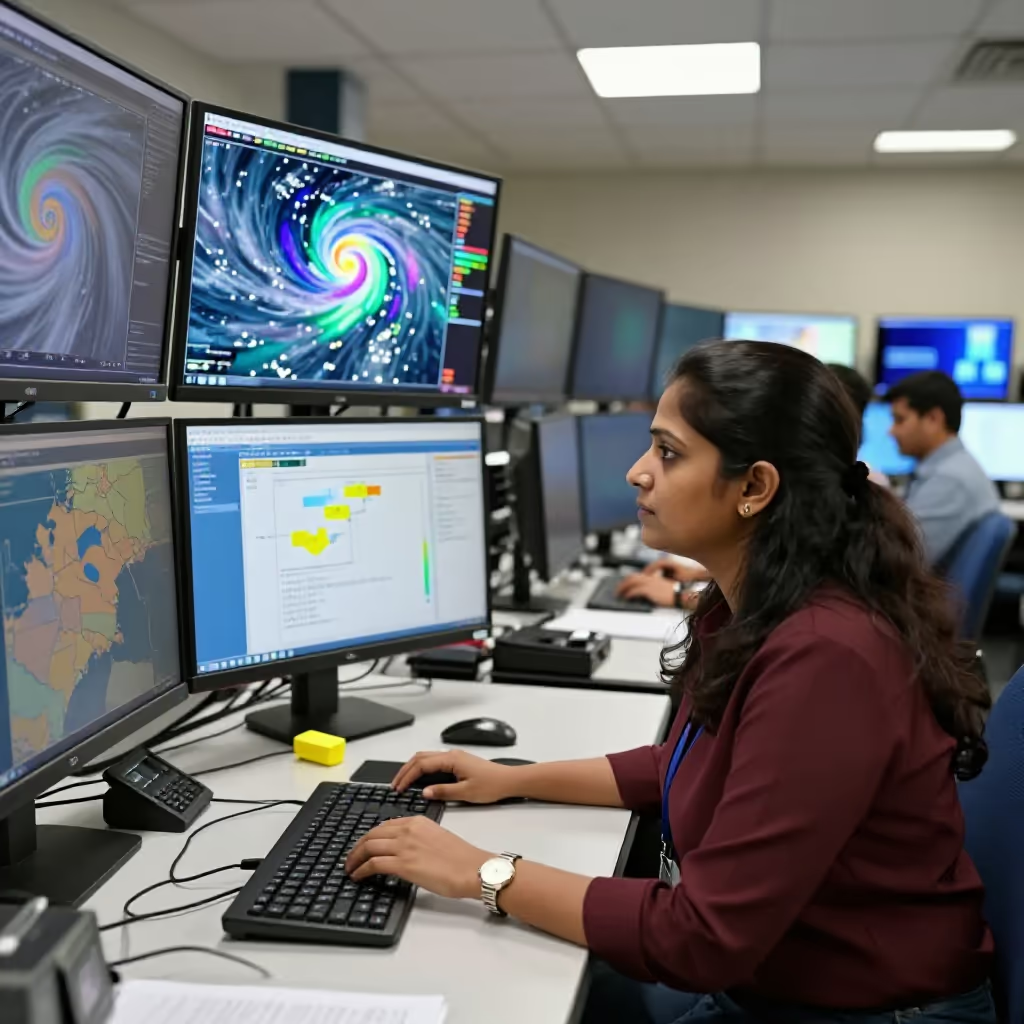
vorhersehen
to foresee
To recognize, expect, or predict a future event or development in advance.
EXAMPLE
Niemand konnte die Konsequenzen dieser Entscheidung vollständig vorhersehen.
No one could fully foresee the consequences of this decision.
to foresee
Loading your saved state.
to foresee
To recognize, expect, or predict a future event or development in advance.
Niemand konnte die Konsequenzen dieser Entscheidung vollständig vorhersehen.
No one could fully foresee the consequences of this decision.
'Vorhersehen' (to foresee) is a separable verb. The prefix 'vorher-' comes at the end in a main clause. In subordinate clauses and in the infinitive, the verb stays together.
Der Experte sah diese Entwicklung nicht vorher.
The expert did not foresee this development.
The verb consists of 'vorher' (beforehand) and 'sehen' (to see). Its literal meaning is therefore 'to see something before it happens,' which makes it easier to understand and remember.
Manche Leute glauben, sie können Katastrophen vorhersehen.
Some people believe they can foresee disasters.
'Vorhersehen' (to foresee) is often used with abstract nouns that describe a future development. Common objects are: die Folgen (the consequences), die Konsequenzen (the consequences), Probleme (problems), or eine Gefahr (a danger).
Die langfristigen Folgen der Klimakrise waren schon früh vorherzusehen.
The long-term consequences of the climate crisis could already be foreseen early on.
to disregard / to foresee
Both words refer to something in the future that can be recognized from indications. „Absehen“ emphasizes that a result can be inferred from the current situation, while „vorhersehen“ also refers to making an active prediction. Use „absehen“ for recognizable consequences and „vorhersehen“ for a prediction.
Die Meteorologin kann für morgen starken Regen vorhersehen.
The meteorologist can predict heavy rain for tomorrow.
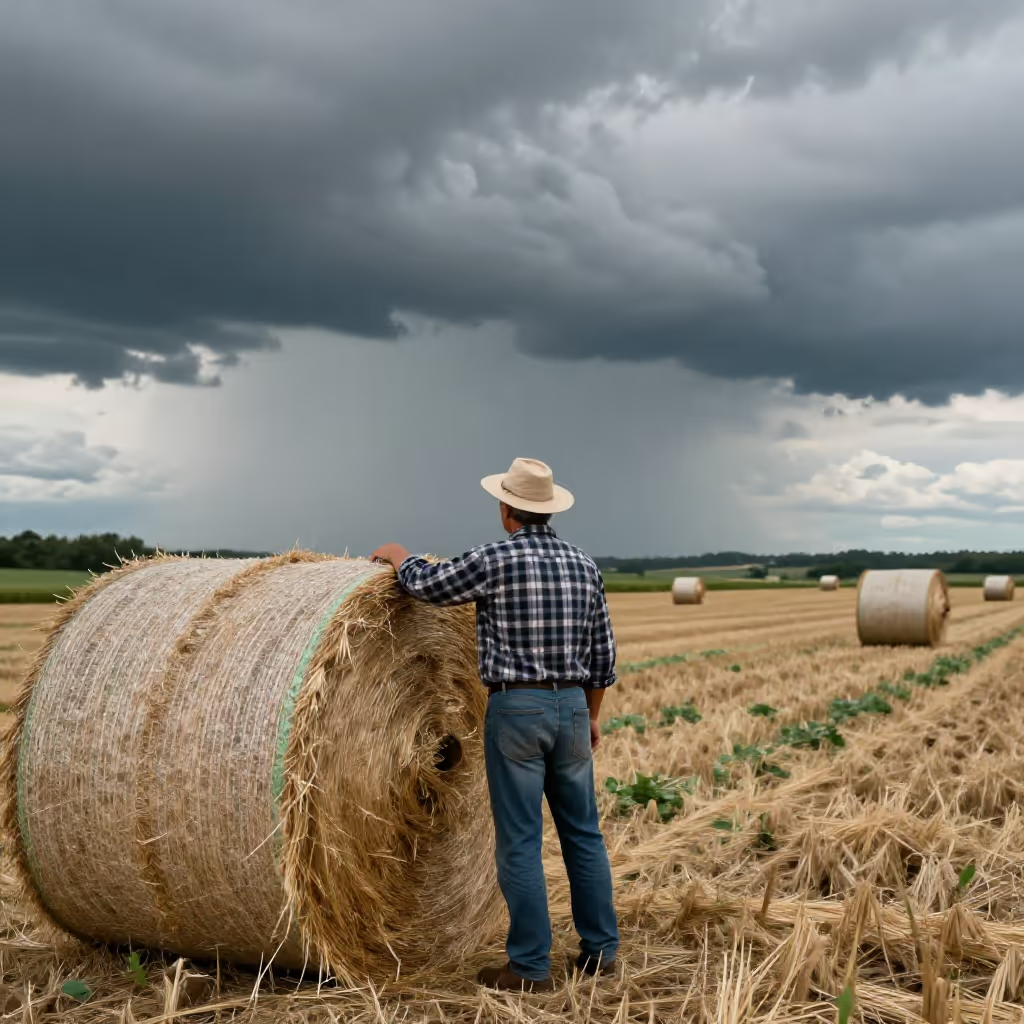
An den dunklen Wolken lässt sich absehen, dass es bald regnen wird.
The dark clouds make it clear that it will rain soon.