

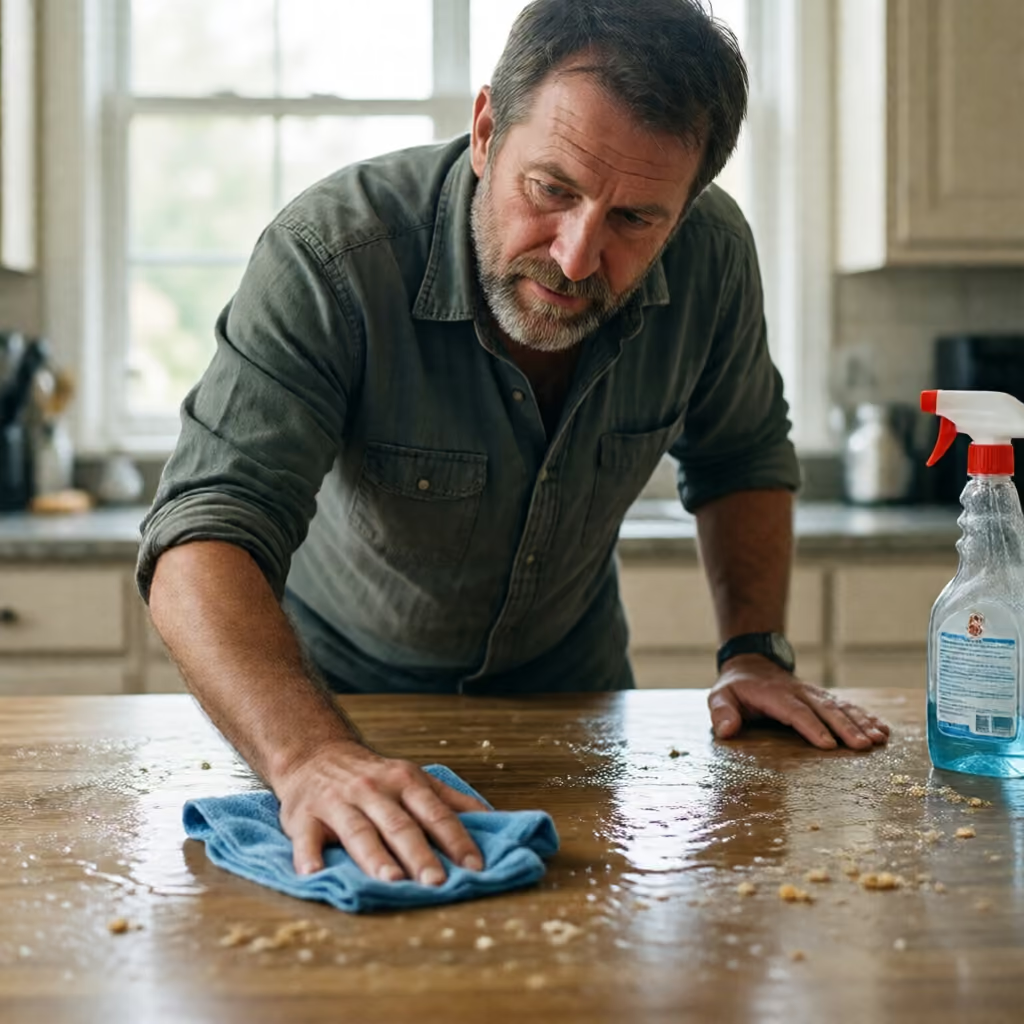
der Putzlappen
cleaning cloth
A cloth used for cleaning and wiping surfaces.
EXAMPLE
Mit einem feuchten Putzlappen wischte sie den Tisch ab.
She wiped the table with a damp cleaning cloth.
cleaning cloth
der Putzlappen, die Putzlappen
Loading your saved state.
cleaning cloth
A cloth used for cleaning and wiping surfaces.
Mit einem feuchten Putzlappen wischte sie den Tisch ab.
She wiped the table with a damp cleaning cloth.
| gender | masculine der |
|---|---|
| plural | die Putzlappen |
| genitive | des Putzlappens |
| singular | plural | |
|---|---|---|
| nominative | der Putzlappen | die Putzlappen |
| accusative | den Putzlappen | die Putzlappen |
| dative | dem Putzlappen | den Putzlappen |
| genitive | des Putzlappens | der Putzlappen |
The article changes with the case; it is shown in colour.
„Putzlappen“ consists of „Putz-“ and „Lappen“. The first part belongs to the verb „putzen“ (to clean) and shows what the cloth is used for.
Zum Reinigen der Fensterrahmen brauchst du einen Putzlappen.
You need a cleaning cloth to clean the window frames.
Typical collocations include „einen Putzlappen anfeuchten“ (to dampen a cleaning cloth), „einen Putzlappen auswaschen“ (to rinse out a cleaning cloth), and „einen Putzlappen auswringen“ (to wring out a cleaning cloth). These describe preparing or cleaning the cloth.
Nach dem Putzen wäscht sie den Putzlappen aus und wringt ihn gründlich aus.
After cleaning, she rinses out the cleaning cloth and wrings it out thoroughly.
A common pattern is „mit einem Putzlappen über etwas wischen“ (to wipe over something with a cleaning cloth). After „mit“, the dative is used; in this pattern, the surface being wiped is used with „über“ and the accusative.
Er wischt mit einem Putzlappen über den Küchentisch.
He wipes over the kitchen table with a cleaning cloth.