


rausgehen
to go outside
To move from an enclosed space, such as a building or room, to the outside.
EXAMPLE
Bei dem schönen Wetter müssen wir einfach rausgehen.
With the weather this nice, we simply have to go outside.
to go out
Loading your saved state.
to go outside
To move from an enclosed space, such as a building or room, to the outside.
Bei dem schönen Wetter müssen wir einfach rausgehen.
With the weather this nice, we simply have to go outside.

to go out
To go out in order to have fun, for example to a bar, club, or restaurant.
Wollen wir am Freitagabend zusammen rausgehen?
Do we want to go out together on Friday evening?
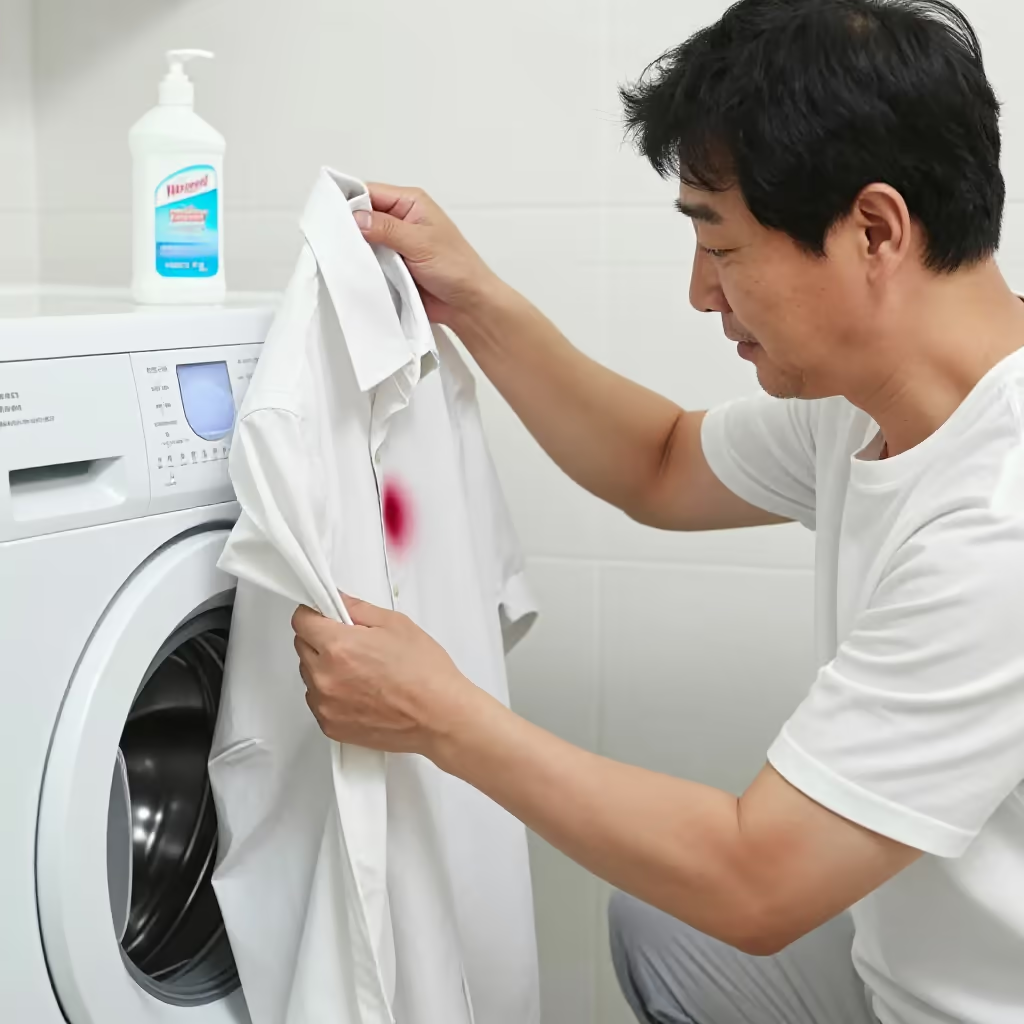
to come out
To be able to be removed; describes that a stain or dirt can be eliminated by washing or cleaning.
Ich hoffe, der Rotweinfleck geht aus dem Hemd wieder raus.
I hope the red wine stain comes out of the shirt again.

to go out
To be sent out or published. Often refers to messages, letters, or official announcements.
Die Pressemitteilung ist gestern an alle Redaktionen rausgegangen.
The press release went out to all editorial offices yesterday.
'Rausgehen' is a separable verb. The prefix 'raus-' goes at the end in a main clause, while in a subordinate clause and in the infinitive with 'zu', it remains attached to the verb.
Wir gehen heute Abend nicht raus.
We are not going out tonight.
The prefix 'raus-' is the colloquial and very common short form of 'heraus-'. In most everyday situations, 'rausgehen' is used instead of 'herausgehen'.
Komm, wir gehen raus in den Garten!
Come on, let's go out into the garden!
Whether 'rausgehen' means simply 'nach draußen gehen' (to go outside) or 'sich amüsieren' (to have fun/go out) depends on the context. Time expressions like 'am Abend' (in the evening), 'am Wochenende' (on the weekend), or places like 'in eine Bar' (to a bar) point to the meaning 'ausgehen' (to go out).
Lass uns am Samstagabend zusammen rausgehen und tanzen.
Let's go out together on Saturday evening and dance.
When it is about stains, the subject of the sentence is the stain itself. The construction is typically '[Fleck] geht aus [Kleidungsstück] raus' ([stain] comes out of [item of clothing]).
Der Kaffeefleck geht hoffentlich beim Waschen wieder raus.
Hopefully the coffee stain will come out again in the wash.
Similar to the meaning with stains, in this meaning the subject is the message or item that is being sent out. The person sending it is often not mentioned.
Die Einladungen für die Hochzeit sind letzte Woche an alle Gäste rausgegangen.
The wedding invitations went out to all the guests last week.
to go out / run out / assume
Ausgehen and rausgehen can both refer to going out for entertainment. Ausgehen focuses on the social activity, while rausgehen can mean the same thing but emphasizes leaving the house. For a straightforward plan to have fun, ausgehen is especially clear.

Nach zwei Tagen zu Hause gehen wir heute Abend endlich raus und besuchen einen Club.
After two days at home, we’re finally going out tonight and visiting a club.
Heute Abend gehen wir aus und besuchen einen Club.
We’re going out tonight and visiting a club.