


reinstecken
to stick in
To stick something into an opening, a container, or something else.
EXAMPLE
Hast du den Brief schon in den Umschlag reingesteckt?
Have you already stuck the letter into the envelope?
to stick in / put in
Loading your saved state.
to stick in
To stick something into an opening, a container, or something else.
Hast du den Brief schon in den Umschlag reingesteckt?
Have you already stuck the letter into the envelope?
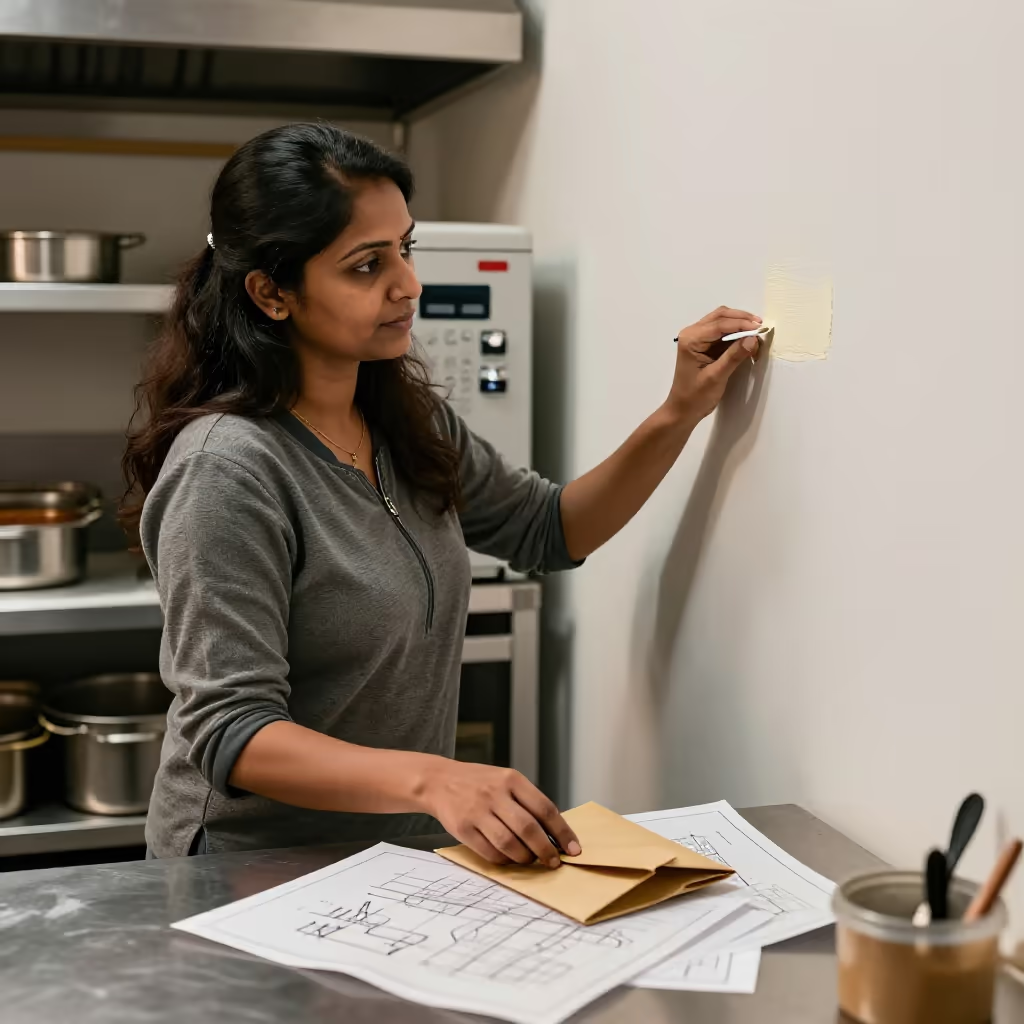
to put into
Colloquial and figurative for investing time, money, or effort in a project or task.
Ich habe sehr viel Arbeit in diese Präsentation reingesteckt.
I put a lot of work into this presentation.
'Reinstecken' (to stick in/put in) is a separable verb with the prefix 'rein-'. In a main clause, the prefix goes at the end; in a subordinate clause, the verb stays together.
Er steckt den Schlüssel in das Schloss rein.
He sticks the key into the lock.
The verb 'reinstecken' (to stick in/put in) is considered colloquial. The prefix 'rein-' is a short, informal form of 'hinein-' (into/in).
Steck das Geld einfach in deine Tasche rein.
Just stick the money into your pocket.
You can recognize the meaning of the verb from the object. With concrete objects (key, letter), the literal meaning is intended. With abstract nouns (time, money, effort), the figurative meaning 'investieren' (to invest) is intended.
Sie hat den USB-Stick in den Laptop reingesteckt.
She stuck the USB drive into the laptop.
In the figurative meaning, 'reinstecken' (to put into/invest) is often used with abstract nouns such as 'Arbeit' (work), 'Mühe' (effort), 'Zeit' (time), 'Energie' (energy), or 'Geld' (money).
Wir haben viel Energie in die Renovierung der Wohnung reingesteckt.
We put a lot of energy into renovating the apartment.
to stick / to be stuck
Stecken and reinstecken can both express putting an object into an opening or container. Reinstecken emphasizes the direction inward and, in colloquial speech, can also be used without naming the destination when it is clear from the context. When the destination is explicitly stated, stecken is also possible.
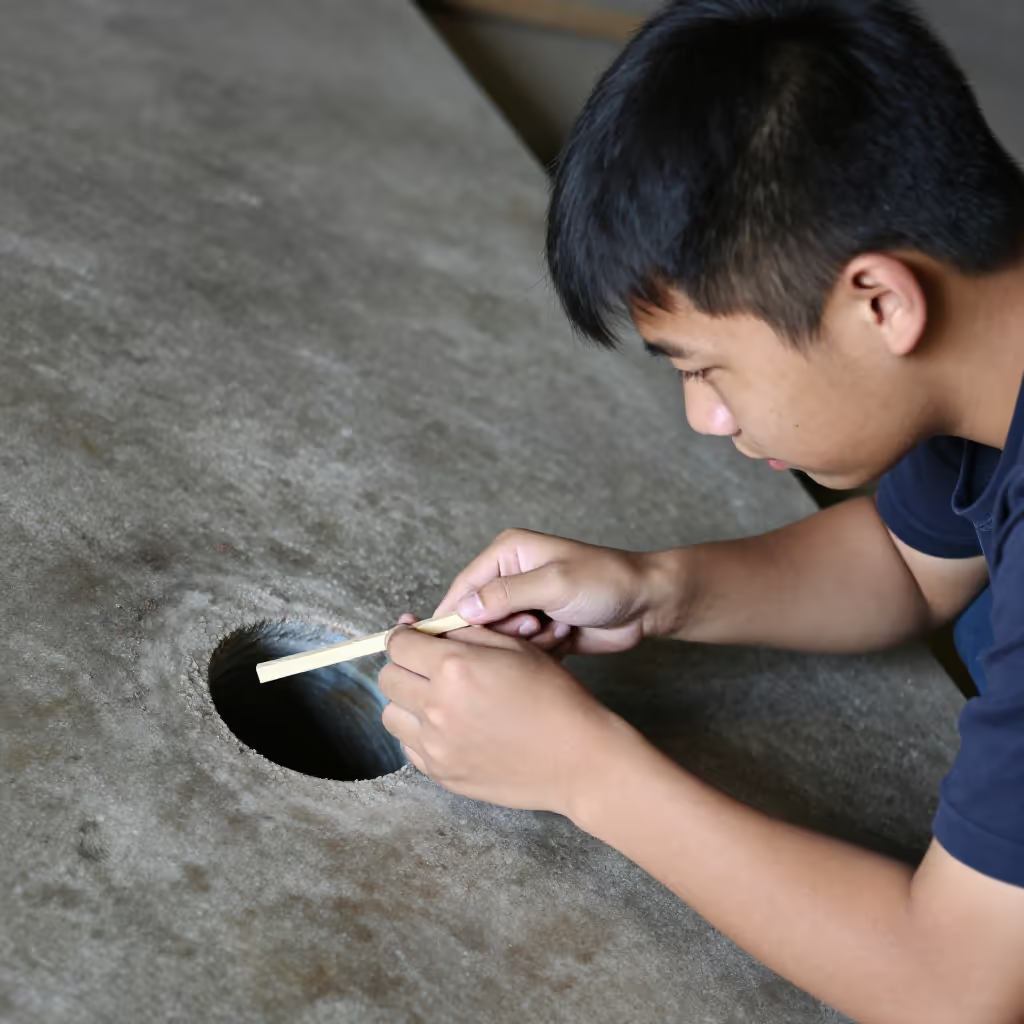
Der Schlüssel liegt schon in deiner Hand, also steck ihn jetzt rein.
The key is already in your hand, so put it in now.
Steck den Schlüssel bitte in das Schloss.
Please put the key in the lock.