

stecken
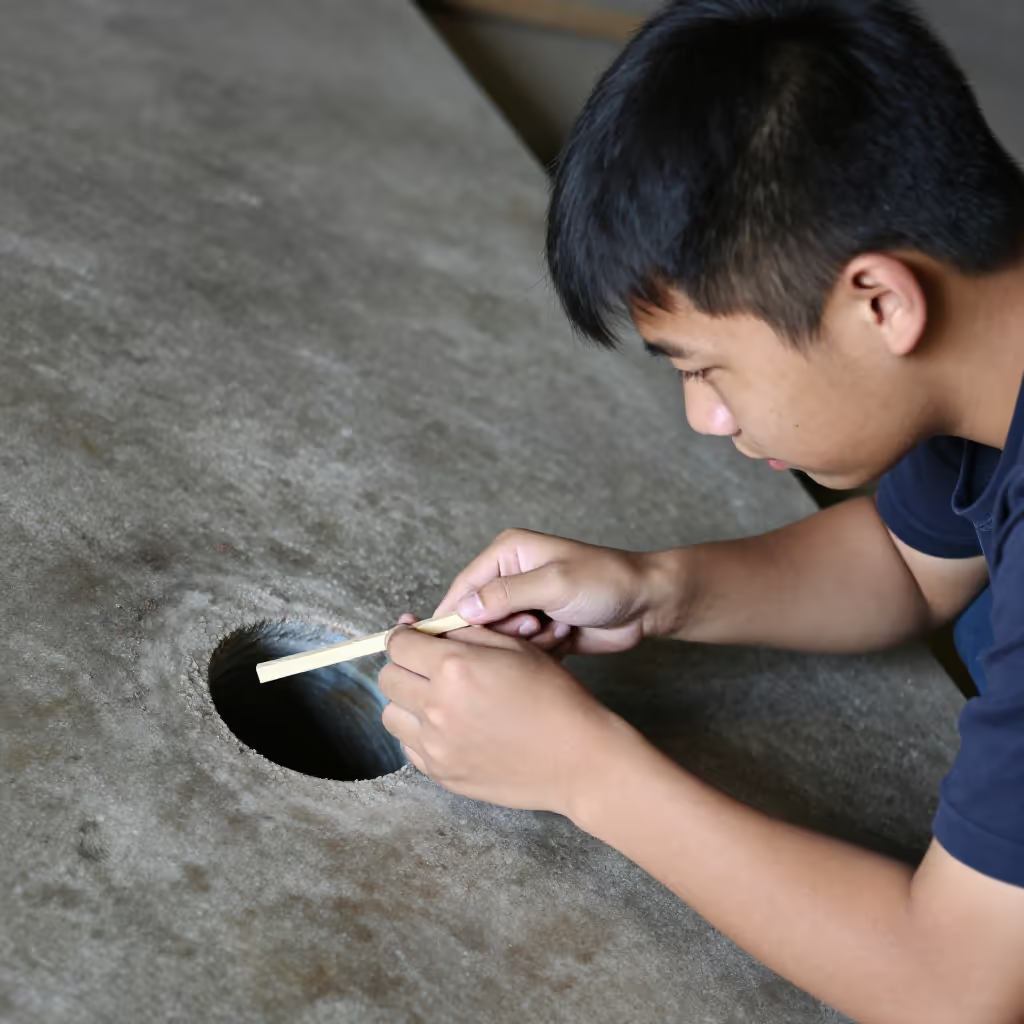
to stick
To put something into an opening or hollow space so that it stays fixed there.
EXAMPLE
Er steckte den Brief in den Umschlag.
He stuck the letter into the envelope.
to stick / to be stuck
Loading your saved state.
to stick
To put something into an opening or hollow space so that it stays fixed there.
Er steckte den Brief in den Umschlag.
He stuck the letter into the envelope.

to be
To be in a place, often hidden or hard to find. Frequently used as a question.
Wo hast du denn den ganzen Tag gesteckt?
Where have you been all day?

to be stuck
To be in a particular, usually difficult, situation or position.
Wir stecken mitten in den Prüfungsvorbereitungen.
We are right in the middle of exam preparations.

to slip someone something
To give someone something secretly, usually money or information.
Der Spion hat seinem Kontaktmann eine Nachricht gesteckt.
The spy slipped his contact a message.
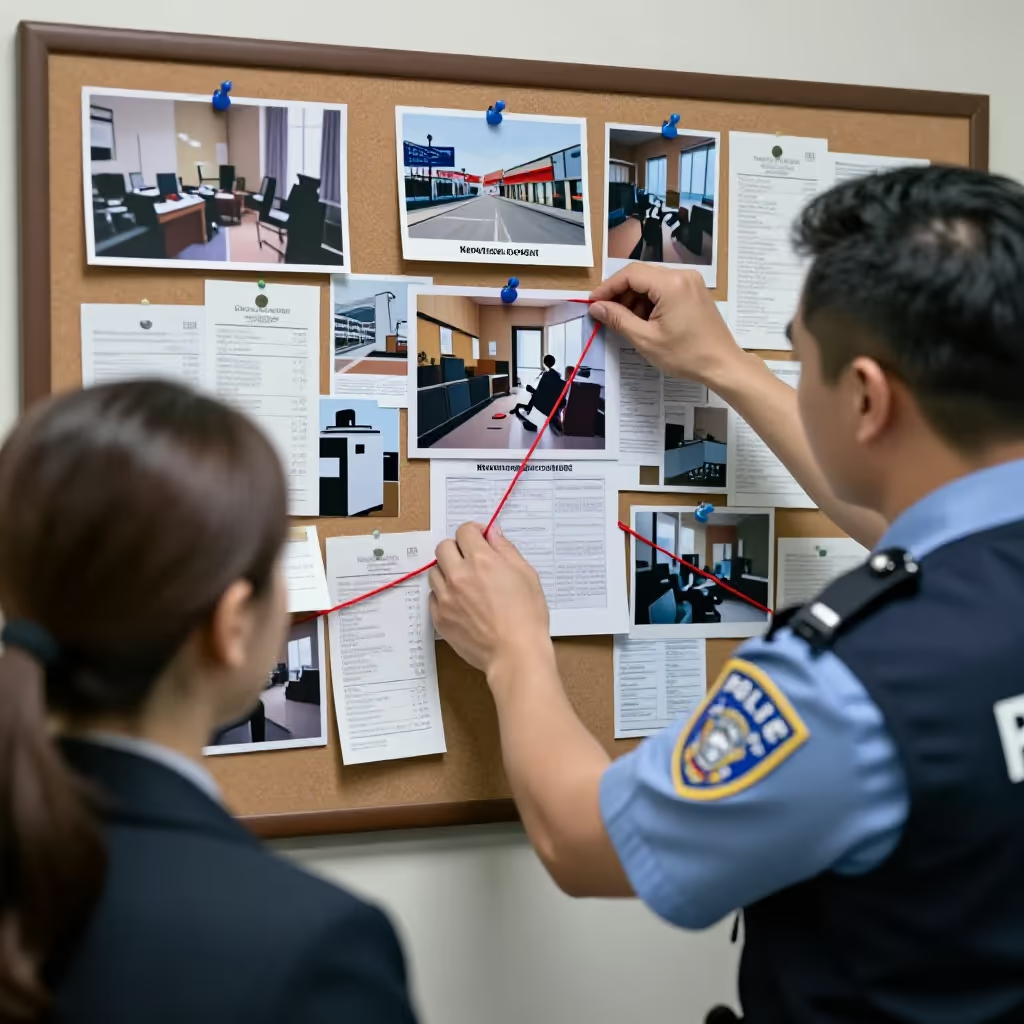
to be behind something
To be the hidden cause or the real reason for something.
Ich frage mich, welche Absicht wirklich hinter seinem Angebot steckt.
I wonder what intention is really behind his offer.
Although 'stecken' (to stick / to be stuck) often describes a state or position, the perfect tense is always formed with 'haben', never with 'sein'.
Der Schlüssel hat die ganze Zeit in der Tür gesteckt.
The key was in the door the whole time.
When 'stecken' (to stick) describes movement (putting something in), it is followed by a preposition with the accusative. When it describes a location (being somewhere), it is followed by a preposition with the dative.
Sie steckt den Stecker in die Steckdose.
She plugs the plug into the socket.
The question 'Wo steckst du?' or 'Wo hast du gesteckt?' is a very common, colloquial way to ask where someone is or was.
Hallo? Ich warte schon seit 20 Minuten. Wo steckst du denn?
Hello? I've been waiting for 20 minutes. Where are you?
To express that you are in a (often difficult) situation, 'stecken' (to be stuck) is frequently used with 'in' + dative. Typical phrases are 'in Schwierigkeiten stecken' (to be in trouble), 'im Stau stecken' (to be stuck in traffic), or 'in der Klemme stecken' (to be in a tight spot).
Ruf mich später an, ich stecke gerade in einer Besprechung.
Call me later; I'm in a meeting right now.
When you secretly give someone something, the verb follows the pattern 'jemandem (dative) etwas (accusative) stecken' (to slip someone something). The person is the dative object, and the thing is the accusative object.
Ihre Großmutter hat ihr zum Abschied heimlich etwas Geld gesteckt.
Her grandmother secretly slipped her some money as she was leaving.
In the meaning 'die Ursache sein' (to be the cause), 'stecken' (to be behind something) is always used with the preposition 'hinter' and the dative.
Ich wüsste gern, wer hinter dieser ganzen Sache steckt.
I'd like to know who is behind this whole thing.
to be
Sein asks neutrally about the location of something. Stecken can express the same question about location, but often suggests that the thing is hidden or difficult to find. When a search has been unsuccessful, stecken is therefore the more marked choice.

Wo stecken nur meine Schlüssel?
Where could my keys be?
Wo sind meine Schlüssel?
Where are my keys?