

das Relikt
relic
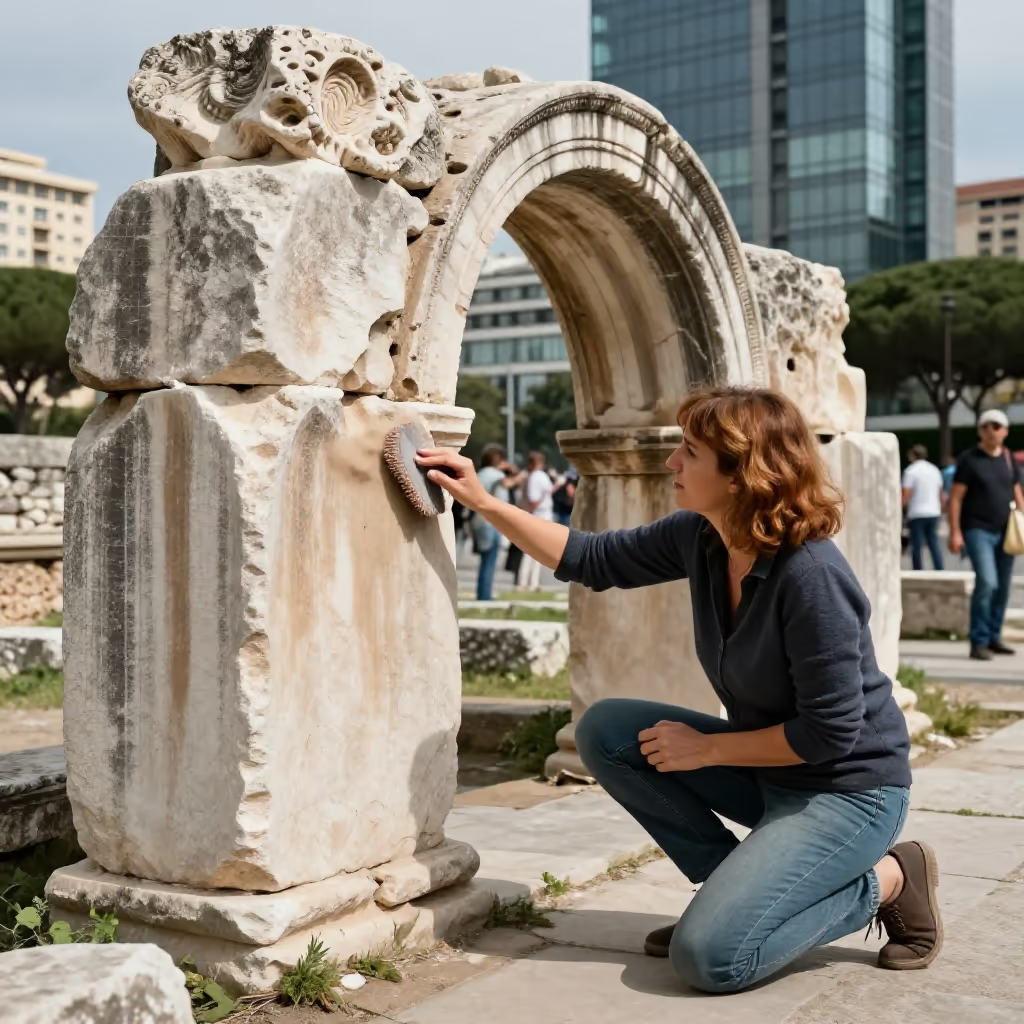
An object, custom, or structure that has remained from an earlier time and serves as evidence of that era.
EXAMPLE
Die alte Stadtmauer ist ein Relikt aus dem Mittelalter.
The old city wall is a relic from the Middle Ages.
relic
Loading your saved state.
relic
An object, custom, or structure that has remained from an earlier time and serves as evidence of that era.
Die alte Stadtmauer ist ein Relikt aus dem Mittelalter.
The old city wall is a relic from the Middle Ages.
relic
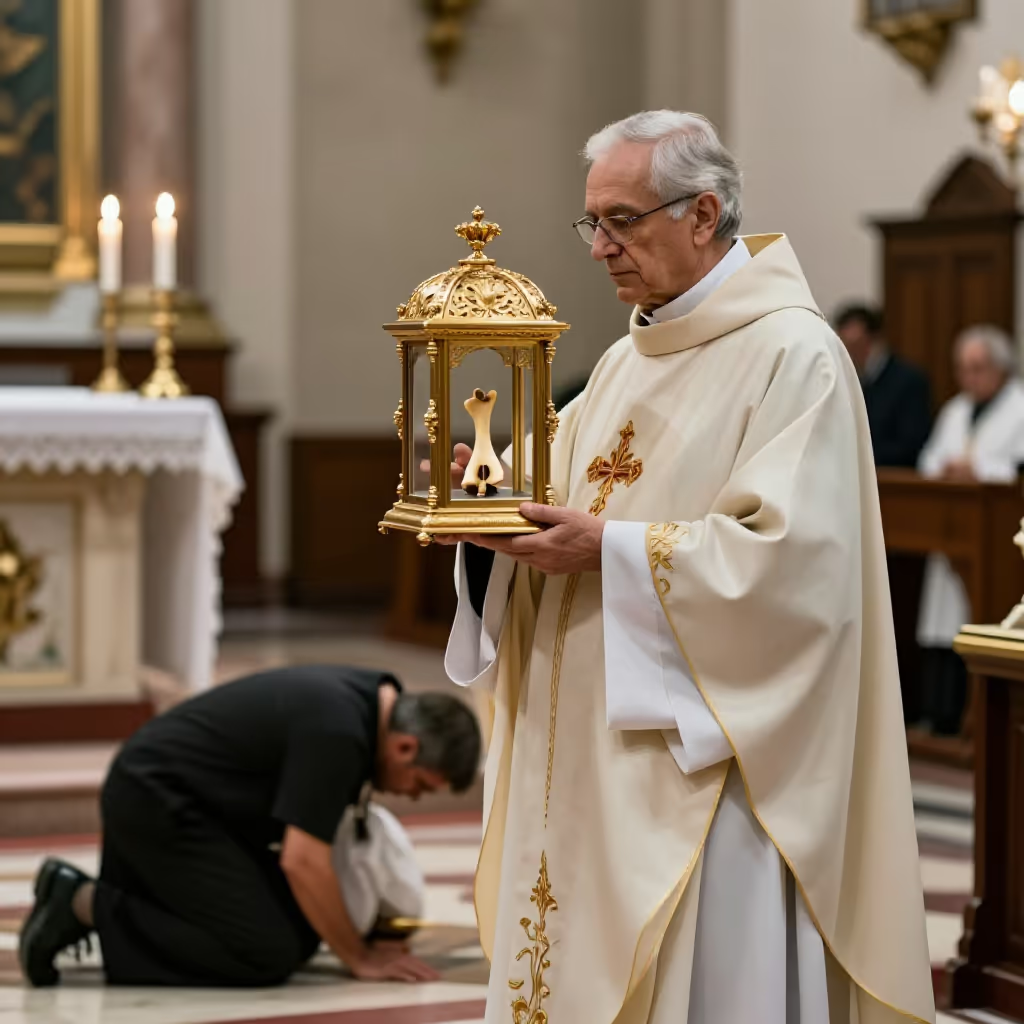
In a religious context, especially in Christianity, a body part or personal object of a saint that is venerated as holy.
In der Schatzkammer des Doms wird ein Relikt des heiligen Martin aufbewahrt.
A relic of Saint Martin is kept in the cathedral treasury.
The context makes it clear which meaning is intended. If it is about history, architecture, or society, it is a remnant from an earlier time. If it is about religion, saints, or churches, it refers to a venerated object.
Die alte Fabrik ist ein Relikt der industriellen Revolution.
The old factory is a relic of the Industrial Revolution.
To name the era or origin of a relic, the preposition 'aus' (from) with the dative is almost always used.
Dieses Telefon mit Wählscheibe ist ein Relikt aus den 70er Jahren.
This rotary phone is a relic from the 1970s.
The word 'Relikt' (relic) is used mainly in written language and in educated or formal contexts such as museums, documentaries, or specialist articles.
Der Historiker bezeichnete die Monarchie als ein überholtes Relikt.
The historian described the monarchy as an outdated relic.
In a religious context, a relic is often 'aufbewahrt' (kept) in a treasury or shrine and 'verehrt' (venerated) by believers.
Tausende Pilger kamen, um das heilige Relikt zu verehren.
Thousands of pilgrims came to venerate the holy relic.
remnant / leftover
An Überrest is generally a remaining part of something that has passed, been destroyed, or been used up. A Relikt is more specific: it comes from an earlier period and serves as evidence of that era. Use „Überrest“ for a mere remainder and „Relikt“ when the historical character is important.
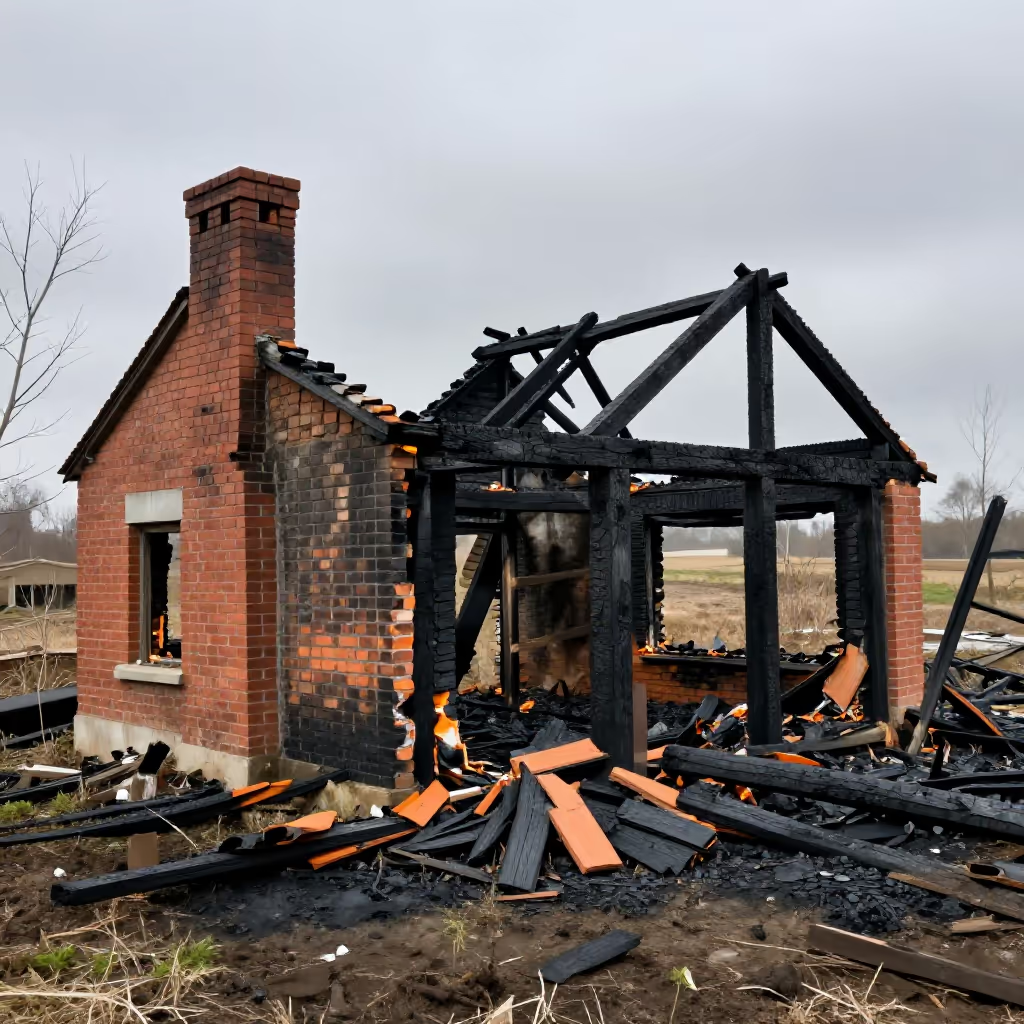
Die alte Mühle ist ein Relikt aus einer früheren Zeit.
The old mill is a relic from an earlier time.
Die Überreste der alten Mauer lagen noch neben der Baustelle.
The remnants of the old wall were still lying beside the construction site.