

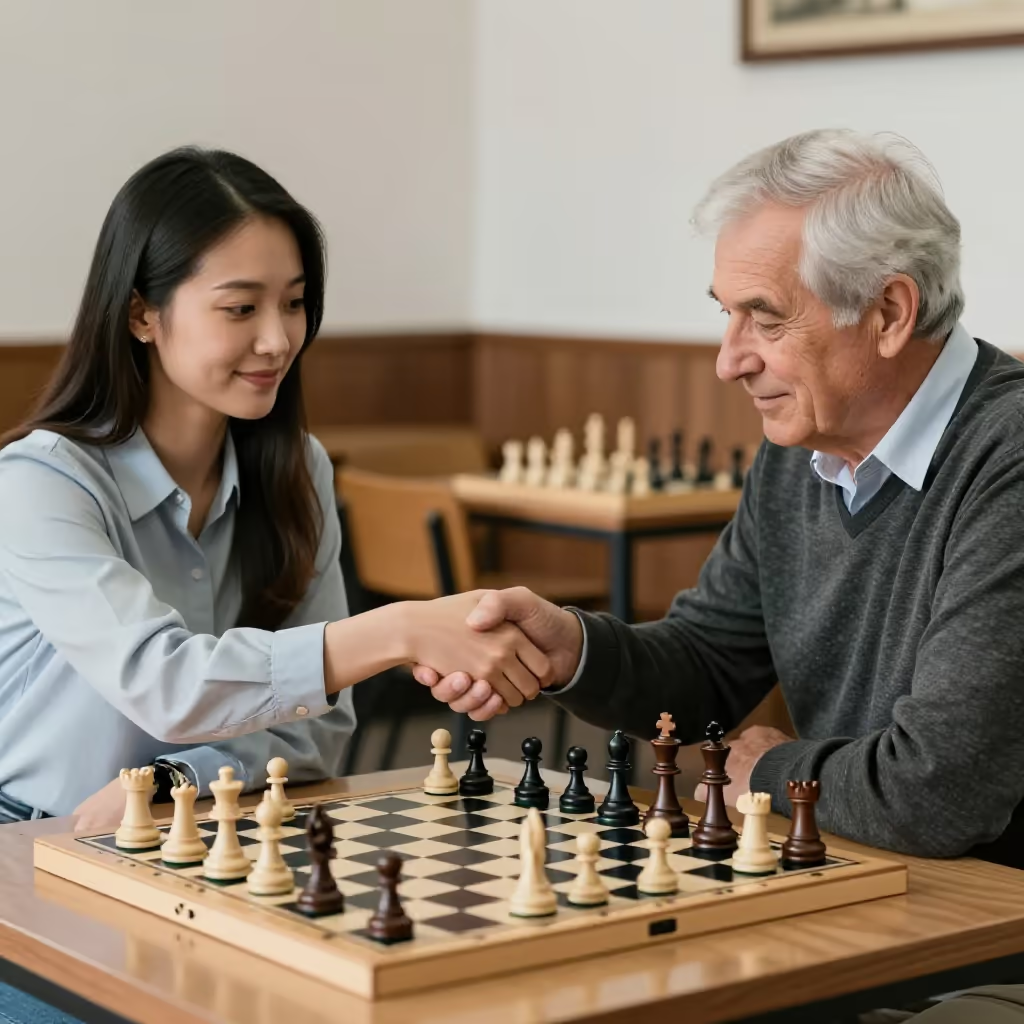
das Remis
draw
An undecided outcome in a game, especially in chess, where there is no winner and no loser.
EXAMPLE
Nach einem langen Kampf endete die Schachpartie mit einem Remis.
After a long battle, the chess game ended in a draw.
draw
Loading your saved state.
draw
An undecided outcome in a game, especially in chess, where there is no winner and no loser.
Nach einem langen Kampf endete die Schachpartie mit einem Remis.
After a long battle, the chess game ended in a draw.
The word 'Remis' (draw) is used almost exclusively in the context of games and competitions to describe a tie or draw. It is especially common in chess.
Die beiden Großmeister einigten sich nach vier Stunden auf ein Remis.
The two grandmasters agreed to a draw after four hours.
Common phrases are 'ein Remis anbieten' (to offer a draw), 'sich auf ein Remis einigen' (to agree to a draw), or when a game 'mit einem Remis endet' (ends in a draw).
Der Spieler in der schwächeren Position bot ein Remis an.
The player in the weaker position offered a draw.
'Remis' (draw) is often used without an article in the fixed structure '[game] endet Remis' ([game] ends in a draw) or '[game] endet mit Remis' ([game] ends with a draw).
Das Fußballspiel endete zur Überraschung aller Remis.
To everyone's surprise, the soccer match ended in a draw.
tied / undecided
Unentschieden describes the outcome of a game with no winner in various sports. Remis also refers to this kind of outcome, but it is especially the usual term in chess. For a chess game, Remis is therefore usually the better choice; in other sports, unentschieden is generally used.
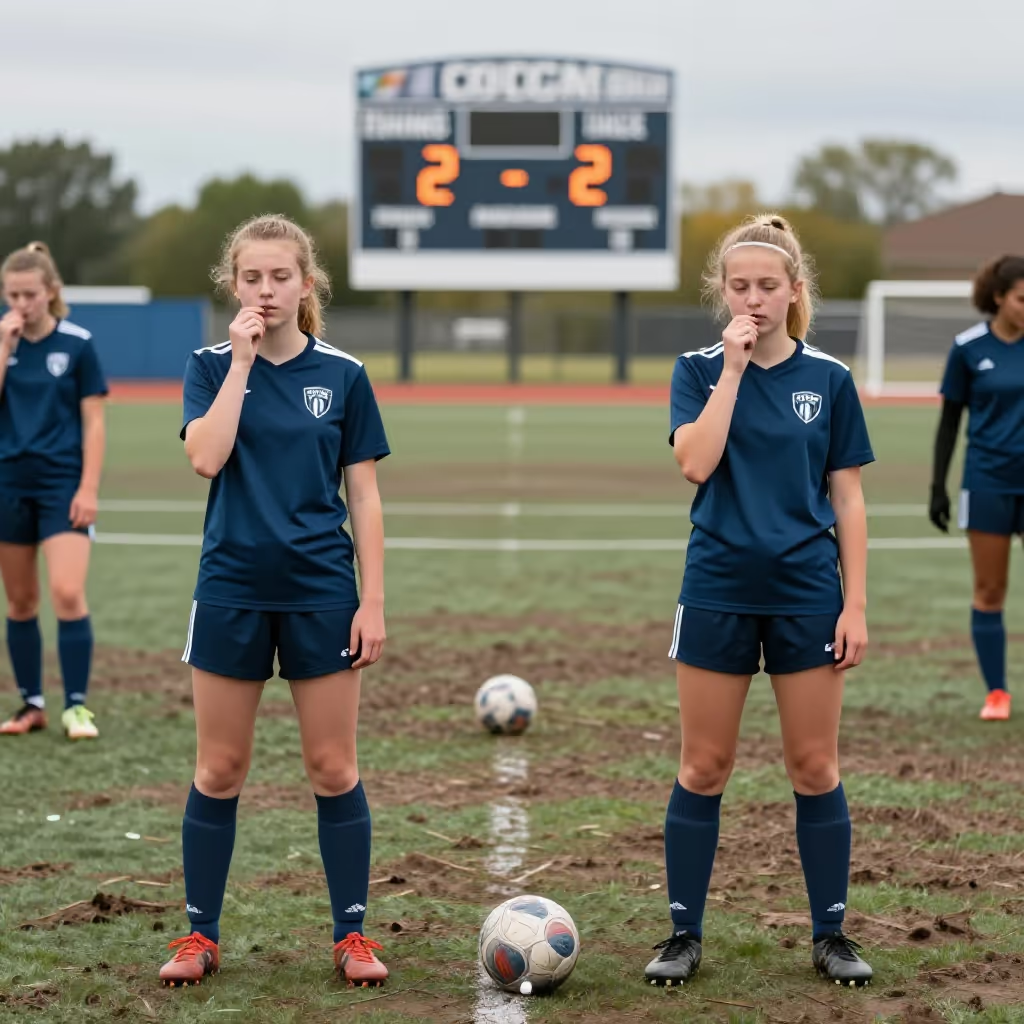
Die Schachpartie endete nach fünfzig Zügen mit einem Remis.
The chess game ended in a draw after fifty moves.
Das Fußballspiel endete mit 1:1 unentschieden.
The soccer game ended in a 1–1 draw.