

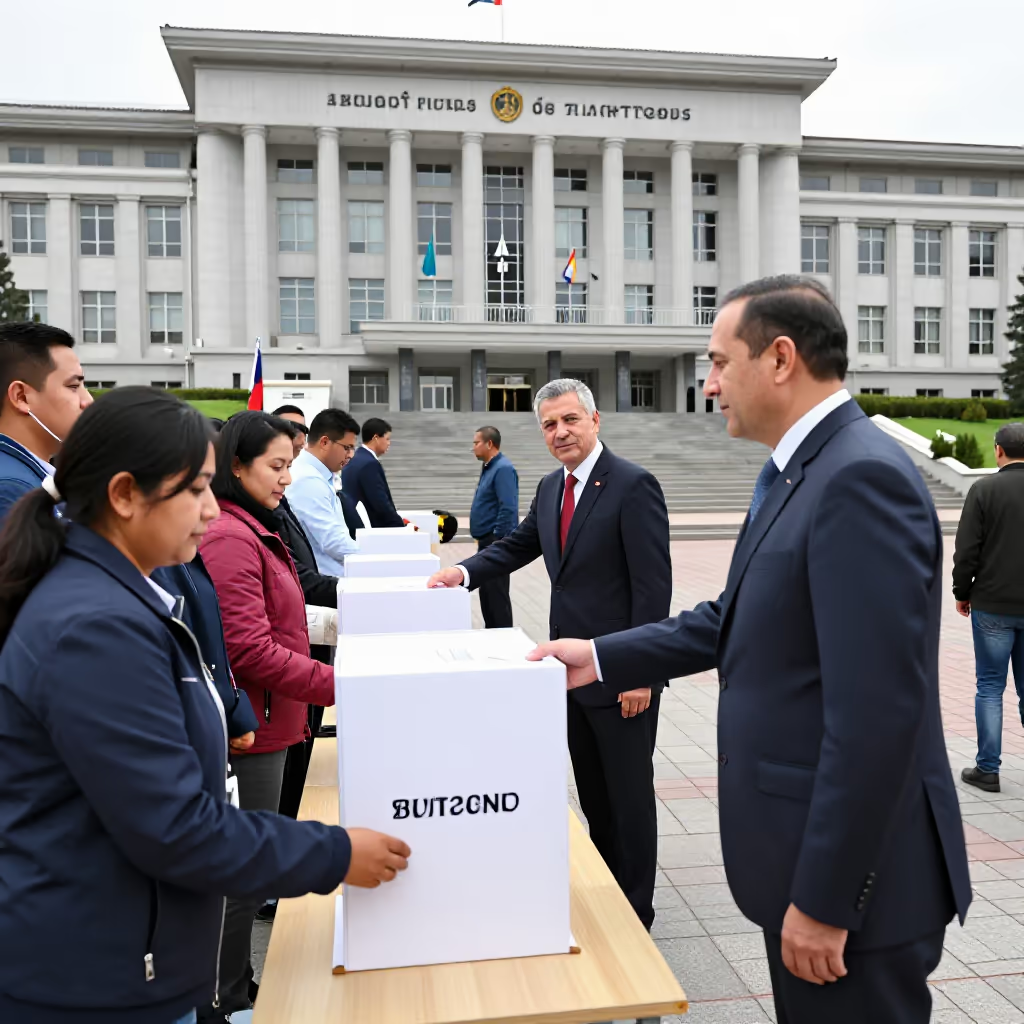
A form of government in which the head of state (e.g., a president) is elected for a certain period of time by the people or their representatives, and there is no monarch.
example
Die Bundesrepublik Deutschland ist eine parlamentarische Demokratie.
The Federal Republic of Germany is a parliamentary democracy.
Usage tips
Word family
The adjective that refers to a republic is 'republikanisch' (republican). It describes a person, an idea, or a form of government that follows the principles of a republic.
EXAMPLE
Er ist ein überzeugter Anhänger der republikanischen Staatsform.
He is a committed supporter of the republican form of government.
Part of country names
The word 'Republik' (republic) is often an official part of country names. Examples are the 'Bundesrepublik Deutschland' (Federal Republic of Germany), the 'Französische Republik' (French Republic), or the 'Tschechische Republik' (Czech Republic).
EXAMPLE
Die Hauptstadt der Tschechischen Republik ist Prag.
The capital of the Czech Republic is Prague.
Context
'Republik' (republic) is a technical term from politics and history. You will mainly encounter this word in the news, history books, or political discussions.
EXAMPLE
Im Geschichtsunterricht lernen wir über die Römische Republik.
In history class, we are learning about the Roman Republic.
Compare with
confusable
Republik vs Staat
state
'der Staat' and 'die Republik' both describe political forms of a country. 'Der Staat' is the more general term: it means the political organization with government, laws, and territory. 'Die Republik' is a specific form of government in which there is no king or queen and the head of state is elected. Learners may confuse the words because every republic is a state. But not every state is a republic, because a state can also be a monarchy.
Republik
Frankreich ist eine Republik mit einem gewählten Präsidenten.
France is a republic with an elected president.
Staat
Der Staat muss die Rechte seiner Bürger schützen.
The state must protect the rights of its citizens.