

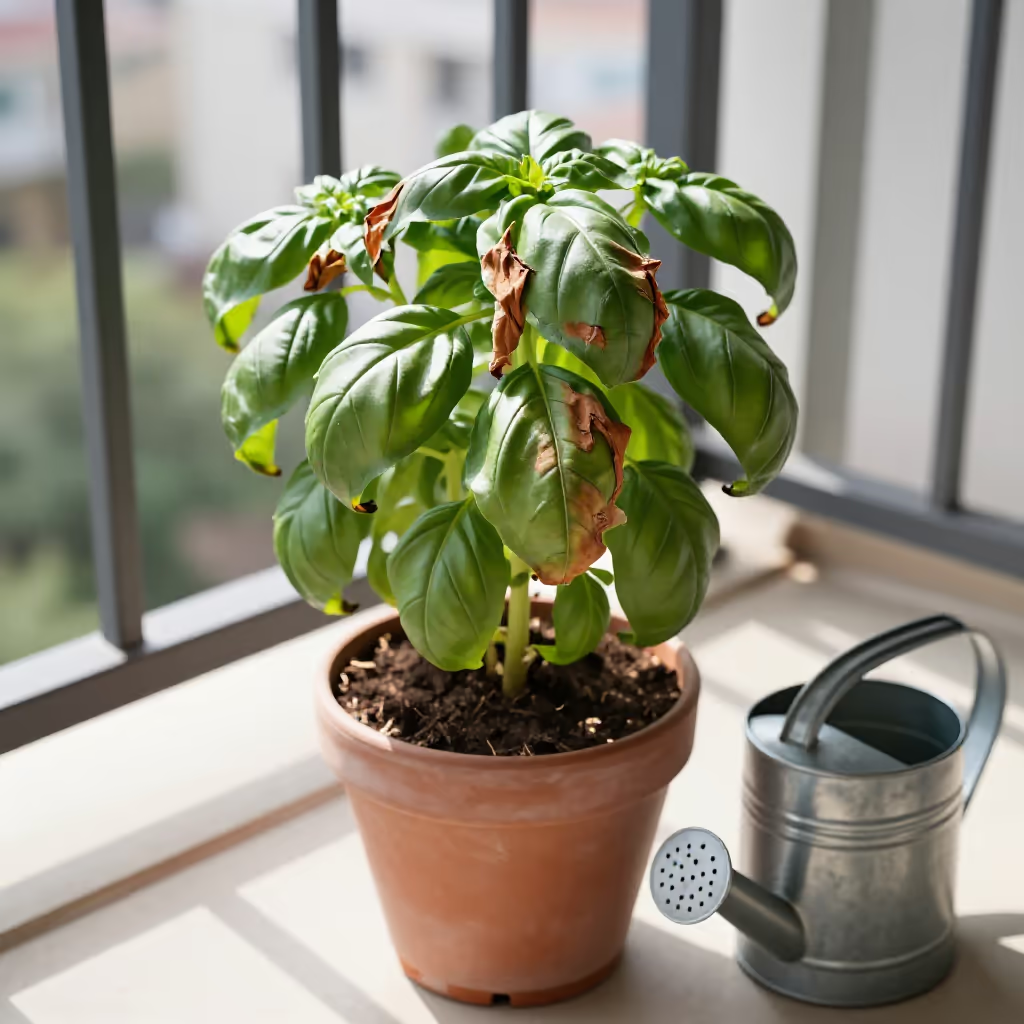
eingehen
to die
Describes dying or withering, especially of plants or animals, often because of poor conditions such as lack of water or disease.
EXAMPLE
Ohne Wasser wird die Pflanze bald eingehen.
Without water, the plant will soon die.
to die / shrink / respond
Loading your saved state.
to die
Describes dying or withering, especially of plants or animals, often because of poor conditions such as lack of water or disease.
Ohne Wasser wird die Pflanze bald eingehen.
Without water, the plant will soon die.

to shrink
Refers to textiles shrinking, usually after being washed at too high a temperature. The item of clothing becomes smaller as a result.
Der Wollpullover ist beim Waschen leider eingegangen.
Unfortunately, the wool sweater shrank in the wash.

to respond to
Means to respond to a suggestion, a question, or a person, or to deal with a topic in more detail.
Können Sie bitte genauer auf meine Frage eingehen?
Could you please respond to my question in more detail?

to come in
Refers to something arriving or being received, for example letters, emails, orders, or payments.
Sobald Ihre Zahlung bei uns eingeht, versenden wir die Ware.
As soon as your payment comes in, we will ship the goods.

to enter into
Means to begin a formal or personal bond that often brings an obligation or risk with it. This can include a partnership, a contract, or a bet.
Er war nicht bereit, eine feste Beziehung einzugehen.
He was not ready to enter into a committed relationship.
to go down in history
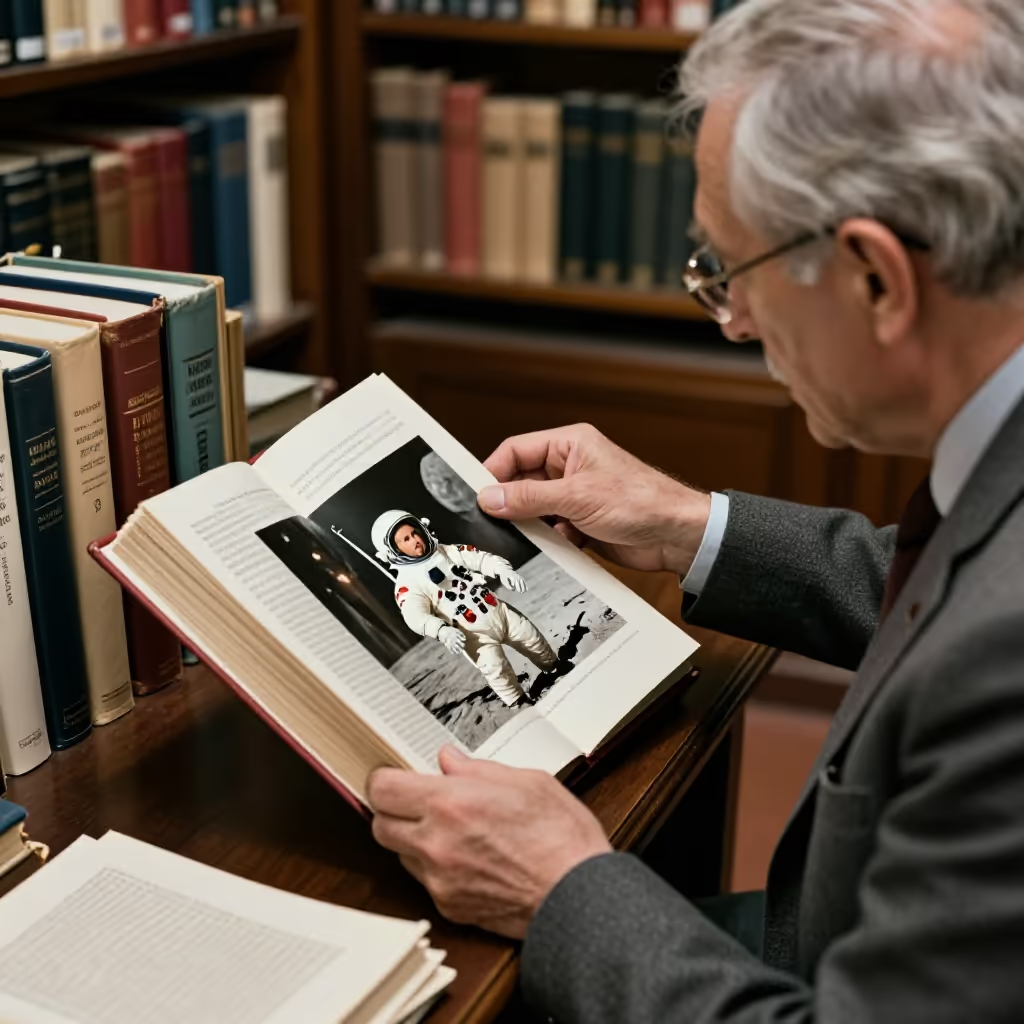
A fixed expression meaning that a person, event, or deed is so significant that it will be remembered in the future and mentioned in history books.
Dieser Tag wird in die Geschichte eingehen.
This day will go down in history.
'Eingehen' is a separable verb. The prefix 'ein-' goes to the end in a main clause. In subordinate clauses and in the infinitive, the verb stays together.
Die Blumen gehen ohne Sonne ein.
The flowers die without sun.
The verb 'eingehen' always forms the perfect tense with the auxiliary verb 'sein', regardless of the meaning. This is because of the basic meaning of 'gehen' (to go), which expresses a change of state or movement.
Meine Lieblingspflanze ist leider eingegangen.
My favorite plant has unfortunately died.
In the meaning of 'to respond' or 'to deal with', 'eingehen' is always used with the preposition 'auf' and the accusative. The structure is: auf jemanden/etwas eingehen (to respond to someone/something).
Der Redner ist auf die Fragen aus dem Publikum eingegangen.
The speaker responded to the questions from the audience.
The meaning 'to arrive' or 'to come in' is used very frequently in formal and business contexts. Typical subjects are 'eine Bestellung' (an order), 'eine Zahlung' (a payment), 'eine E-Mail' (an email), or 'eine Bewerbung' (an application).
Sobald die Bewerbung eingeht, erhalten Sie eine Bestätigung.
As soon as the application comes in, you will receive a confirmation.
When someone begins an obligation, 'eingehen' is often used with an accusative object. Common combinations are 'eine Beziehung eingehen' (to enter into a relationship), 'einen Vertrag eingehen' (to enter into a contract), 'ein Risiko eingehen' (to take a risk), or 'einen Kompromiss eingehen' (to make a compromise).
Beide Parteien müssen bereit sein, einen Kompromiss einzugehen.
Both parties must be willing to make a compromise.
The meanings 'to die' and 'to shrink' become clear through context. 'Eingehen' refers to plants, or sometimes animals, when it is about dying. It refers to clothing or fabrics when it is about shrinking.
Die Tomatenpflanzen sind in der Kälte eingegangen.
The tomato plants died in the cold.
The expression 'in die Geschichte eingehen' (to go down in history) is a fixed idiom. It means that an event or person becomes historically significant and remains remembered.
Die Erfindung des Internets wird in die Geschichte eingehen.
The invention of the internet will go down in history.
to receive / preserve / support
With a payment, erhalten and eingehen can describe the same event, but from different perspectives. With erhalten, the recipient is the subject and the payment is the object. With eingehen, the incoming payment itself is the subject.
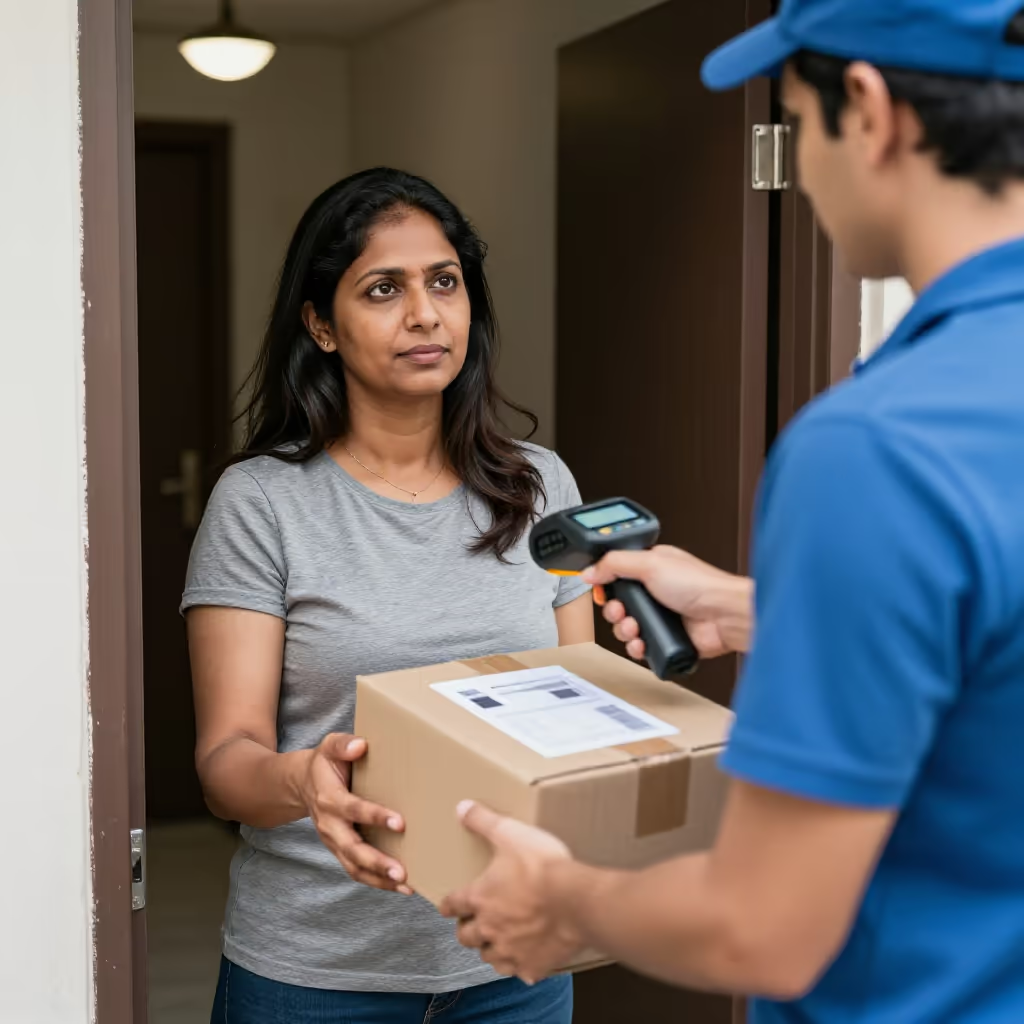
Die Zahlung ist heute bei uns eingegangen.
The payment came in today.
Wir haben die Zahlung heute erhalten.
We received the payment today.