

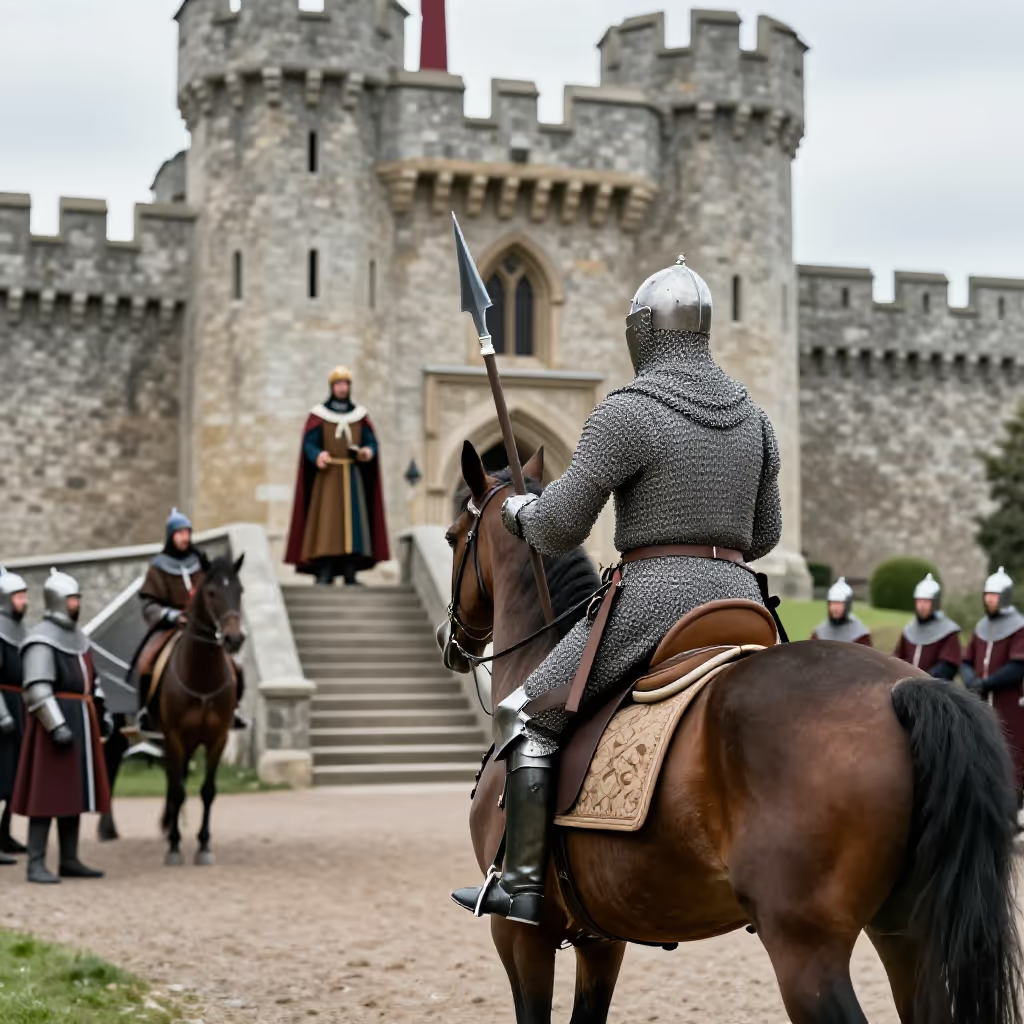
der Ritter
knight
In the Middle Ages, a mounted and armored warrior of noble or lower-noble origin who served a feudal lord.
EXAMPLE
Der Ritter zog sein Schwert, um die Burg zu verteidigen.
The knight drew his sword to defend the castle.
knight
Loading your saved state.
knight
In the Middle Ages, a mounted and armored warrior of noble or lower-noble origin who served a feudal lord.
Der Ritter zog sein Schwert, um die Burg zu verteidigen.
The knight drew his sword to defend the castle.
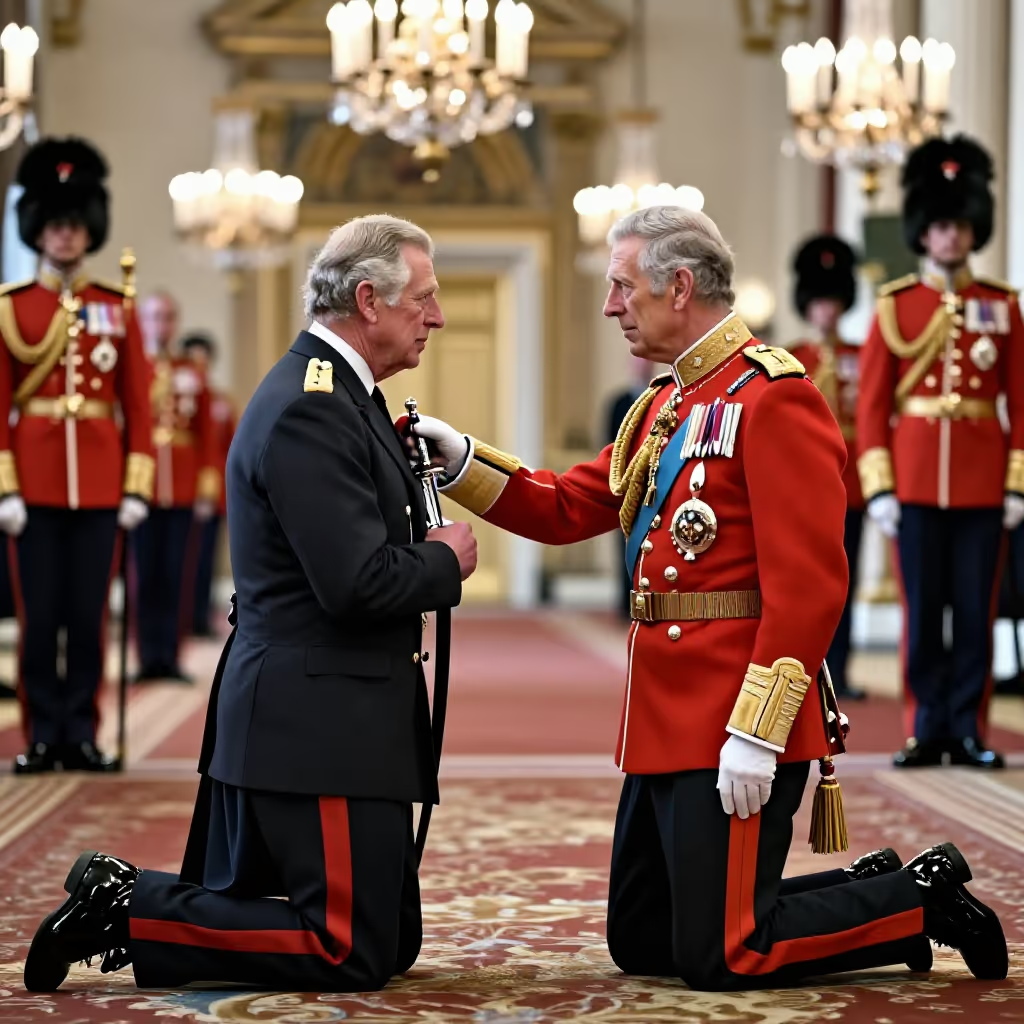
knight
A person honored by a monarch through admission into an order of knighthood; an honorary title.
Für seine Verdienste um die Wissenschaft wurde der Professor von der Queen zum Ritter geschlagen.
For his services to science, the professor was knighted by the Queen.

gentleman
Figuratively, a man who behaves especially honorably, protectively, and politely toward others, especially women.
Er erwies sich als wahrer Ritter, als er ihr im Regen seinen Schirm anbot.
He proved to be a true gentleman when he offered her his umbrella in the rain.
The adjective 'ritterlich' (chivalrous) is derived from the noun 'der Ritter' (knight). It describes honorable, polite, and protective behavior.
Es war sehr ritterlich von ihm, mir seinen Mantel anzubieten.
It was very chivalrous of him to offer me his coat.
In its original meaning, 'Ritter' (knight) is often combined with words from the Middle Ages, for example 'Burg' (castle), 'Rüstung' (armor), 'Schwert' (sword), or 'Turnier' (tournament).
Im Museum sahen wir die schwere Rüstung eines Ritters aus dem 14. Jahrhundert.
In the museum, we saw the heavy armor of a knight from the 14th century.
The fixed expression 'jemanden zum Ritter schlagen' (to knight someone) describes the ceremony in which a person is granted a title of nobility. This is still common in some monarchies today.
Der berühmte Schauspieler wurde für seine Verdienste von der Königin zum Ritter geschlagen.
The famous actor was knighted by the Queen for his services.
In the figurative meaning, the phrase 'ein wahrer Ritter' (a true knight/gentleman) is often used. It praises a man who behaves in an especially helpful and polite way.
Als er mir mit dem schweren Koffer half, war er ein wahrer Ritter.
When he helped me with the heavy suitcase, he was a true gentleman.