

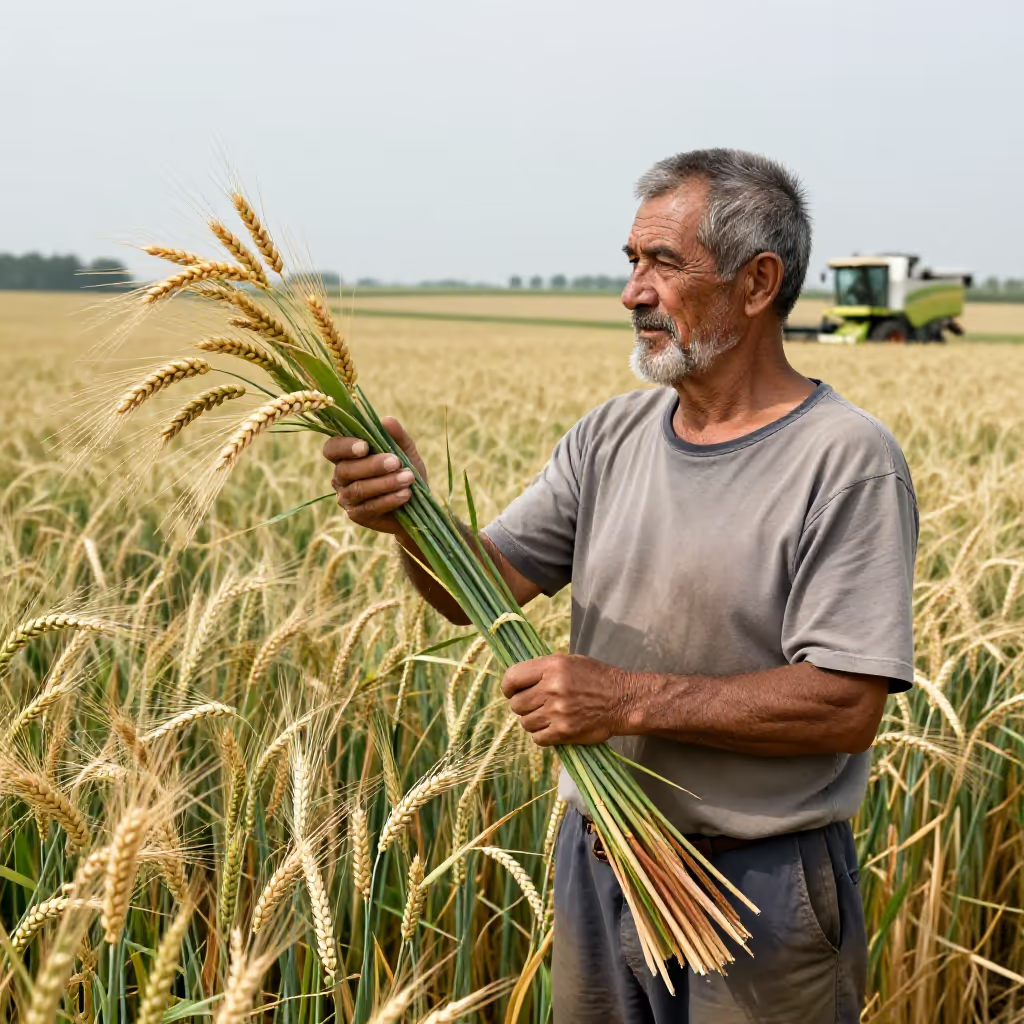
A type of grain with long stalks and ears that is grown mainly in temperate climates. Its grains are used to make flour for bread, for animal feed, and for producing alcohol.
example
Dieses dunkle Brot wird aus reinem Roggen gebacken.
This dark bread is baked from pure rye.
Usage tips
Productive compounds
'Roggen' (rye) is the base for many words that describe foods. If you see 'Roggen-' at the beginning of a word, it probably has to do with this grain, e.g. 'Roggenbrot' (rye bread), 'Roggenmehl' (rye flour), 'Roggenbrötchen' (rye roll).
EXAMPLE
Ich hätte gern zwei Roggenbrötchen, bitte.
I’d like two rye rolls, please.
Indicating material
To describe what a product is made from, you use the preposition 'aus' (from/of). This construction is very common with 'Roggen' (rye).
EXAMPLE
Dieses Müsli besteht hauptsächlich aus Roggen und Hafer.
This muesli consists mainly of rye and oats.
Uncountable noun
Like other types of grain, 'Roggen' (rye) is usually used as an uncountable noun. You say 'Roggen anbauen' (to grow rye), not 'einen Roggen anbauen'.
EXAMPLE
Der Bauer hat dieses Jahr auf seinen Feldern Roggen angebaut.
The farmer grew rye in his fields this year.
Compare with
confusable
Roggen vs Weizen
wheat
'Weizen' and 'Roggen' are both types of grain that can be made into flour. That is why both often come up when talking about bread and can be confused. 'Weizen' is very typical for white flour, cakes, noodles, and many baked goods. 'Roggen' is especially often used for stronger, darker bread. When speaking generally about white flour or many ordinary baked goods, 'Weizen' often fits. For rye bread or hearty bread, 'Roggen' is more precise.
Roggen
Die Eltern kaufen Roggen, weil sie ein dunkles Brot backen wollen.
The parents buy rye because they want to bake a dark bread.
Weizen
Der Teig wird weich, weil das Mehl viel Weizen enthält.
The dough becomes soft because the flour contains a lot of wheat.