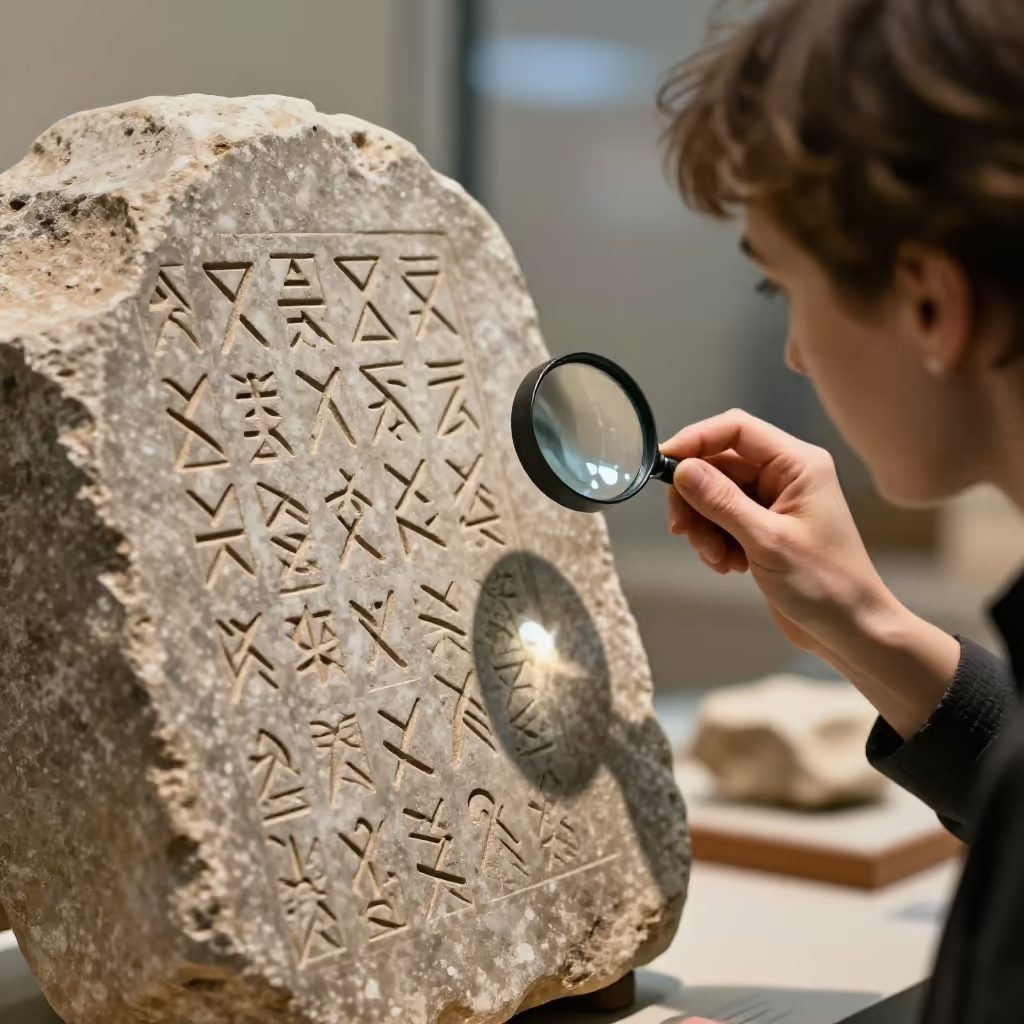
A character from the old Germanic alphabet that was used before the introduction of the Latin script. Runes were often carved into stone, wood, or metal.
example
Auf dem alten Gedenkstein waren mehrere Runen eingraviert.
Several runes were engraved on the old memorial stone.
Usage tips
Context clue: verbs
The verb often reveals the meaning. Historical runes are 'geritzt' (scratched/carved), 'gemeißelt' (chiseled), or 'entziffert' (deciphered). Esoteric runes used for fortune-telling are 'gelegt' (laid out), 'geworfen' (cast), or 'gelesen' (read).
EXAMPLE
Der Archäologe versuchte, die Runen auf dem Schwert zu entziffern.
The archaeologist tried to decipher the runes on the sword.
Typical collocations
In a historical context, runes are often 'geritzt' (scratched/carved) or 'gemeißelt' (chiseled) into hard materials (e.g. stone, wood, metal). A text passage in this script is called an 'Inschrift in Runen' (inscription in runes).
EXAMPLE
Die Inschrift in Runen war nur noch schwer zu lesen.
The inscription in runes was now very difficult to read.
Cultural context
Runes were the written characters of Germanic tribes, e.g. the Vikings, before the Latin script became established. They therefore have a strong connection to the mythology and ancient history of Northern Europe.
EXAMPLE
Im Geschichtsunterricht lernten wir über die Bedeutung der Runen für die Wikinger.
In history class, we learned about the importance of runes for the Vikings.
Fixed expressions
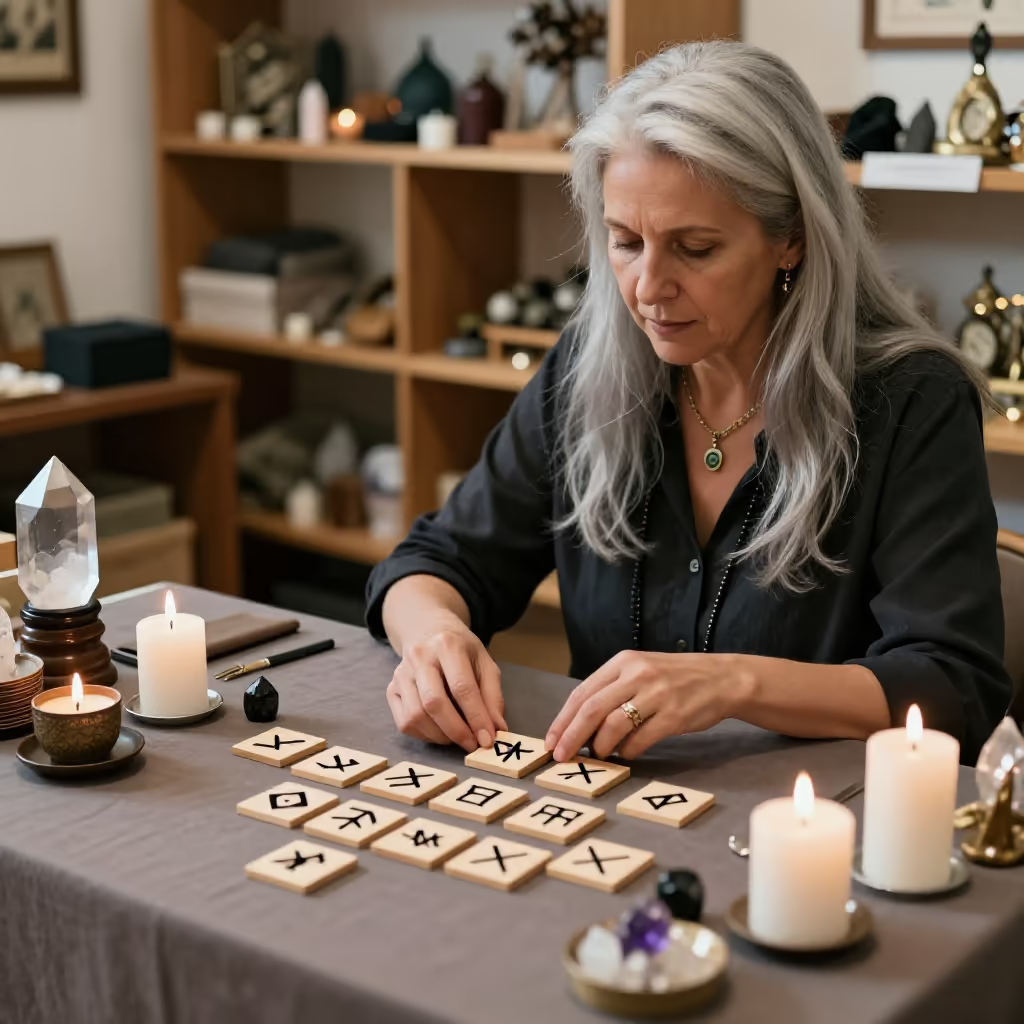
In esoteric usage, there are fixed expressions such as 'Runen legen/werfen' (to lay out/cast runes) to begin a divination, or 'aus den Runen lesen' (to read from the runes) to interpret a prediction.
EXAMPLE
Er behauptet, er könne aus den Runen die Zukunft lesen.
He claims he can read the future from the runes.
Compare with
near_synonym · confusable
Rune vs Zeichen
sign / symbol
'das Zeichen' and 'die Rune' can both mean a symbol or a written character. 'Zeichen' is the general term and works for many symbols, markings, and letters. 'Rune' is much more specific: it means a character from an old Germanic alphabet or a symbol in esoteric contexts. The words can be confused because a rune is also a kind of sign or character. But not every 'Zeichen' is a 'Rune'. If you are not specifically talking about ancient runes or symbols of that kind, 'Zeichen' is usually more natural.
Rune
Im Museum sah Julia eine Rune, die in einen Stein geritzt war.
At the museum, Julia saw a rune that had been carved into a stone.
Zeichen
Ich verstehe das Zeichen auf dem alten Schild nicht.
I don't understand the sign on the old noticeboard.