

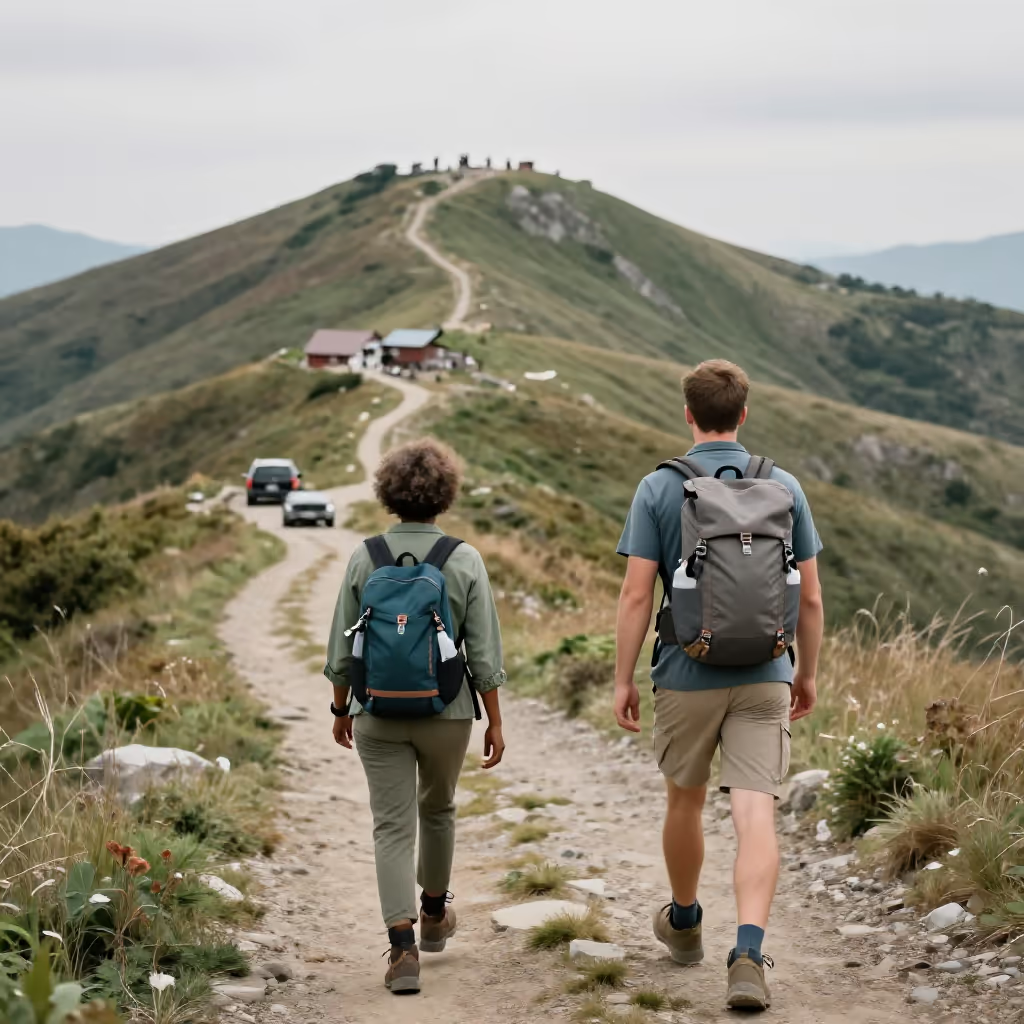
The route that leads from a reached destination or turning point back to the starting point of a trip or excursion.
example
Auf dem Rückweg vom Gipfel gerieten wir in ein Gewitter.
On the way back from the summit, we got caught in a thunderstorm.
Usage tips
Compound word
The word is made up of 'Rück-' (from 'zurück', meaning back) and 'Weg' (way/path). So it literally describes the way that leads back to the starting point.
EXAMPLE
Der Rückweg war kürzer als der Hinweg.
The way back was shorter than the way there.
Fixed expression
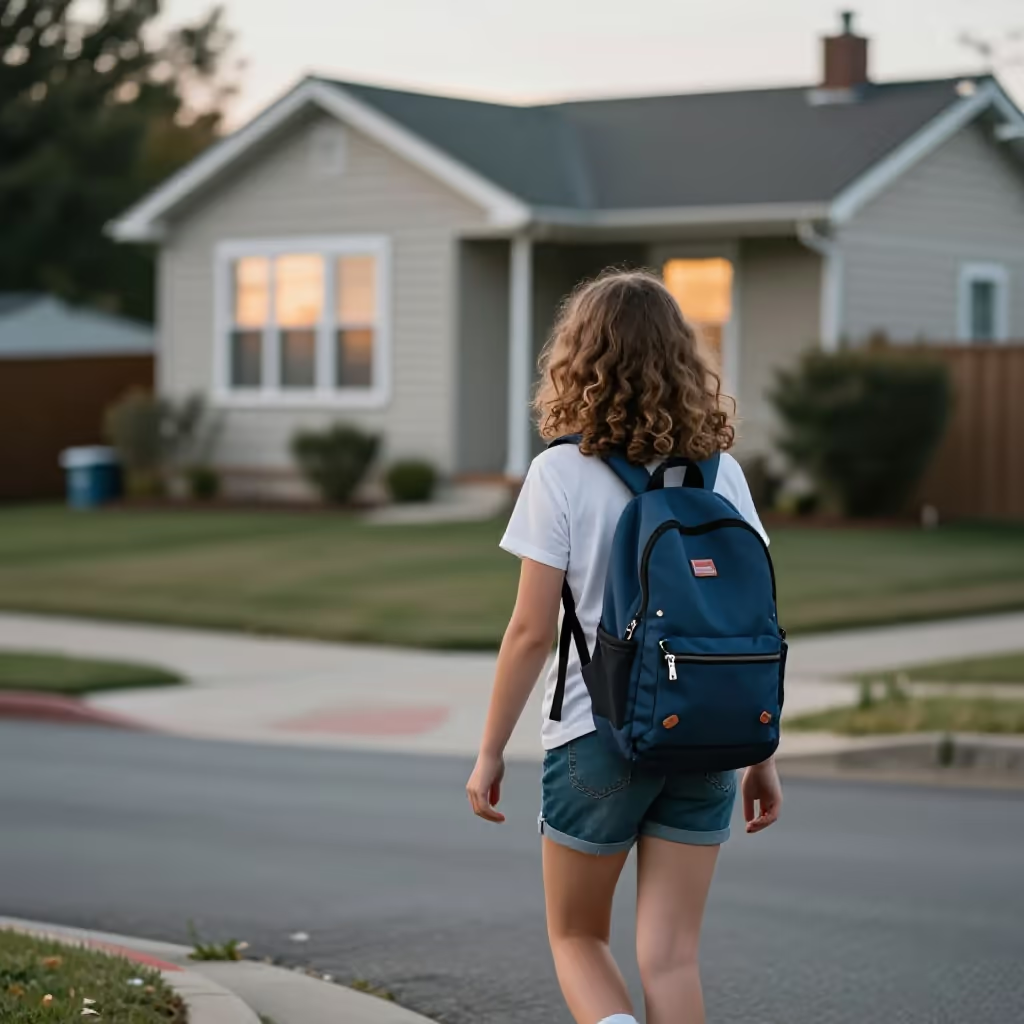
A very common construction is 'sich auf den Rückweg machen' (to set off on the way back). It means that you begin returning to the starting point.
EXAMPLE
Nach dem Picknick machten wir uns auf den Rückweg.
After the picnic, we set off on the way back.
Correct preposition
To describe that something happens during the return, German uses the preposition 'auf' with the dative: 'auf dem Rückweg' (on the way back).
EXAMPLE
Auf dem Rückweg haben wir noch kurz bei meinen Großeltern angehalten.
On the way back, we briefly stopped by my grandparents' place.
Compare with
near_synonym · confusable
Rückweg vs Rückkehr
return
'die Rückkehr' and 'der Rückweg' both belong to movement back. 'Rückkehr' emphasizes arriving or coming back at the starting point, for example home or to an earlier place. 'Rückweg' means the way or route that you walk or drive back. So you can be 'auf dem Rückweg' (on the way back) before the 'Rückkehr' happens. The words are easy to confuse because they can occur in the same situation. If you are talking about the route, use 'Rückweg'. If you are talking about arriving back, use 'Rückkehr'.
Rückweg
Wegen des Wetters dauert der Rückweg vom See heute länger.
Because of the weather, the way back from the lake is taking longer today.
Rückkehr
Die Rückkehr der Fahrerin ist für den Abend geplant.