

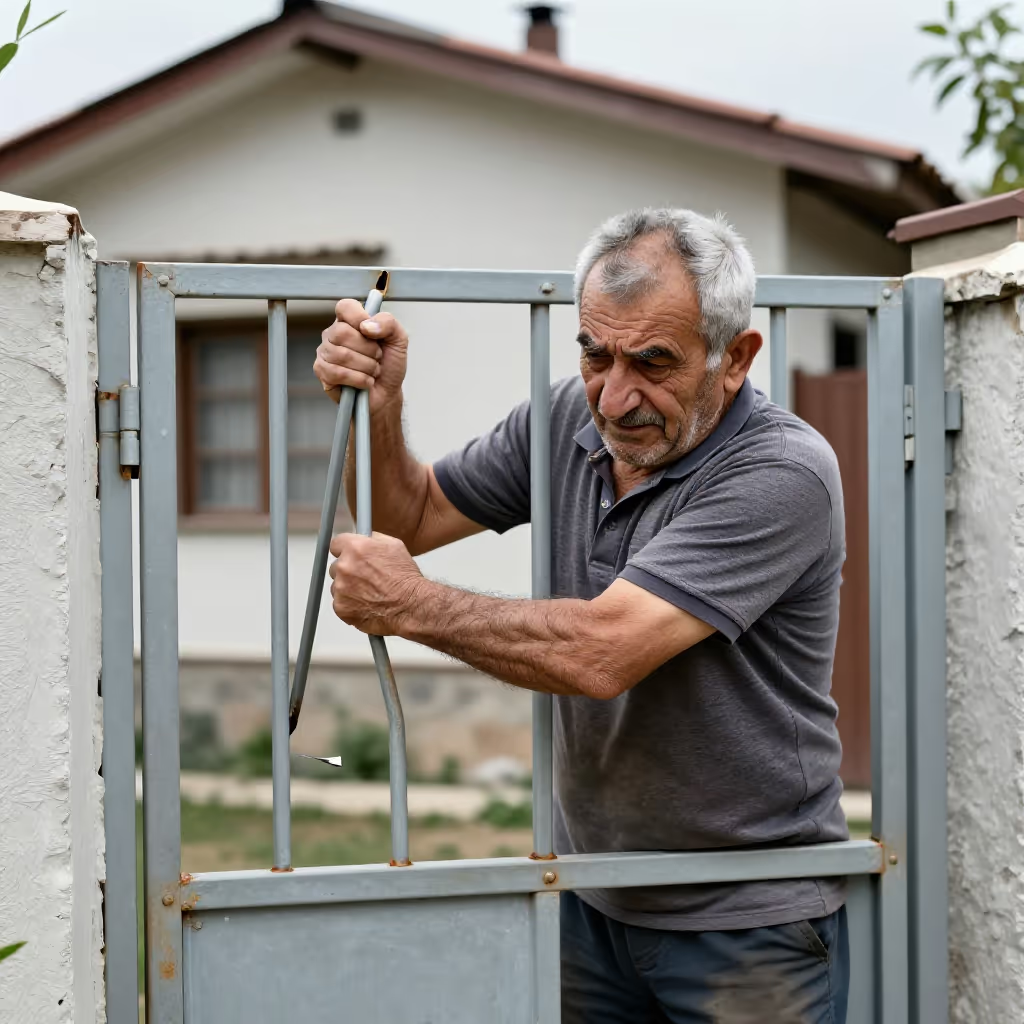
rütteln
to shake
To move or push something or someone back and forth forcefully and repeatedly.
EXAMPLE
Er musste kräftig an der alten Tür rütteln, um sie zu öffnen.
He had to shake the old door hard to open it.
to shake
Loading your saved state.
to shake
To move or push something or someone back and forth forcefully and repeatedly.
Er musste kräftig an der alten Tür rütteln, um sie zu öffnen.
He had to shake the old door hard to open it.

to shake
In a figurative sense: to question or try to undermine an established order, belief, or authority.
Die neuen Erkenntnisse rütteln an den Grundfesten der bisherigen Theorie.
The new findings shake the foundations of the existing theory.
The verb 'rütteln' (to shake) is almost always used with the preposition 'an' followed by the dative. This applies to both the literal and the figurative meaning.
Der Wind rüttelte heftig an den Fensterläden.
The wind shook the shutters violently.
You can recognize the figurative meaning when something abstract is being 'gerüttelt' (shaken). If the object is a person or a physical object, the literal meaning is intended.
Der Forscher will an einem alten Dogma rütteln.
The researcher wants to shake an old dogma.
In the figurative meaning, there are fixed expressions. Common examples are 'an den Grundfesten rütteln' (to shake the foundations), 'am Thron von jemandem rütteln' (to challenge someone's throne), or 'an einem Tabu rütteln' (to challenge a taboo).
Die Opposition versucht, am Thron der Kanzlerin zu rütteln.
The opposition is trying to challenge the chancellor's throne.
to shake
Erschüttern and rütteln an can both call a conviction, established order, or authority into question. Erschüttern directly describes strong uncertainty or a loss of stability, while rütteln an emphasizes more the attempt or act of questioning something. Use erschüttern for a shock and rütteln an for a critical attack.

Die neuen Beweise rütteln am Vertrauen der Bürger in die Regierung.
The new evidence is undermining citizens’ trust in the government.
Der Korruptionsskandal erschütterte das Vertrauen der Bürger in die Regierung.
The corruption scandal shook citizens’ trust in the government.