


ruhen
to rest
To rest, not be active, in order to recover.
EXAMPLE
Nach der langen Wanderung müssen wir erst einmal ruhen.
After the long hike, we first need to rest.
to rest
Loading your saved state.
to rest
To rest, not be active, in order to recover.
Nach der langen Wanderung müssen wir erst einmal ruhen.
After the long hike, we first need to rest.
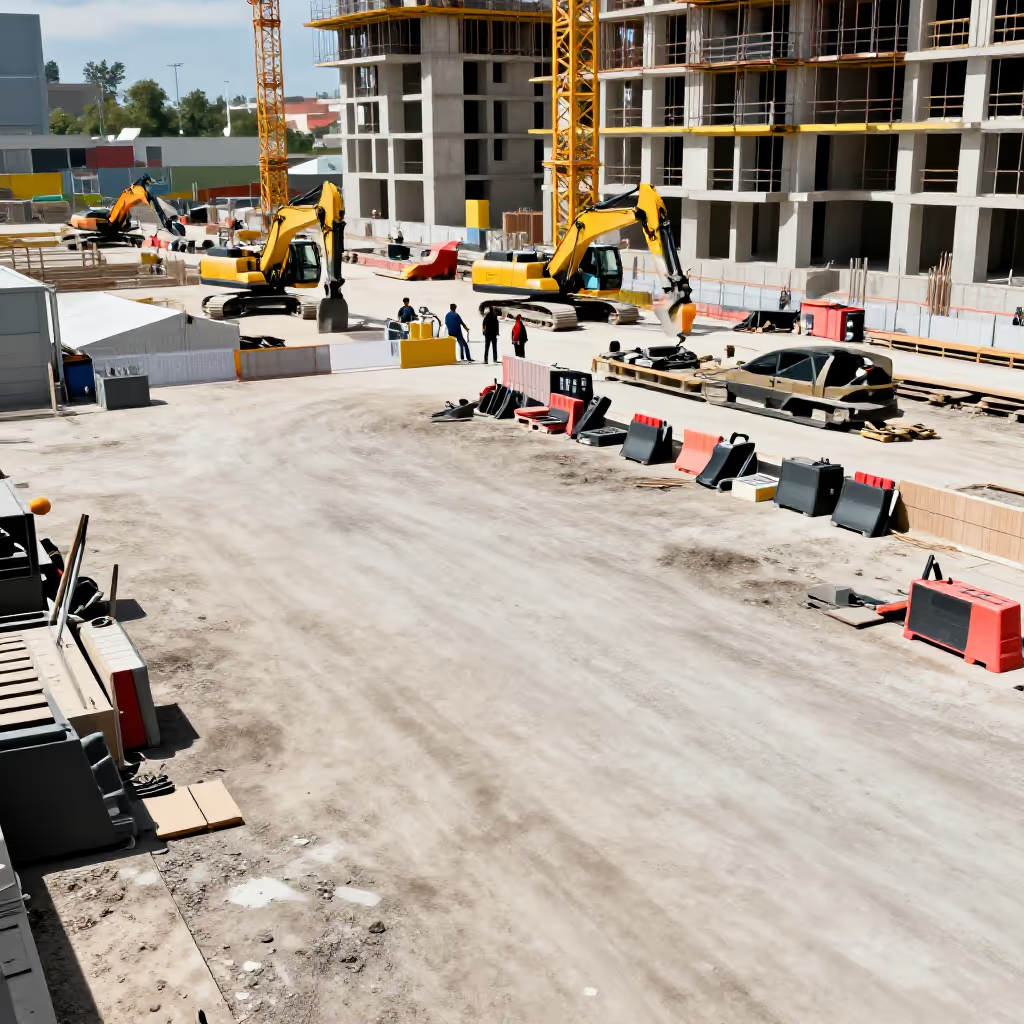
to be at a standstill
To be in a state of silence or standstill; to temporarily not take place or be continued.
Wegen der Feiertage ruht die Arbeit auf der Baustelle.
Because of the holidays, work on the construction site is at a standstill.
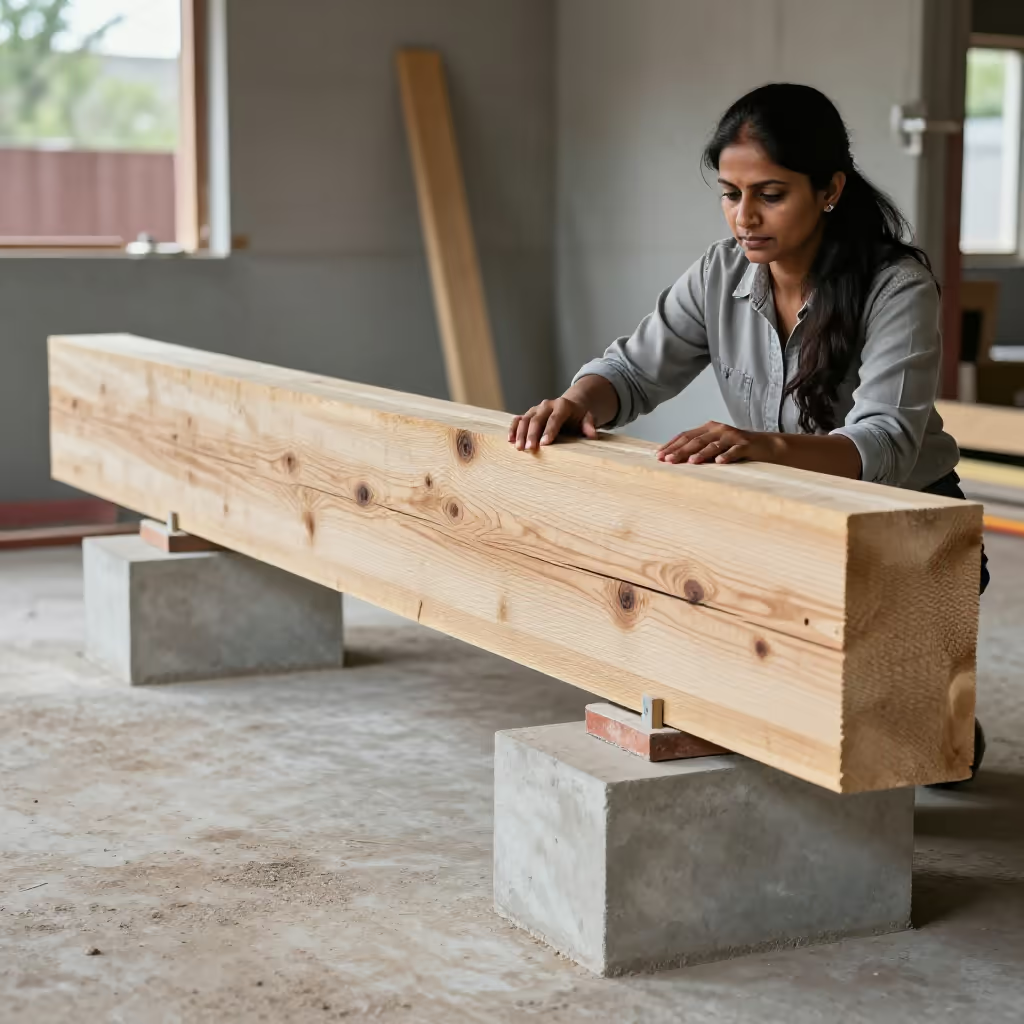
to rest on
To lie on a surface or be supported by something. Can also be used figuratively for a burden or responsibility.
Alle Augen ruhten auf dem Redner.
All eyes rested on the speaker.

to let something rest
To not pursue a matter or dispute further and let it be.
Lass uns das Thema für heute einfach ruhen lassen.
Let's just let the topic rest for today.
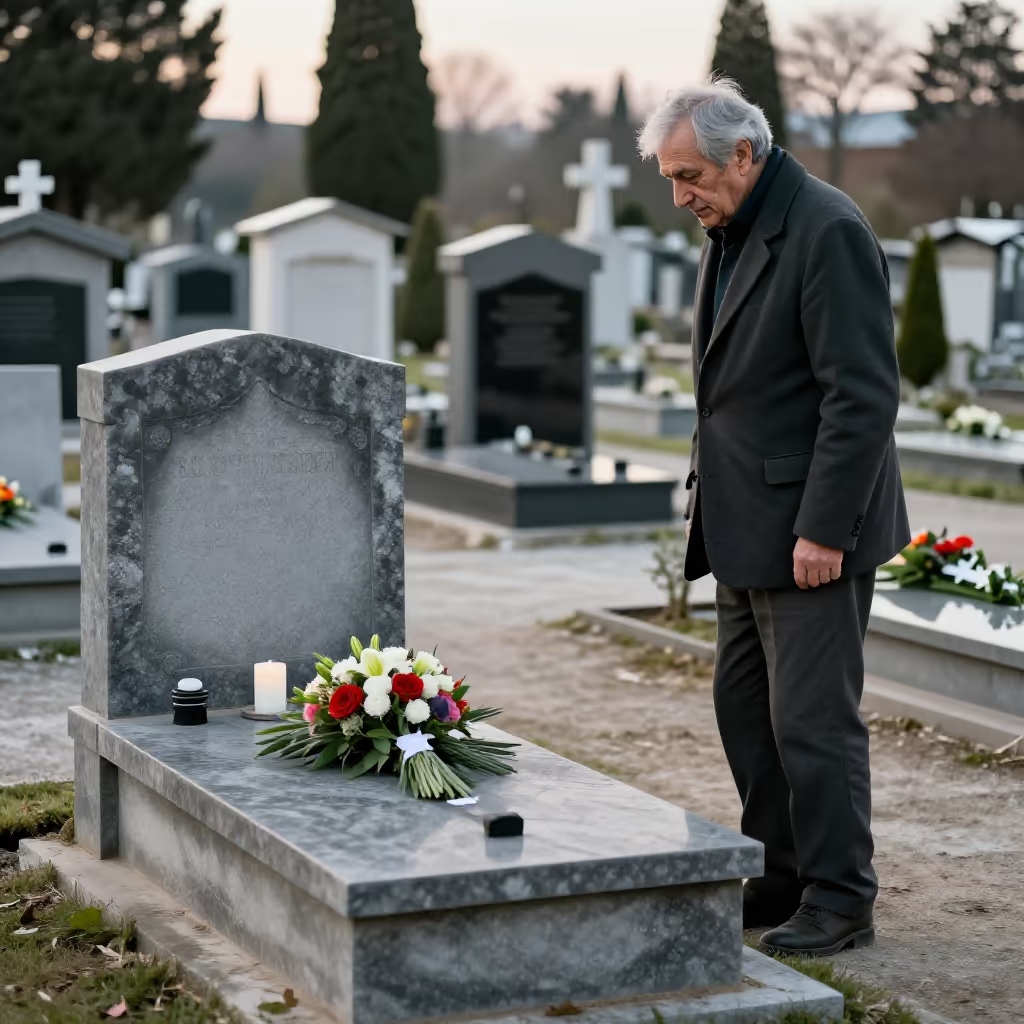
to rest
A euphemism for 'to be buried'; the place of one's final resting place.
Auf diesem Friedhof ruhen viele berühmte Persönlichkeiten.
Many famous figures rest in this cemetery.
'Ruhen' is the verb corresponding to the noun 'die Ruhe' (rest/quiet). When something 'ruht' (rests), it is in a state of rest. This connection helps you understand the different meanings of the verb.
Am Sonntag möchte ich nur meine Ruhe haben und auf dem Sofa ruhen.
On Sunday I just want to have my peace and rest on the sofa.
Although 'ruhen' describes a state, it forms the perfect tense with the auxiliary verb 'haben' (to have), not with 'sein' (to be). So the correct form is 'hat geruht' (has rested).
Der Patient hat nach der Operation lange geruht.
The patient rested for a long time after the operation.
When an activity is temporarily suspended, 'ruhen' is often combined with abstract nouns such as 'die Arbeit' (the work), 'der Verkehr' (traffic), or 'die Bauarbeiten' (construction work).
Wegen des Streiks ruht der gesamte Bahnverkehr.
Because of the strike, all rail traffic is at a standstill.
When something lies on a surface or is supported by something, you use 'ruhen auf' (to rest on) with the dative. This applies both literally and figuratively to responsibility or expectations.
Sein Blick ruhte nachdenklich auf dem alten Foto.
His gaze rested thoughtfully on the old photo.
The fixed expression 'etwas ruhen lassen' (to let something rest) means to deliberately not pursue a matter or dispute further. The topic that you are dropping is in the accusative.
Wir kommen hier nicht weiter. Lassen wir das Thema für heute ruhen.
We're not getting anywhere here. Let's let the topic rest for today.
In connection with death, 'ruhen' (to rest) is a very formal and respectful expression for 'begraben sein' (to be buried). You often find it on gravestones, e.g. in the form 'Hier ruht ...' (Here rests ...).
Auf diesem Friedhof ruht ein berühmter Dichter.
A famous poet rests in this cemetery.
to lie / be located
Liegen auf neutrally describes an object’s position on a surface. Ruhen auf can describe the same position, but stylistically emphasizes more strongly that the object is lying still or is supported by the surface. In everyday language, liegen is usually the neutral choice.

Das schwere Buch ruht unbewegt auf dem Tisch.
The heavy book is resting motionless on the table.
Das schwere Buch liegt auf dem Tisch.
The heavy book is lying on the table.