

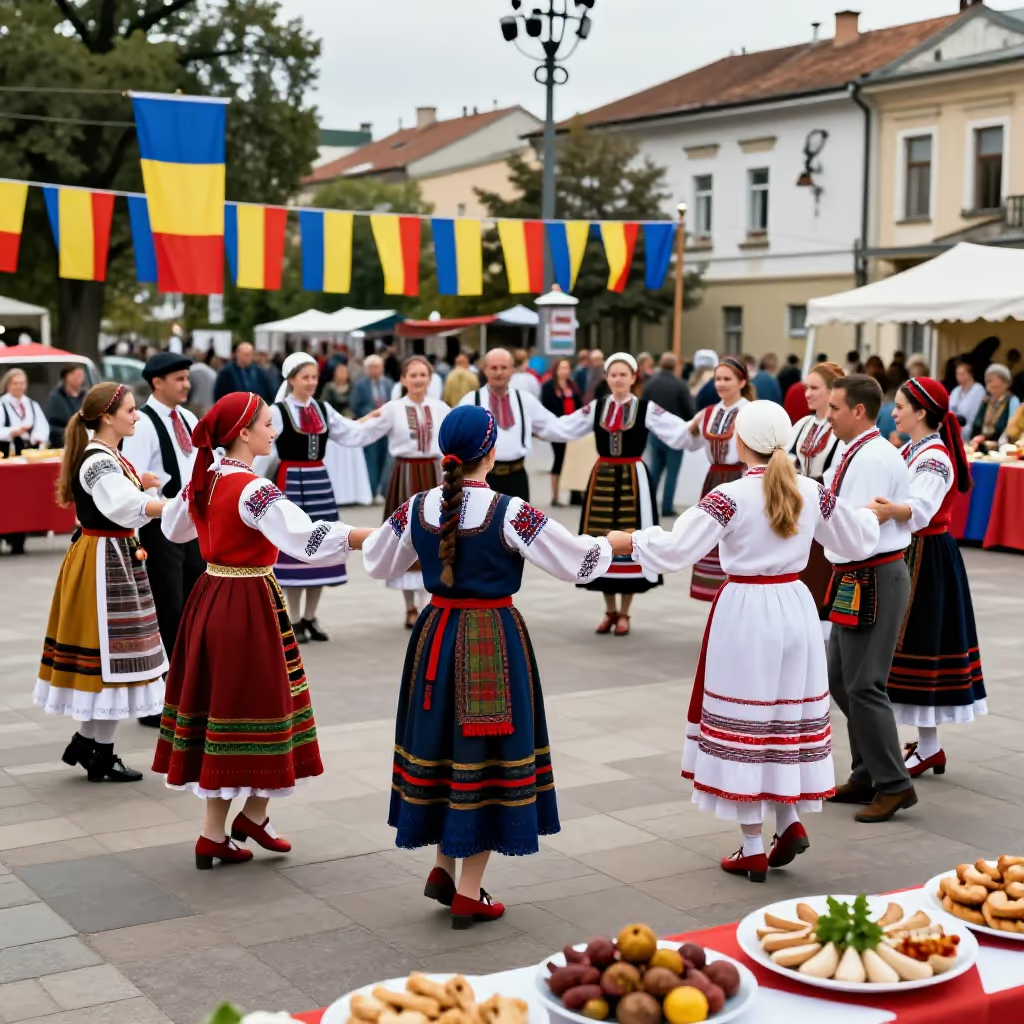
rumänisch
Romanian
Refers to Romania, its people, its culture, or the Romanian language.
EXAMPLE
Er bestellte im Restaurant ein typisch rumänisches Gericht.
He ordered a typical Romanian dish at the restaurant.
Romanian
Loading your saved state.
Romanian
Refers to Romania, its people, its culture, or the Romanian language.
Er bestellte im Restaurant ein typisch rumänisches Gericht.
He ordered a typical Romanian dish at the restaurant.
Adjectives for countries or regions in German are often formed with the ending '-isch'. This is how the country 'Rumänien' (Romania) becomes the adjective 'rumänisch' (Romanian).
Die rumänische Küste am Schwarzen Meer ist ein beliebtes Urlaubsziel.
The Romanian coast on the Black Sea is a popular holiday destination.
When speaking about the language, the adjective is capitalized and used as a noun: 'das Rumänisch' (Romanian). So you say 'Ich spreche Rumänisch' (I speak Romanian).
In der Schule lernt sie als dritte Fremdsprache Rumänisch.
At school, she is learning Romanian as her third foreign language.
Pay attention to the difference: the adjective is written with a lowercase letter, but the noun for the language is capitalized.
Er liest gerne rumänische Literatur im Original.
He likes reading Romanian literature in the original.
Romance / Romanesque
„Rumänisch“ refers specifically to Romania, its culture, its people, or its language. „Romanisch“, by contrast, refers to the larger group of languages that developed from Latin, which also includes Romanian. If you are talking only about Romania, use „rumänisch“; if you are talking about the language group, use „romanisch“.
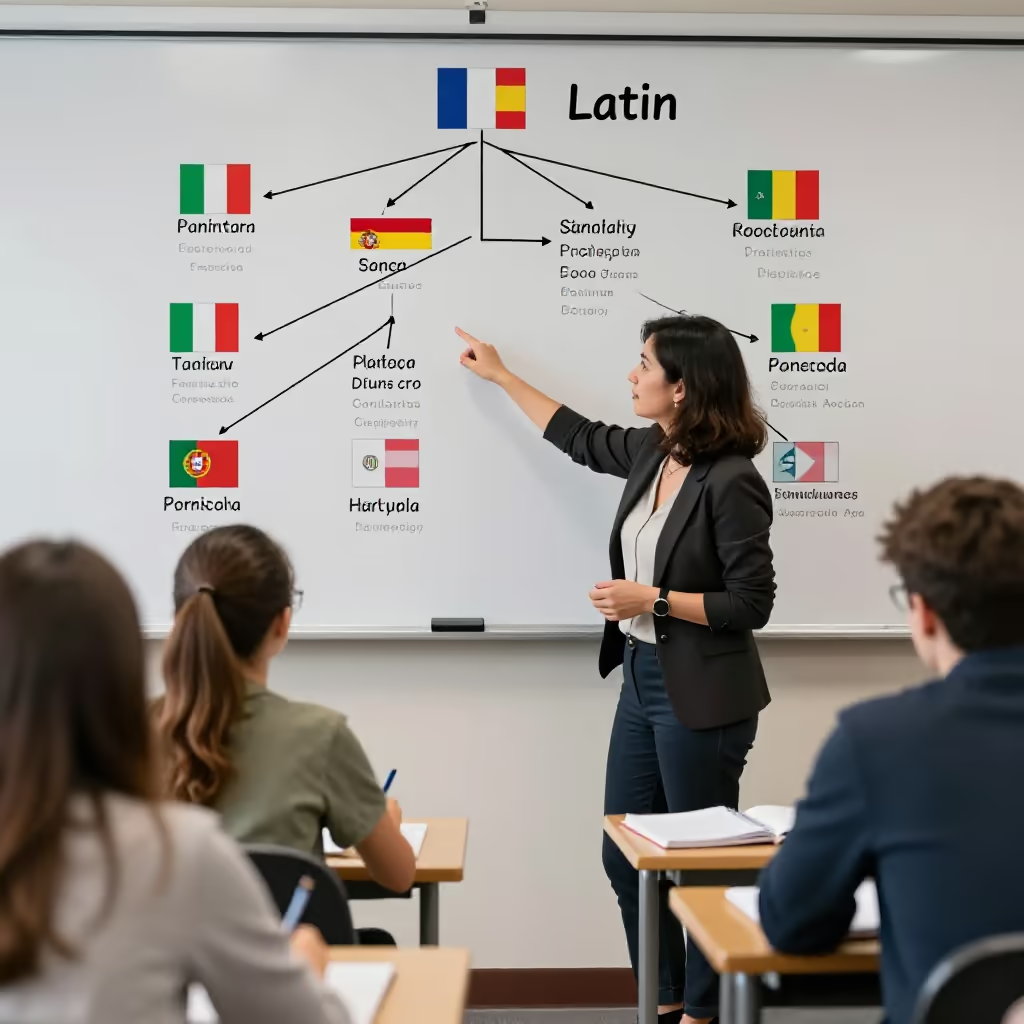
An der Sprachschule lernt Maria rumänische Wörter für ihre Reise nach Rumänien.
At the language school, Maria is learning Romanian words for her trip to Romania.
Rumänisch ist eine romanische Sprache und gehört damit zu derselben Sprachgruppe wie Italienisch.
Romanian is a Romance language and therefore belongs to the same language group as Italian.