


runterkommen
to come down
To move down from a higher place.
EXAMPLE
Komm sofort vom Baum runter, das ist zu gefährlich!
Come down from the tree right now, that's too dangerous!
to come down / calm down / become run-down
Loading your saved state.
to come down
To move down from a higher place.
Komm sofort vom Baum runter, das ist zu gefährlich!
Come down from the tree right now, that's too dangerous!

to calm down
Colloquial for calming down or relaxing after being excited, stressed, or angry.
Nach dem Streit musste ich erstmal eine Runde spazieren gehen, um wieder runterzukommen.
After the argument, I first had to go for a walk to calm down again.
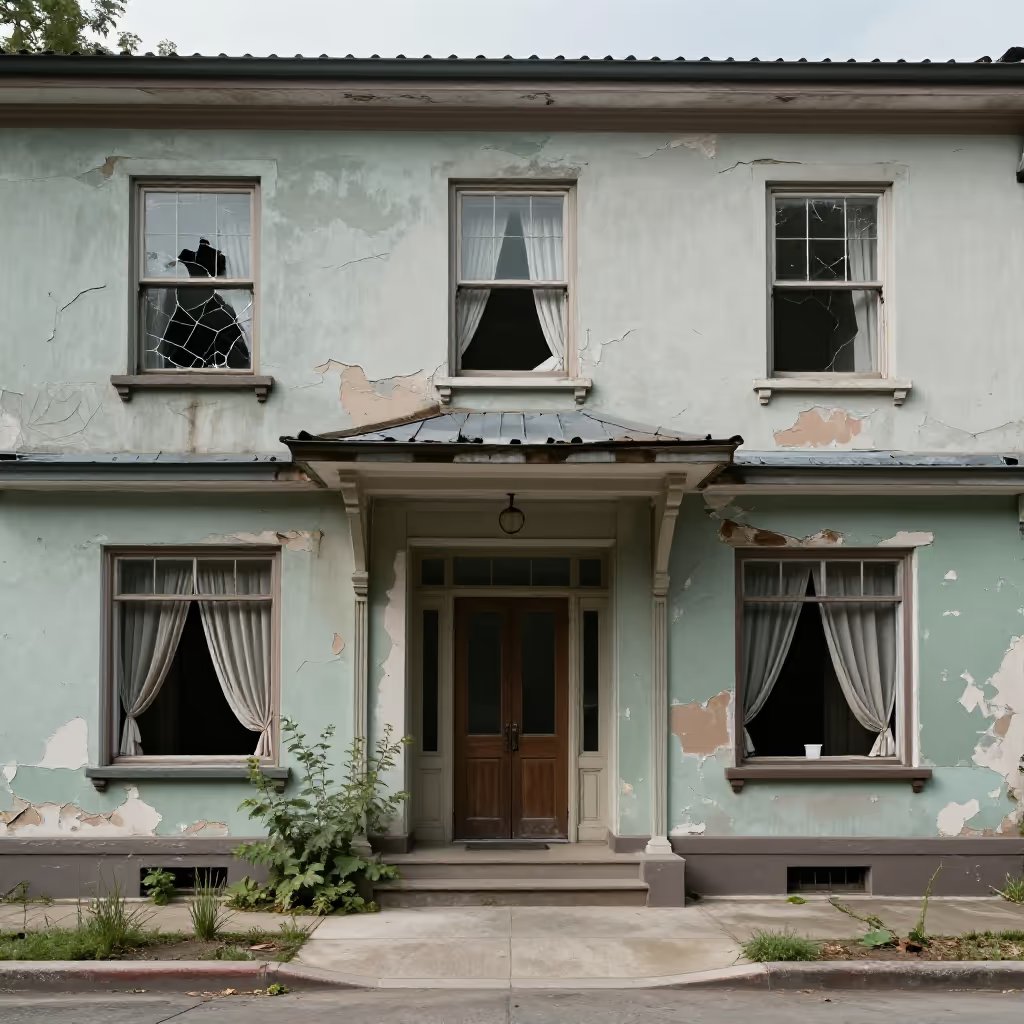
to become run-down
Colloquial and usually derogatory for becoming dilapidated, neglected, or losing quality and reputation.
Das Hotel ist in den letzten Jahren sichtlich runtergekommen.
The hotel has visibly become run-down in recent years.

to come down
In the drug scene, the expression for the phase in which the effect of a drug wears off, often associated with unpleasant physical or psychological states.
Nach der langen Partynacht war das Runterkommen für ihn besonders schlimm.
After the long night of partying, coming down was especially bad for him.
'Runterkommen' (to come down) is a separable verb. The prefix 'runter' comes at the end in a main clause. In subordinate clauses, the verb stays together.
Bitte komm sofort vom Dach runter!
Please come down from the roof right now!
Since 'runterkommen' (to come down/calm down/become run-down) describes movement or a change of state, the perfect tense is always formed with the auxiliary verb 'sein' (to be). A common source of mistakes is using 'haben' (to have).
Nach dem anstrengenden Tag bin ich auf dem Sofa endlich runtergekommen.
After the exhausting day, I finally calmed down on the sofa.
The prefix 'runter' is the colloquial short form of 'herunter' (down). In a more formal text or conversation, you would use 'herunterkommen' (to come down).
Der Bergsteiger ist sicher vom Gipfel heruntergekommen.
The mountaineer came down safely from the summit.
In the meaning 'sich beruhigen' (to calm down), the verb is often combined with the word 'wieder' (again): 'wieder runterkommen' (to calm down again). It describes the process of returning to inner calm after excitement or stress.
Atme tief durch, dann kommst du schnell wieder runter.
Take a deep breath, then you'll calm down again quickly.
When 'runterkommen' (to become run-down) describes decline, it usually refers to buildings, neighborhoods, or facilities. Here the verb has a clearly negative and derogatory meaning.
Seit der Schließung der Fabrik ist der ganze Stadtteil ziemlich runtergekommen.
Since the factory closed, the whole neighborhood has become pretty run-down.
to decay / degenerate
Verkommen and runterkommen can both describe a bad, neglected condition. Verkommen is more general and can also be used in more matter-of-fact statements, while runterkommen is colloquial and often sounds more strongly judgmental. Use verkommen for a neutral description of decay and runterkommen for a casual, often derogatory assessment.
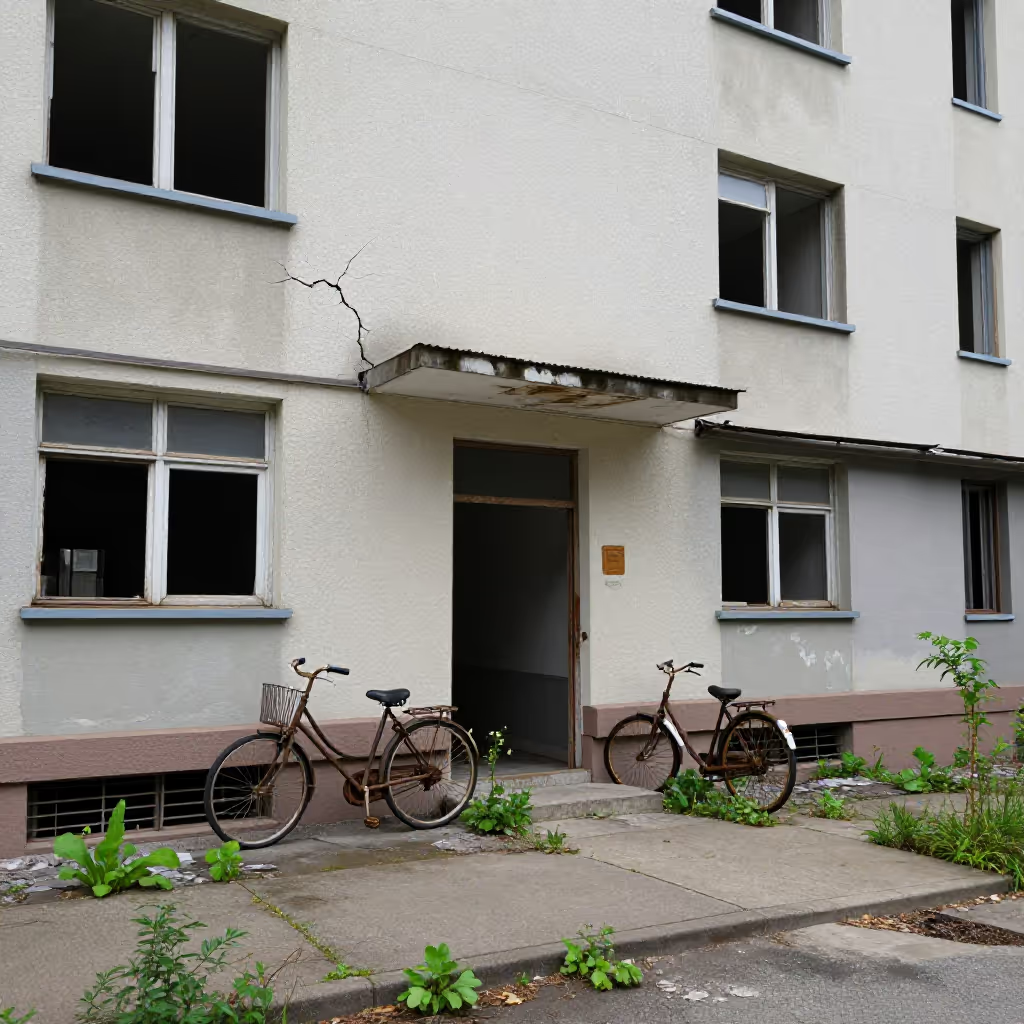
Das alte Hotel wirkt auf Besucher ziemlich runtergekommen.
The old hotel looks pretty run-down to visitors.
Das alte Hotel ist im Laufe der Jahre verkommen.
The old hotel decayed over the years.