verkommen
to decay
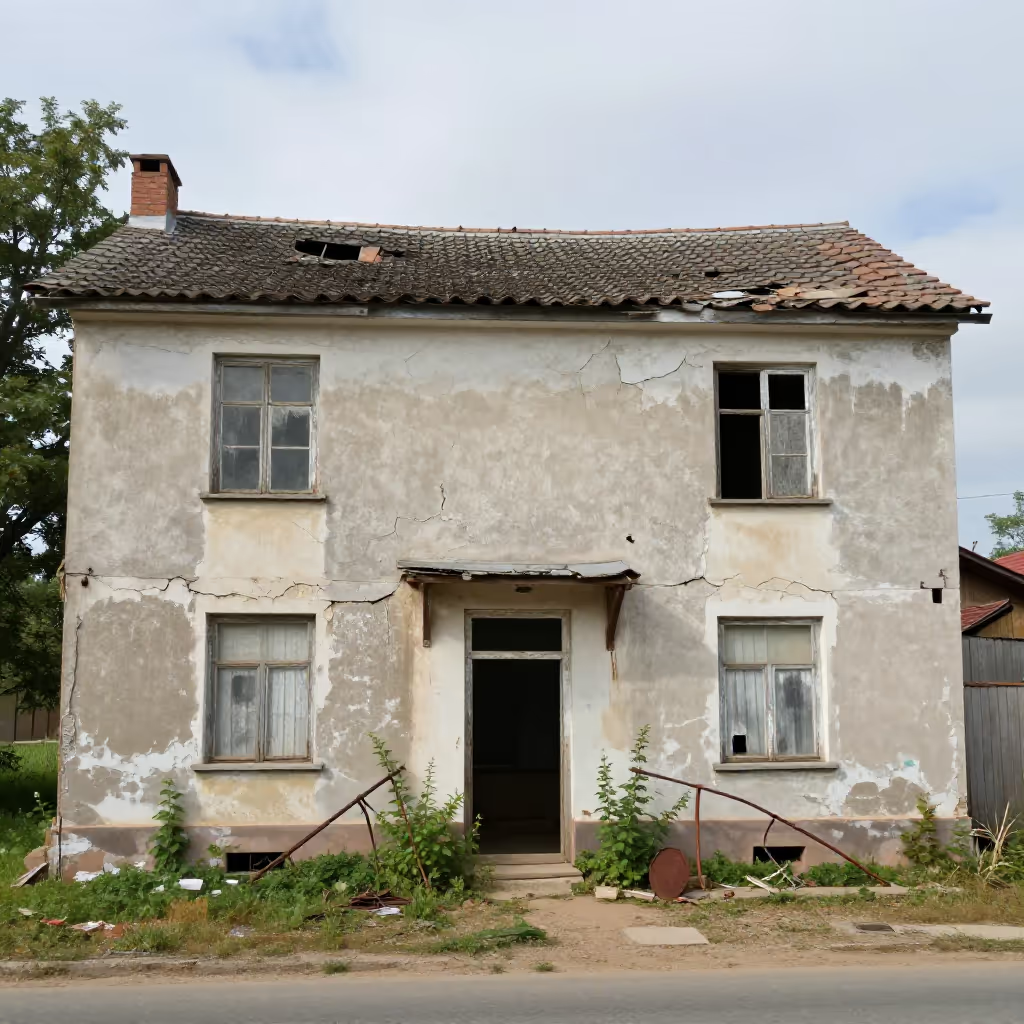
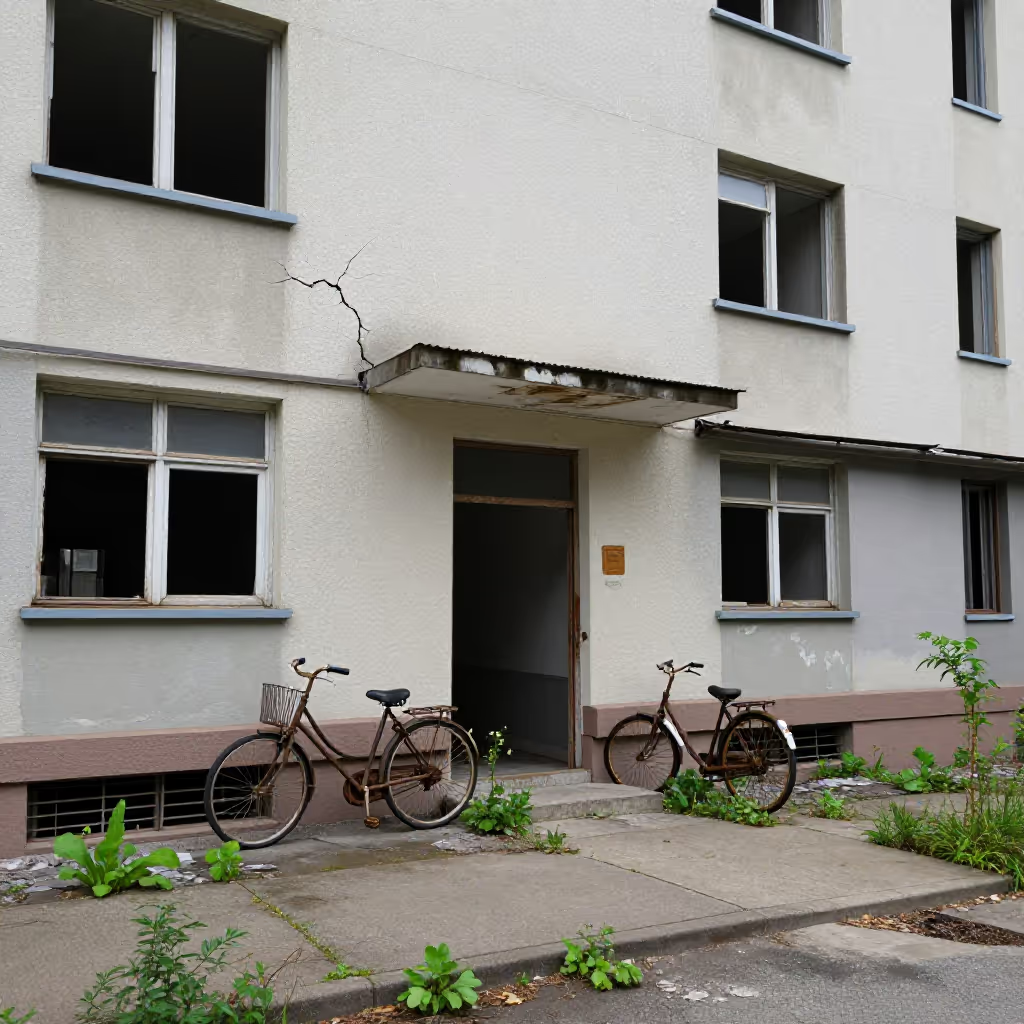
To fall into a bad, dilapidated, or neglected state. This often refers to buildings, places, or objects.
Das alte Fabrikgelände ist über die Jahre völlig verkommen.
The old factory site has completely decayed over the years.

to decay / degenerate
Loading your saved state.

to decay
To fall into a bad, dilapidated, or neglected state. This often refers to buildings, places, or objects.
Das alte Fabrikgelände ist über die Jahre völlig verkommen.
The old factory site has completely decayed over the years.


to deteriorate
To decline severely morally, socially, or physically and sink to a low level.
Nach dem Verlust seines Jobs ist er leider ziemlich verkommen.
After losing his job, he unfortunately deteriorated quite badly.

to degenerate into
To develop into something negative or undesirable; to degenerate.
Die einst ernsthafte Diskussion ist zu einem reinen Streit verkommen.
The once serious discussion degenerated into a mere argument.
'Verkommen' (to decay/degenerate) is an inseparable verb with the prefix 'ver-'. This prefix often indicates a negative change or a process of decline, which is exactly the meaning of the verb.
Ich kann nicht glauben, wie sehr dieses schöne Haus verkommen ist.
I can't believe how much this beautiful house has decayed.
The perfect tense of 'verkommen' (to decay/degenerate) is always formed with 'sein' (to be), because it describes a change of state. So it is 'ist verkommen' (has decayed/degenerate), not 'hat verkommen'.
Der Park ist in den letzten Jahren leider völlig verkommen.
Unfortunately, the park has completely decayed in recent years.
You can recognize the meaning from the subject: If the verb refers to places or things, it is about structural decay. If it refers to people, it means moral or social decline. The preposition 'zu' (into/to) introduces a negative development.
Das Gebäude ist verkommen und einsturzgefährdet.
The building is decayed and at risk of collapse.
When 'verkommen' (to deteriorate) is applied to people, it has a very strong, negative, and often derogatory meaning. It describes deep moral, social, or physical decline.
Ohne Hilfe von Freunden wäre er auf der Straße verkommen.
Without help from friends, he would have deteriorated on the street.
In this meaning, 'verkommen' (to degenerate) is always used with the preposition 'zu' and the dative. The structure is: [something] verkommt zu [something negative].
Die friedliche Demonstration ist zu einer gewalttätigen Auseinandersetzung verkommen.
The peaceful demonstration degenerated into a violent confrontation.
to decay / expire
Both words can be used when a building or object becomes noticeably worse. „verfallen“ emphasizes the gradual decay and dilapidated condition, while „verkommen“ focuses more on neglect and an unkempt appearance. Use „verfallen“ for visible decay and often „verkommen“ when something has not been properly maintained.

Das alte Haus ist völlig verkommen, weil sich niemand um Garten und Räume kümmert.
The old house has become completely run-down because no one takes care of the garden or the rooms.
Das alte Haus verfällt langsam, weil seit Jahren niemand das Dach repariert.
The old house is slowly falling into disrepair because no one has repaired the roof for years.