


schleudern
to hurl
To throw something with great force and speed.
EXAMPLE
Er schleuderte den Stein wütend gegen die Wand.
He angrily hurled the stone against the wall.
to hurl / to skid / to spin
Loading your saved state.
to hurl
To throw something with great force and speed.
Er schleuderte den Stein wütend gegen die Wand.
He angrily hurled the stone against the wall.
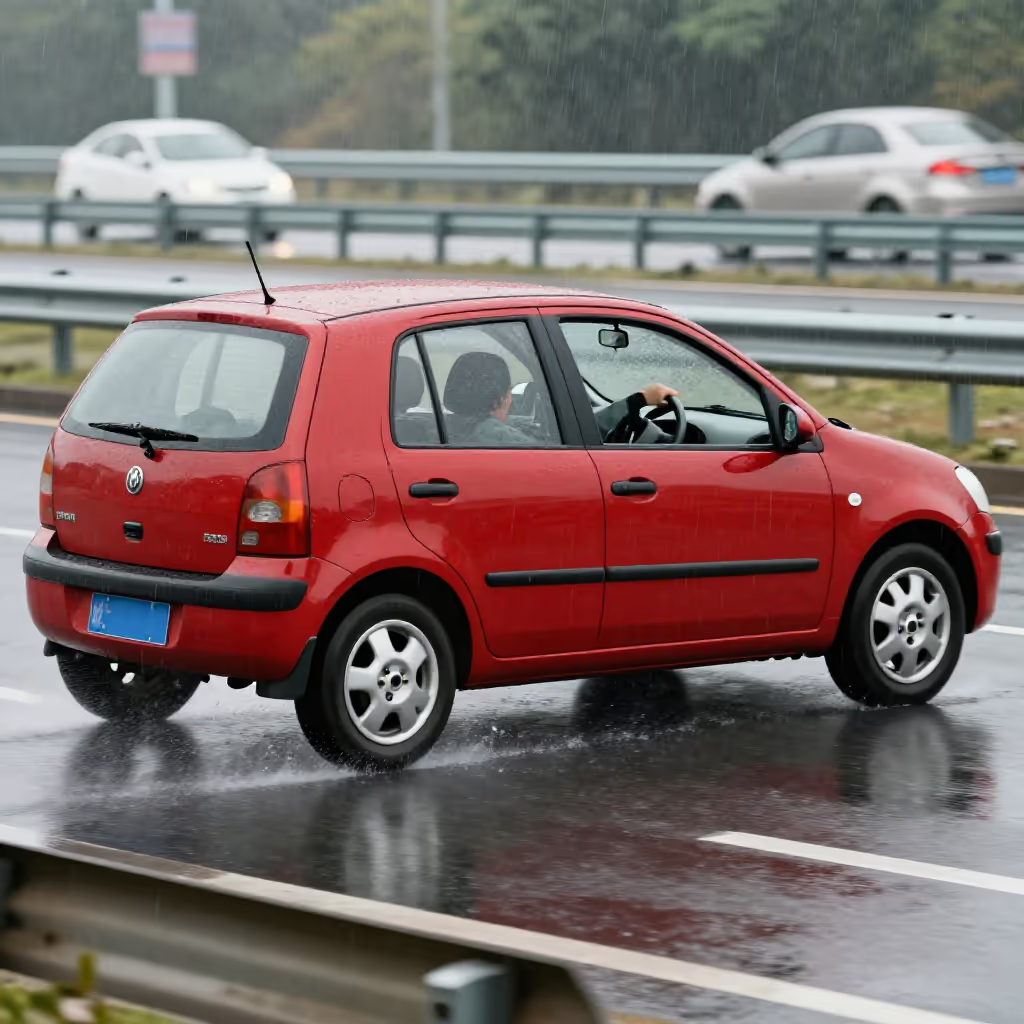
to skid
To lose control of a vehicle so that it slides sideways. This often happens on wet roads, ice, or at excessive speed.
Das Auto kam auf der vereisten Brücke ins Schleudern und prallte gegen die Leitplanke.
The car started skidding on the icy bridge and crashed into the guardrail.
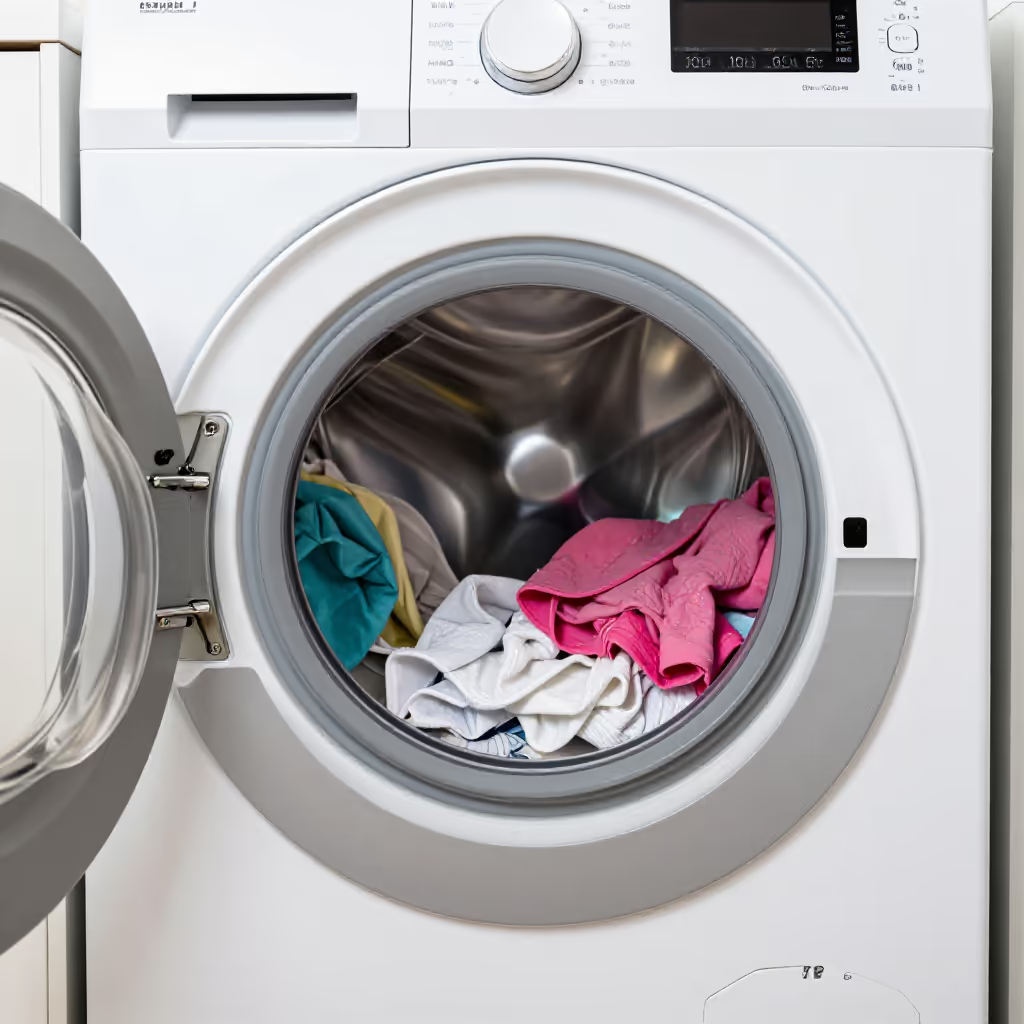
to spin
To rotate laundry in a washing machine at high speed in order to remove the water.
Vergiss nicht, die Feinwäsche nur bei niedriger Drehzahl zu schleudern.
Don't forget to spin the delicates only at a low speed.
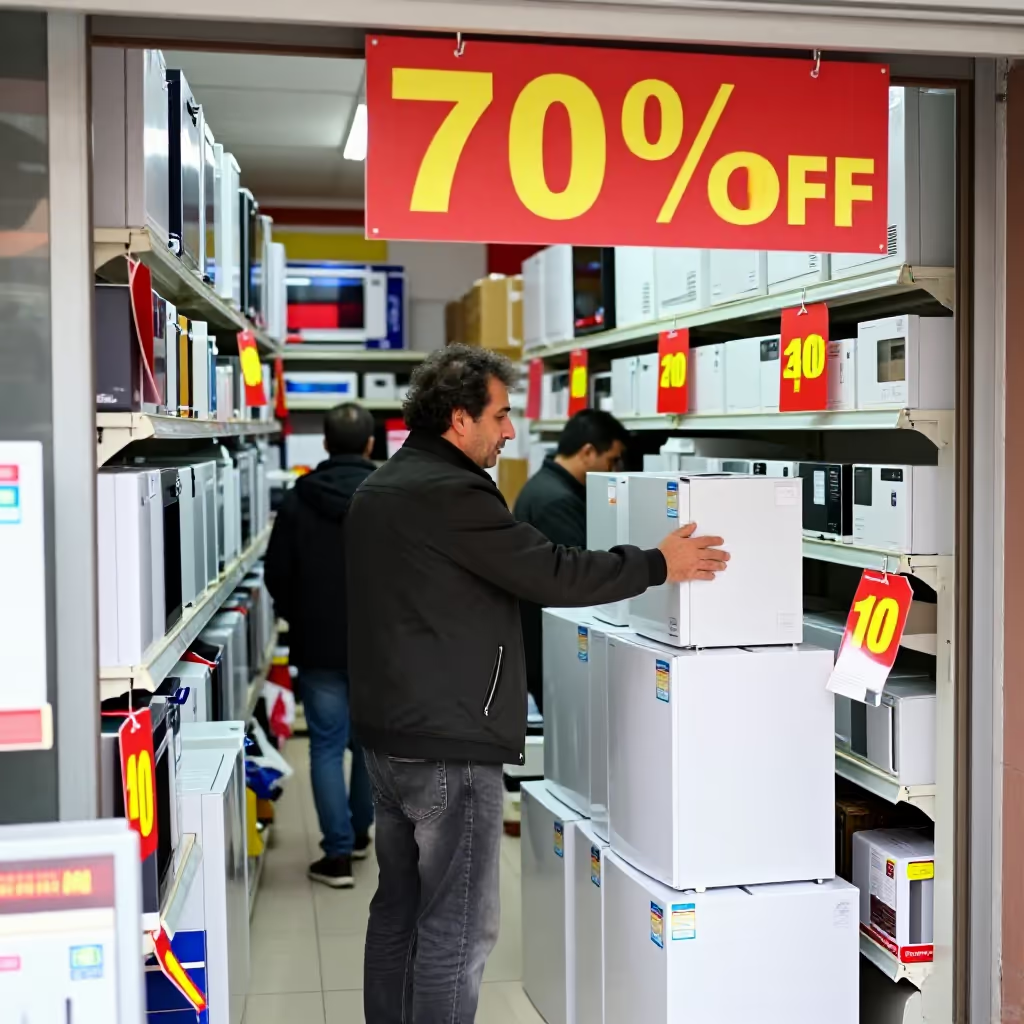
to sell off
Colloquial for selling goods at extremely low prices, often to get rid of inventory quickly.
Der Händler schleuderte die letzten Modelle für die Hälfte des Preises raus.
The dealer sold off the last models for half the price.
The verb 'schleudern' (to hurl) is related to the noun 'die Schleuder' (slingshot). The idea that something is moved powerfully and quickly with a slingshot helps you understand the basic meaning of throwing.
Die Maschine schleudert kleine Teile mit hoher Geschwindigkeit aus.
The machine ejects small parts at high speed.
In connection with vehicles, the fixed expression 'ins Schleudern kommen' or 'ins Schleudern geraten' is used very frequently. This is often more natural than using the verb 'schleudern' alone.
Auf der nassen Straße geriet der Wagen plötzlich ins Schleudern.
On the wet road, the car suddenly started skidding.
This meaning is relevant only in the context of laundry and washing machines. Signal words like 'Wäsche' (laundry), 'Waschmaschine' (washing machine), 'nass' (wet), or 'Umdrehungen' (revolutions) make it clear that removing water is meant.
Du kannst die Handtücher bei 1400 Umdrehungen schleudern.
You can spin the towels at 1400 rpm.
The meaning 'billig verkaufen' (to sell cheaply) is colloquial. The separable particle 'raus-' is often added here: 'etwas rausschleudern' (to sell something off).
Zum Saisonende schleudert das Geschäft die restlichen Winterjacken raus.
At the end of the season, the store is selling off the remaining winter jackets.
to throw
Both words describe moving an object through the air. Werfen is the neutral term, whereas schleudern additionally emphasizes great force and high speed. Use werfen for a normal throw and schleudern when the throw’s exceptional force is important.

Aus großer Wut schleuderte der Spieler den Ball weit über das Tor.
In a fit of anger, the player hurled the ball far over the goal.
Im Training warf der Spieler den Ball zu seinem Mitspieler.
During practice, the player threw the ball to his teammate.