

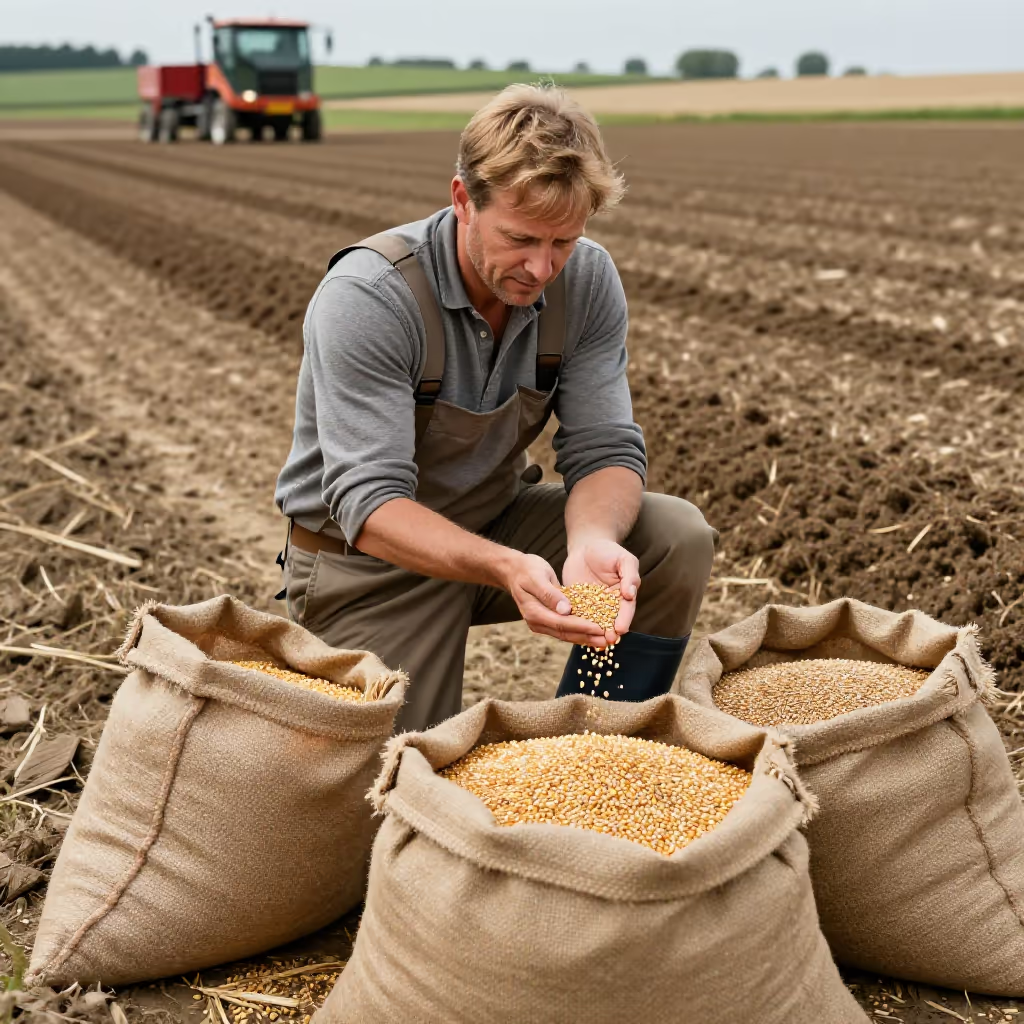
das Saatgut
seed
The collective set of seeds of cultivated plants that are intended for sowing and growing new plants.
Der Bauer kaufte hochwertiges Saatgut für die kommende Saison.
The farmer bought high-quality seed for the coming season.
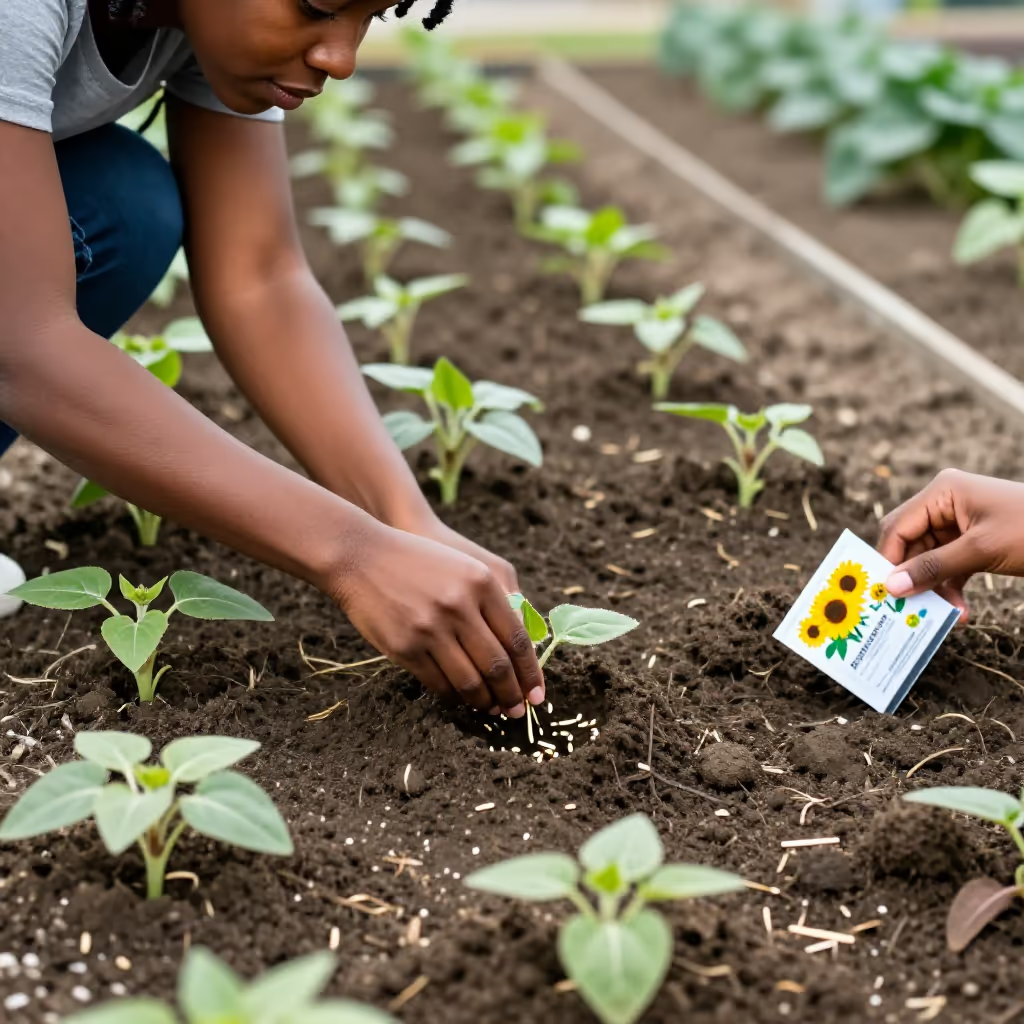
seed
Loading your saved state.
seed
The collective set of seeds of cultivated plants that are intended for sowing and growing new plants.
Der Bauer kaufte hochwertiges Saatgut für die kommende Saison.
The farmer bought high-quality seed for the coming season.

'Saatgut' is a compound noun made up of 'die Saat' (the seed for sowing) and 'das Gut' (here in the sense of property or valuable material). So it is the 'material for sowing'.
Für eine gute Ernte ist hochwertiges Saatgut entscheidend.
High-quality seed is crucial for a good harvest.
'Saatgut' is a collective term and is almost always used in the singular, even when it refers to many individual seeds. It describes the seeds as an uncountable quantity.
Das Saatgut für die Karotten ist in der kleinen Tüte.
The seed for the carrots is in the small packet.
In the context of agriculture and gardening, 'Saatgut' (seed) is often used with the verbs 'aussäen' (to sow), 'kaufen' (to buy), 'lagern' (to store), or 'gewinnen' (to obtain/produce).
Im Frühling wird das Saatgut auf den Feldern ausgesät.
In spring, the seed is sown in the fields.
seed
'Saatgut' and 'Saat' can both mean the seeds that are sown in a field or garden. In this sense, they are often very similar. 'Saatgut' sounds more precise and somewhat more technical; it is used especially when buying, storing, or checking seeds for cultivation. 'Saat' can also mean the seed grains, but it feels more general and also appears in fixed or somewhat elevated expressions. The words can be confused because both are important before sowing. If you very clearly mean seeds as a material, 'Saatgut' is usually the safer choice.

Der Bauer lagert das Saatgut trocken, damit es im Frühling gut keimt.
The farmer stores the seed in a dry place so that it germinates well in spring.
Nach dem Regen brachte die Gärtnerin die Saat in die vorbereitete Erde.
After the rain, the gardener put the seed into the prepared soil.