

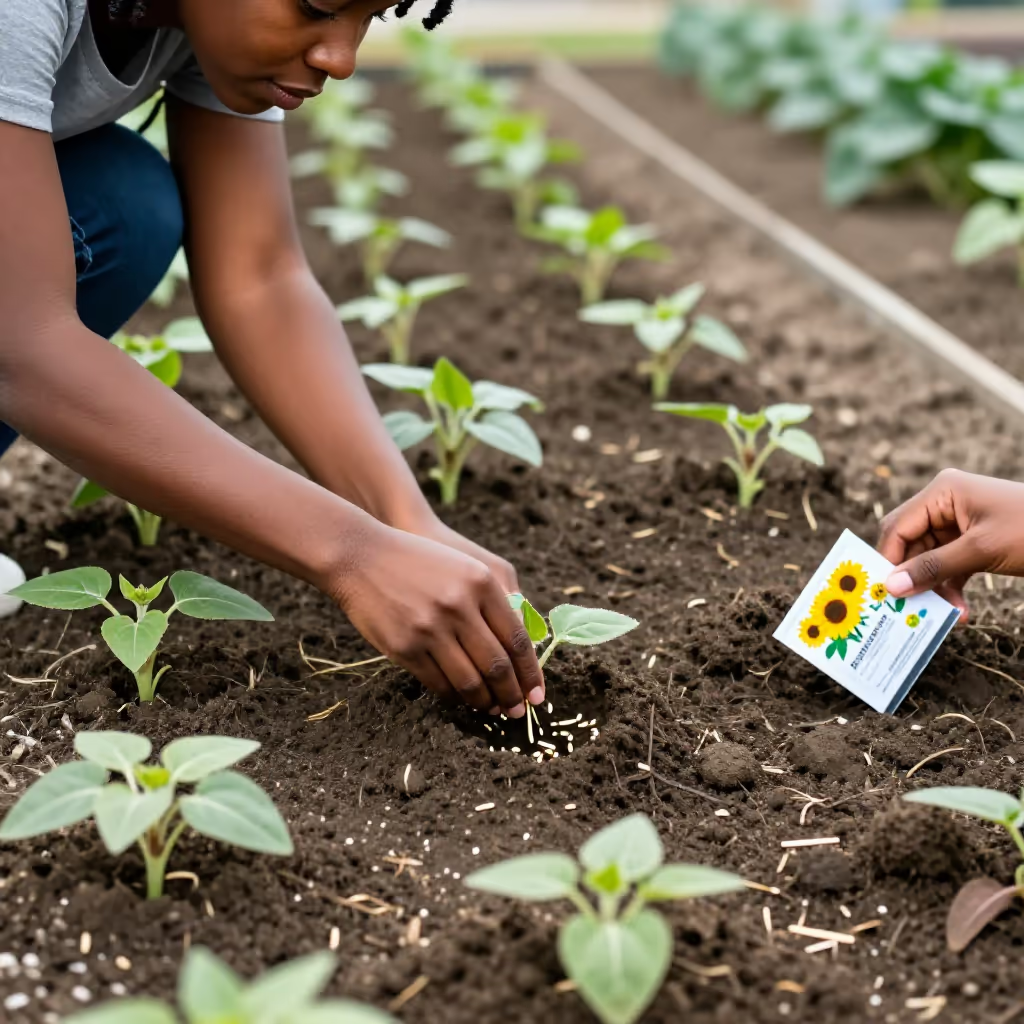
der Same
seed
The part of a plant from which a new plant can grow; a seed grain.
EXAMPLE
Im Frühling wird der Same für das neue Gemüse in die Erde gebracht.
In spring, the seed for the new vegetables is put into the soil.
seed / semen
Loading your saved state.
seed
The part of a plant from which a new plant can grow; a seed grain.
Im Frühling wird der Same für das neue Gemüse in die Erde gebracht.
In spring, the seed for the new vegetables is put into the soil.
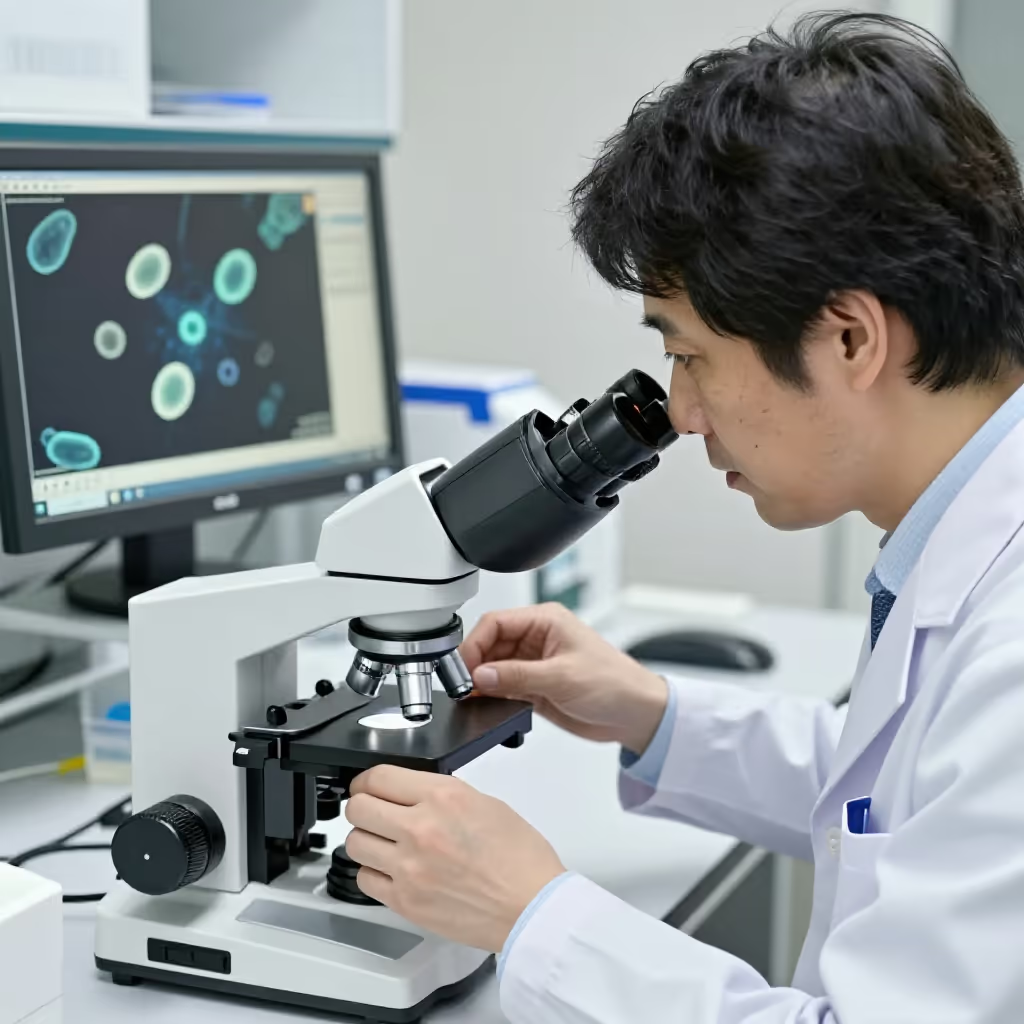
semen
The male reproductive cell in humans and animals, used for reproduction. Often the fluid that contains the reproductive cells, semen, is also referred to this way.
Für eine künstliche Befruchtung wird der Same des Spenders verwendet.
For artificial insemination, the donor's semen is used.

seed
The cause, germ, or beginning of something that develops later, for example an idea, a feeling, or a conflict.
Mit seiner Rede pflanzte er den Samen des Zweifels in die Köpfe der Zuhörer.
With his speech, he planted the seed of doubt in the listeners' minds.
The three meanings are very different and become clear through context. Pay attention to words like 'pflanzen' (to plant) or 'säen' (to sow) for plants, 'biologisch' (biological) or 'Befruchtung' (fertilization) for reproductive cells, and abstract nouns like 'Zweifel' (doubt) or 'Gewalt' (violence) for origin.
Dieser Same muss in feuchte Erde gelegt werden, um zu keimen.
This seed must be placed in moist soil in order to germinate.
In the plant meaning, 'der Same' (the seed) can be used in the singular as a collective term for seed or seed stock, an uncountable quantity. The plural 'die Samen', on the other hand, refers to individual, countable seeds.
Der Bauer sät den Samen im Frühling aus.
The farmer sows the seed in spring.
In the botanical context, 'der Same' (the seed) is often combined with the verbs 'säen' (to sow), 'pflanzen' (to plant), 'keimen' (to germinate), or 'aufgehen' (to sprout).
Nach ein paar Tagen begann der Same zu keimen.
After a few days, the seed began to germinate.
The use of 'der Same' for the male reproductive cell is correct, but it is found mainly in biological, medical, or very formal contexts.
Die Qualität des Samens wurde im Labor untersucht.
The quality of the semen was examined in the laboratory.
This meaning is a metaphor based on the image of a plant seed. Just as a large plant grows from a small grain, a major development can arise from a small cause.
Die Idee war nur ein kleiner Same, aber daraus wuchs ein großes Projekt.
The idea was only a small seed, but a large project grew from it.
In the metaphorical meaning, 'Same' (seed) is often combined with a genitive that describes the type of development: 'der Same des Zweifels' (the seed of doubt), 'der Same der Gewalt' (the seed of violence), or 'der Same der Hoffnung' (the seed of hope).
Seine Worte legten den Samen des Misstrauens zwischen die Freunde.
His words planted the seed of mistrust between the friends.
semen
Der Same and das Sperma can both be associated with male reproduction. Same usually refers more to a single male reproductive cell, while Sperma normally means the fluid containing many reproductive cells. Use Same for the individual cell and Sperma for the fluid as a whole.
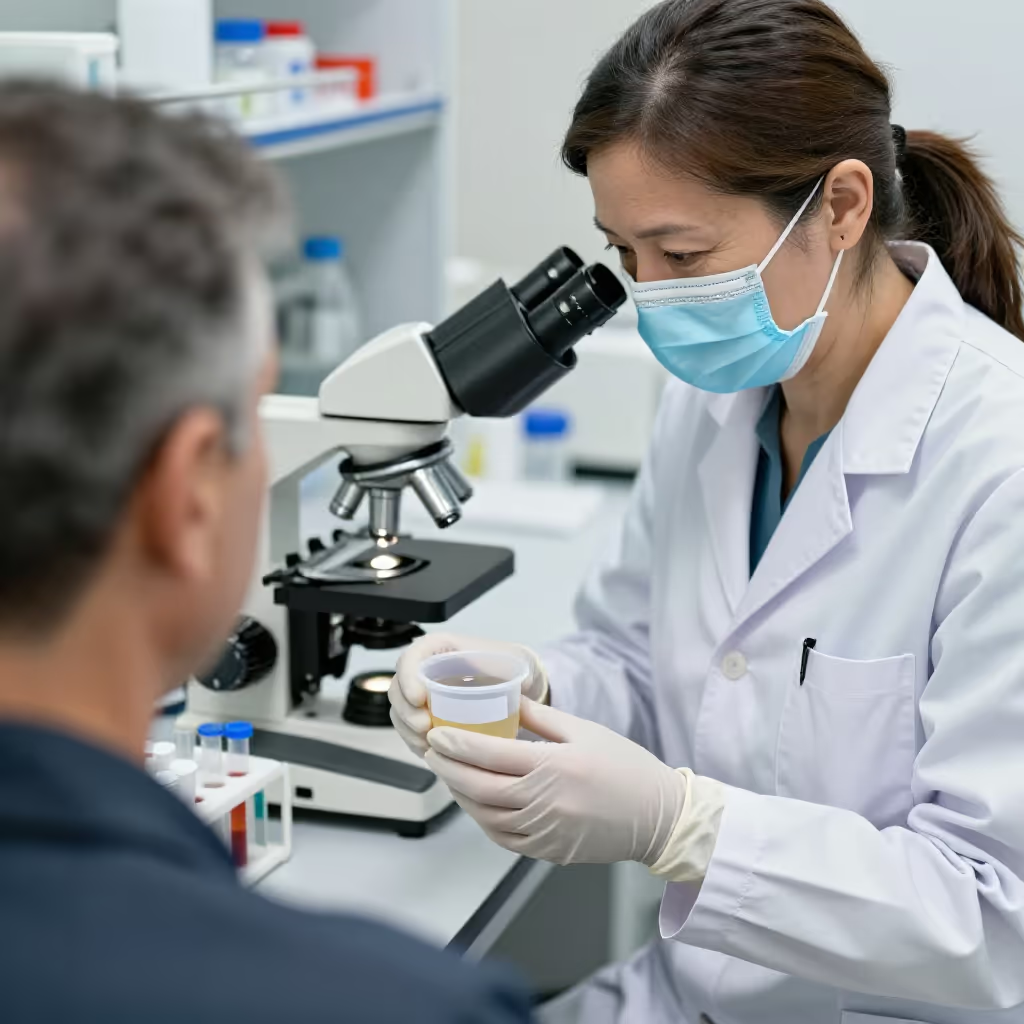
Unter dem Mikroskop wurde ein einzelner Same untersucht.
A single sperm cell was examined under the microscope.
Für die Untersuchung wurde eine Probe Sperma ins Labor geschickt.
A semen sample was sent to the laboratory for testing.