

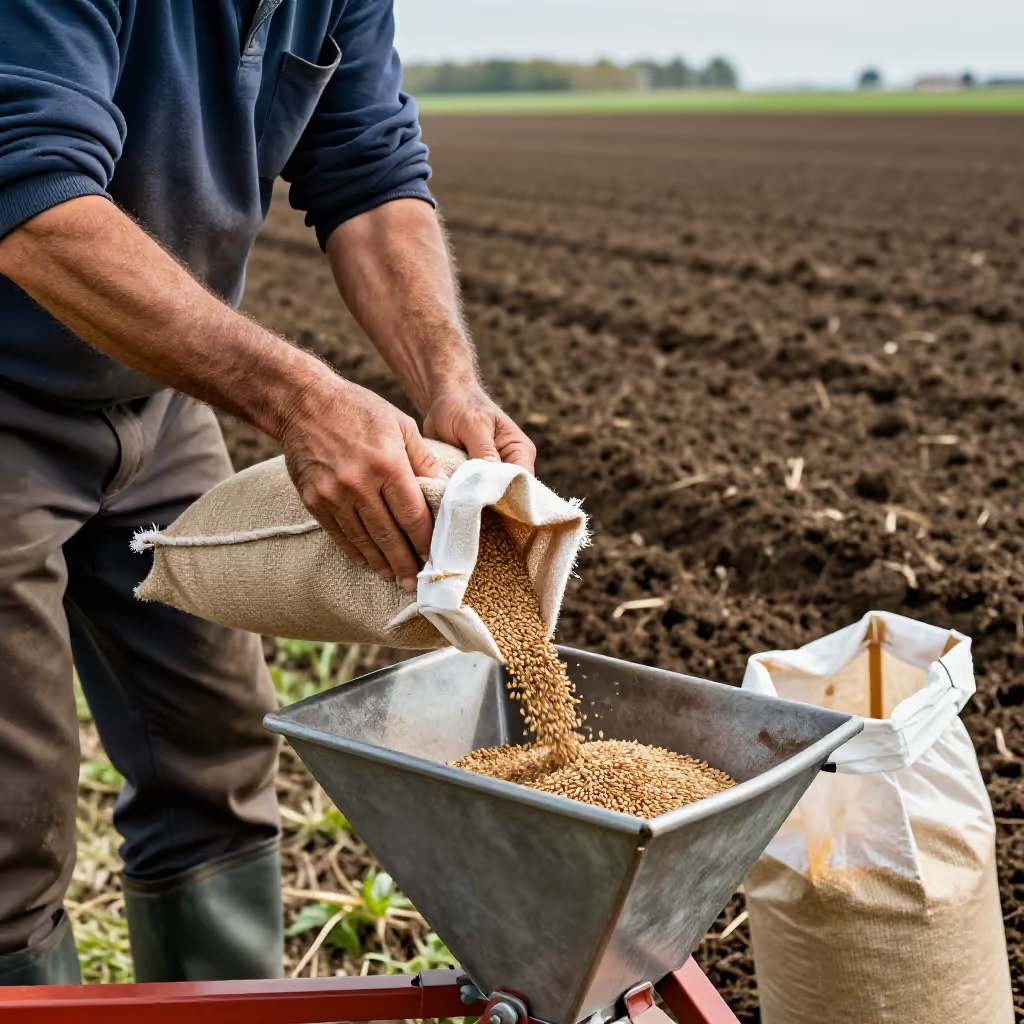
die Saat
seed
The totality of seeds from cultivated plants intended for sowing in fields or gardens.
EXAMPLE
Im Frühling bringt der Bauer die Saat auf den Feldern aus.
In spring, the farmer sows the seed in the fields.
seed
Loading your saved state.
seed
The totality of seeds from cultivated plants intended for sowing in fields or gardens.
Im Frühling bringt der Bauer die Saat auf den Feldern aus.
In spring, the farmer sows the seed in the fields.

seed
In a figurative sense, the cause or beginning of something that will develop in the future, often with a negative or positive connotation.
Mit seinen misstrauischen Worten hat er die Saat des Zweifels in der Gruppe gesät.
With his suspicious words, he sowed the seed of doubt in the group.
'Die Saat' (seed) is the noun related to the verb 'säen' (to sow). 'Die Saat' is what you sow. This connection applies to both the literal and the figurative meaning.
Der Bauer sät im Frühjahr die Saat für den Sommerweizen.
The farmer sows the seed for the summer wheat in spring.
You can recognize the figurative meaning by the fact that 'Saat' (seed) is combined with an abstract noun in the genitive, e.g. 'die Saat des Zweifels' (the seed of doubt). The literal meaning appears in the context of agriculture and gardening.
Nach dem Regen ging die Saat schnell auf.
After the rain, the seed sprouted quickly.
In agriculture, there are fixed expressions with 'Saat' (seed). 'Die Saat ausbringen' means to sow seed. 'Die Saat geht auf' means that the young plants are growing out of the ground.
Die Bauern hoffen auf Regen, damit die Saat aufgeht.
The farmers are hoping for rain so that the seed will sprout.
In the figurative meaning, 'Saat' (seed) is often connected with the verb 'säen' (to sow) and a negative concept. Typical collocations are 'die Saat des Hasses säen' (to sow the seed of hatred), 'die Saat der Gewalt säen' (to sow the seed of violence), or 'die Saat des Misstrauens säen' (to sow the seed of mistrust).
Durch die ständigen Lügen wurde die Saat des Misstrauens gesät.
The constant lies sowed the seed of mistrust.
seed
Here, Saatgut and Saat both refer to the totality of seeds from cultivated plants intended for sowing. In this area of use, the meanings given do not indicate any firm factual difference; both words can refer to the same material.
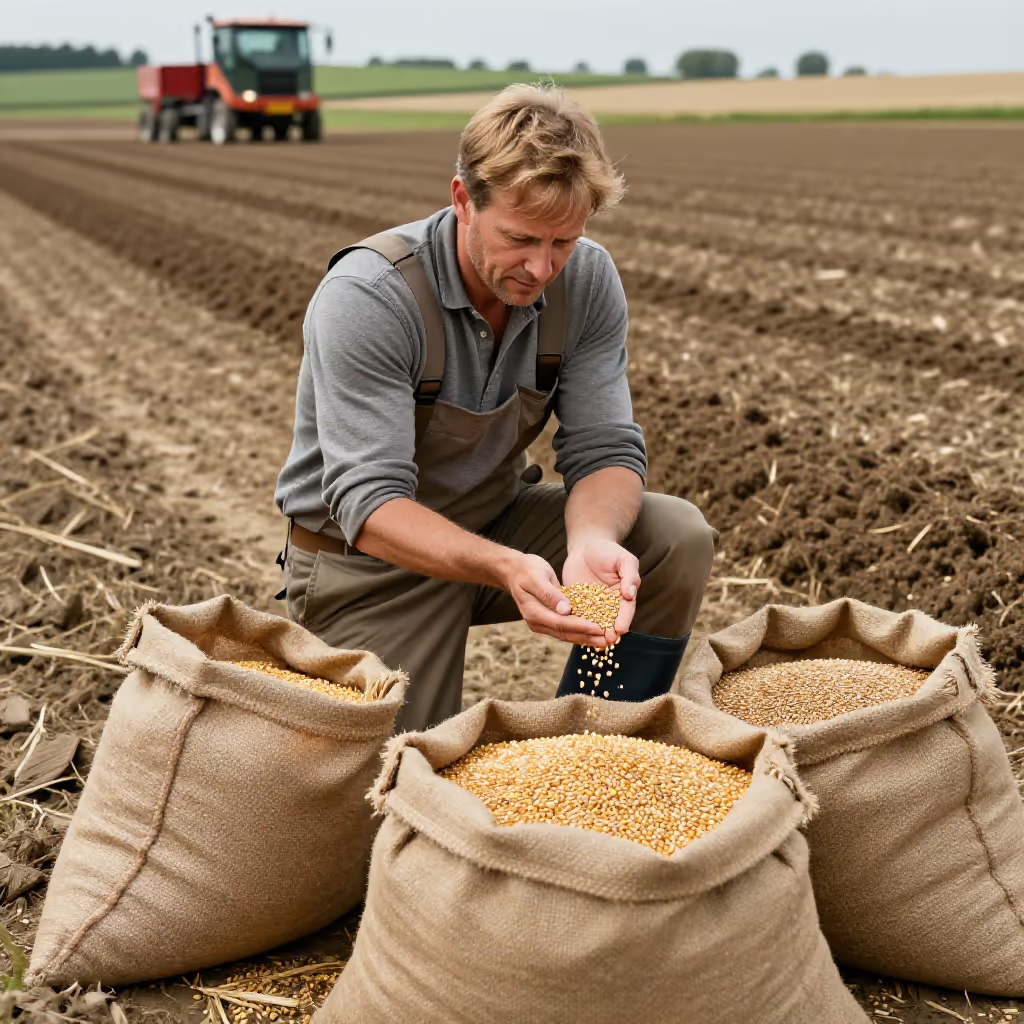
Der Landwirt lagert die Saat für die Aussaat im Frühjahr trocken ein.
The farmer stores the seed for sowing in spring in a dry place.
Der Landwirt lagert das Saatgut für die Aussaat im Frühjahr trocken ein.
The farmer stores the seed for sowing in spring in a dry place.