

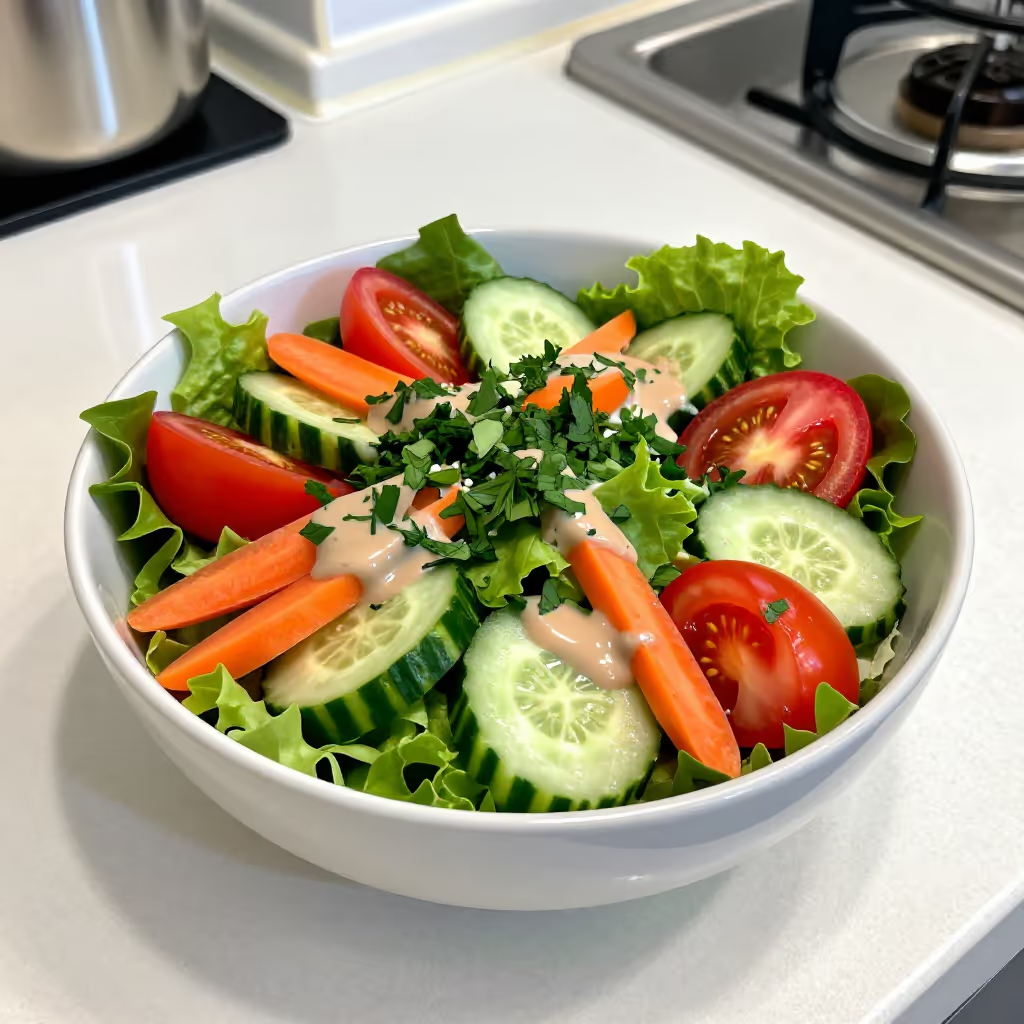
der Salat
salad
A dish made from mixed, mostly raw ingredients such as vegetables, leaves, herbs, often served with a sauce (dressing).
EXAMPLE
Zum Grillen machen wir einen großen Nudelsalat.
For the barbecue, we're making a large pasta salad.
salad
Loading your saved state.
salad
A dish made from mixed, mostly raw ingredients such as vegetables, leaves, herbs, often served with a sauce (dressing).
Zum Grillen machen wir einen großen Nudelsalat.
For the barbecue, we're making a large pasta salad.
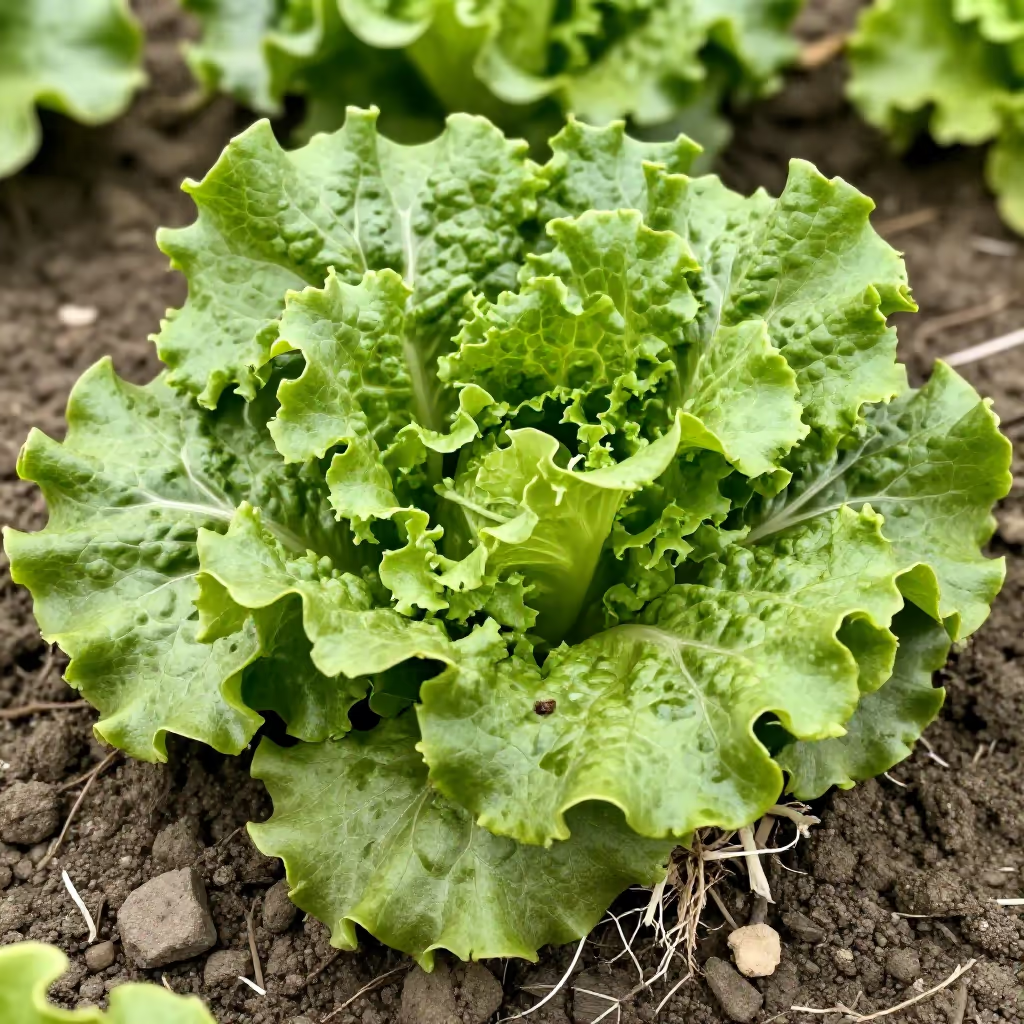
lettuce
A plant with large green leaves that is used as the main ingredient for salads, especially head lettuce.
Kannst du im Supermarkt noch einen Kopf Salat kaufen?
Can you buy a head of lettuce at the supermarket?

mess
Colloquial for a big mess, chaos, or a confusing, difficult situation.
Ich habe die Schlüssel verloren, jetzt haben wir den Salat!
I lost the keys, and now we've got a real mess!
'Salat' (salad) is a very productive base word for many compound nouns that refer to a certain type of salad dish. Examples are 'Nudelsalat' (pasta salad), 'Kartoffelsalat' (potato salad), 'Gurkensalat' (cucumber salad), or 'Obstsalat' (fruit salad).
Bringst du bitte einen Kartoffelsalat zur Party mit?
Could you please bring a potato salad to the party?
The colloquial meaning 'Chaos' (chaos/mess) is used almost exclusively in the fixed expression 'den Salat haben' (to be stuck with the mess). It expresses that an unpleasant, chaotic situation has occurred, often as the result of a mistake.
Jetzt ist die Milch umgefallen. Na super, da haben wir den Salat!
Now the milk has spilled. Oh great, now we've got a real mess!
Whether the plant or the dish is meant can be recognized from context. Verbs like 'anmachen' (to dress) or 'zubereiten' (to prepare) and quantities like 'eine Portion' (a portion) point to the dish. Verbs like 'waschen' (to wash) or 'pflanzen' (to plant) and quantities like 'ein Kopf' (a head) point to the plant.
Ich mache den Salat schnell an, bevor die Gäste kommen.
I'll quickly dress the salad before the guests arrive.
Typical verbs used with salad as a dish are 'einen Salat machen/zubereiten' (to make/prepare a salad), 'einen Salat anmachen' (to add dressing), and 'Salat essen' (to eat salad).
Womit sollen wir den Salat heute anmachen? Mit Öl und Essig?
What should we dress the salad with today? Oil and vinegar?
chaos
Chaos is the general term for complete disorder or confusion. Salat is more colloquial and often refers to a particularly tangled, confusing, or complicated mess. Use Chaos as a broad description and Salat when you also want the situation to sound vivid and informal.

Auf dem Schreibtisch ist durch die vielen Kabel ein richtiger Salat entstanden.
All the cables had created a real mess on the desk.
Auf dem Schreibtisch herrscht nach der Arbeit völliges Chaos.
After work, there was complete chaos on the desk.