

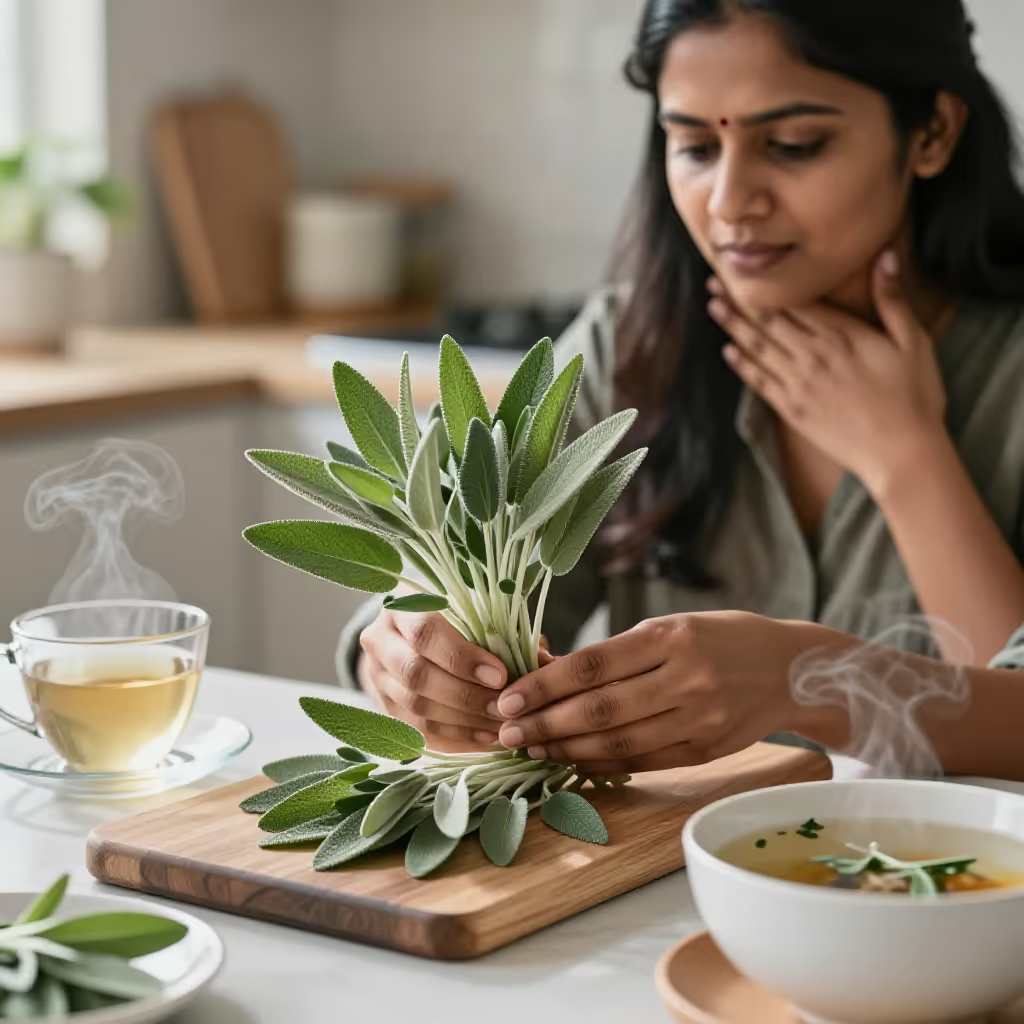
An aromatic plant whose leaves are used as a spice in cooking and as a medicinal herb, especially for colds and throat inflammations.
example
Ein Tee aus frischem Salbei soll bei Halsschmerzen helfen.
Tea made from fresh sage is said to help with a sore throat.
Usage tips
Two main contexts
'Salbei' (sage) is mainly used in two areas: as a spice in cooking, especially for meat and pasta, and as a medicinal herb, usually in the form of tea or lozenges.
EXAMPLE
Für die Soße benötigst du frische Salbeiblätter und Butter.
For the sauce, you need fresh sage leaves and butter.
Use as a remedy
In a medical context, sage is often used for cold symptoms. Typical uses are 'Salbeitee trinken' (to drink sage tea) for a sore throat or 'mit Salbei gurgeln' (to gargle with sage) for inflammations.
EXAMPLE
Meine Großmutter schwört bei Heiserkeit auf Salbeibonbons.
My grandmother swears by sage lozenges for hoarseness.
Countable and uncountable
When 'Salbei' (sage) means the spice or herb, it is usually uncountable. However, when referring to the plant itself, the word can also be used in the plural.
EXAMPLE
Dieses Gericht schmeckt stark nach Salbei.
This dish tastes strongly of sage.
Compare with
confusable
Salbei vs Rosmarin
rosemary
'Rosmarin' and 'Salbei' are both fragrant herbs and can be used in cooking as well as medicinal plants. They can be confused because both are often sold dried or fresh and go well with savory dishes. 'Rosmarin' has narrow, needle-like leaves and a very strong Mediterranean smell. 'Salbei' has broader, soft leaves and is especially often used for throat problems or colds. In cooking, 'Rosmarin' is typical with potatoes or meat, while 'Salbei' is more typical for tea, butter sauces, or certain pasta dishes.
Salbei
Bei Halsschmerzen kocht Maria sich einen Tee mit Salbei.
When she has a sore throat, Maria makes herself tea with sage.
Rosmarin
Im Garten wächst Rosmarin neben der Terrasse und duftet stark in der Sonne.
Rosemary grows in the garden next to the terrace and gives off a strong scent in the sun.