

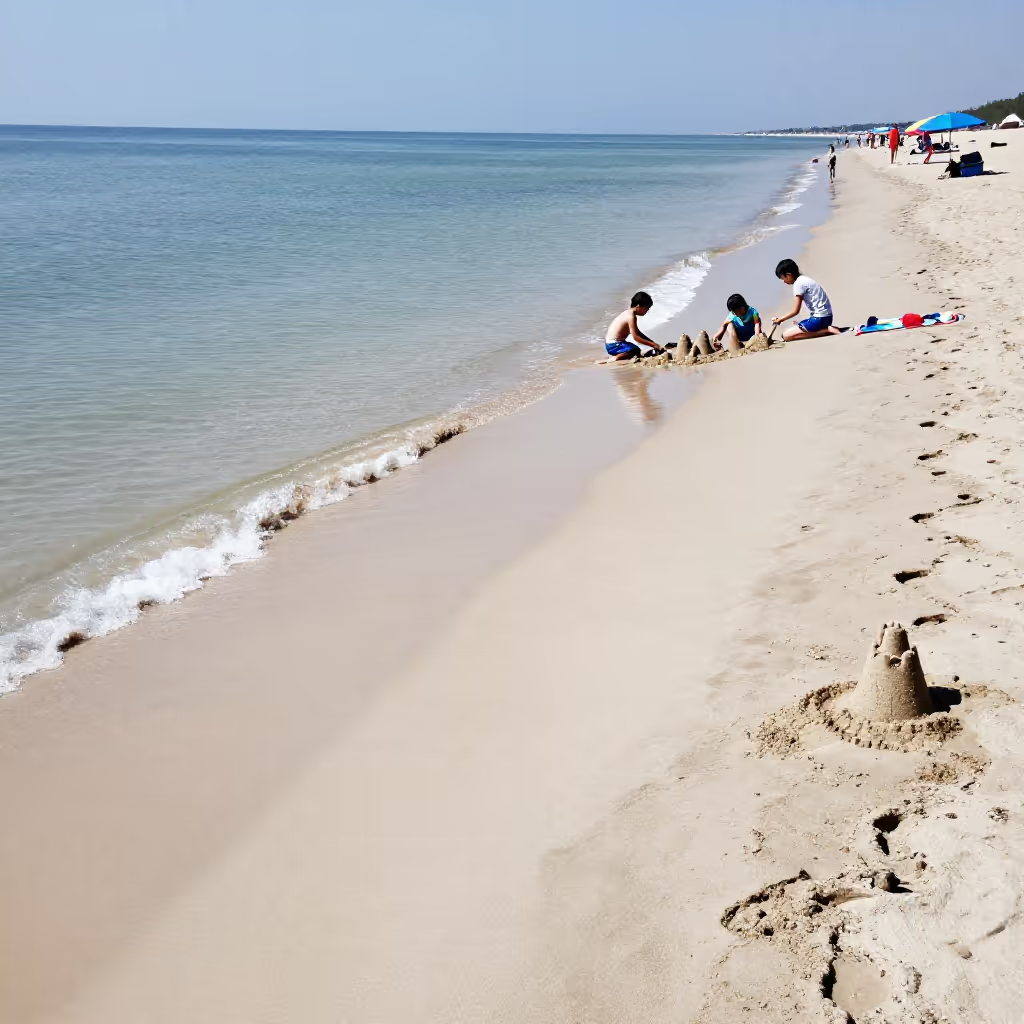
A flat shore area by a sea, lake, or river that consists mainly of sand.
example
Wir verbrachten den ganzen Nachmittag am breiten Sandstrand und bauten eine Sandburg.
We spent the whole afternoon on the wide sandy beach and built a sandcastle.
Usage tips
Word composition
The word is a simple and clear compound of 'Sand' (sand) and 'Strand' (beach). So it literally describes a beach made of sand.
EXAMPLE
Kinder lieben es, an Sandstränden zu spielen.
Children love playing on sandy beaches.
Correct preposition
Pay attention to the difference in prepositions: 'am Sandstrand' (on/at the sandy beach, dative) describes a location, while 'an den Sandstrand' (to the sandy beach, accusative) indicates direction.
EXAMPLE
Wir treffen uns später am Sandstrand.
We'll meet later on the sandy beach.
Typical adjectives
Common adjectives that describe a sandy beach are 'breit' (wide), 'lang' (long), 'fein' (fine), 'weiß' (white), or 'endlos' (endless).
EXAMPLE
Die Insel ist berühmt für ihre langen, weißen Sandstrände.
The island is famous for its long, white sandy beaches.
Compare with
near_synonym · confusable
Sandstrand vs Strand
beach
'der Strand' and 'der Sandstrand' both refer to a flat area by the water. 'Strand' is the more general term. A beach can be made of sand, pebbles, or small stones. 'Sandstrand' is more specific and directly says that the beach consists mainly of sand. The words can be confused because many people automatically think of sand when they hear 'Strand'. If the material does not matter or is not known, 'Strand' is enough. If the sand is important, 'Sandstrand' is more precise.
Sandstrand
Für die Kinder ist ein Sandstrand ideal, weil sie dort gut spielen können.
A sandy beach is ideal for the children because they can play there easily.
Strand
Wir suchen am See einen ruhigen Strand für den Nachmittag.
We are looking for a quiet beach by the lake for the afternoon.